Dead Chuffed: Shortlisted for a Brilliance in Blogging Award

20140502-150010.jpg

Spade Fork Spoon has been nominated in the Brilliance in Blogging Awards in the food category. This is amazing and I’m dead chuffed, especially as there are so many amazing food blogs out there. I started the blog as a way of documenting the change from being a full-time teacher, to becoming a stay-at-home Dad; spending time in the kitchen and at the allotment, as well as spending quality time with my family. Cooking and growing fruit and veg has really helped me to become a happier person and I really feel it can help me as I continue my journey and I blog about my recipes for a changed life. It’s so nice to think that what I write about is liked and appreciated by others; and even liked to the point of actually nominating me. Thank you whoever you are!

You can see  the other amazing blogs who made the shortlist on the BiBs2014 website; and if you can see your way to voting for Spade Fork Spoon, then you can do so by clicking on the badge below.


May at Plot 4

April is one of my favourite months. It’s the time of year when the garden, the allotment, everything is growing. We’ve had some cold and wet weather, but its been pretty sunny of recent weeks, and the sun has started to transform the plot.

The month that has just finished is the first of the year to have new produce to harvest, as well as the stalwart that is Swiss chard.  Only the other day we were able to pick the first few delicate broad beans.  I love harvesting the first of these beans, sliding my finger along the shell and opening it to reveal the lime green beans in their silken bed. To be honest, the majority of the crop is not quite ready, but my wife and I couldn’t resist a quick nibble on these sweet treats. We’ve also be harvesting a few radishes (the globe variety grown in boxes in the cold frame) and the first of the salad leaves.

I started sowing with enthusiasm during April, and this will continue into May with beans, peas, beetroot, chard, fennel, cavalo nero and cime di rapa all to sow. Every year I get excited by the coming of spring and good weather, sow a load of seeds and then have too many plants, then end up with a glut. I’m determined this year to sow successionally, so I’ll be curbing my enthusiasm and only sowing a few seeds every few weeks. This way I aim to keep the crops coming, but not have them coming out of my ears!

I’ve pretty much completed the big winter jobs at the plot. I’ve managed to get the fence fixed, water butts sorted and have even managed to construct a netted protection frame for some of the crops. During May I need to create another of these netted cloches, but without a doubt the major job for this month is weeding. The crops are growing, but so are the weeds. So battle commences again for the year!

Garden share collective badge

This post is contributing to The Garden Share Collective; an international group of bloggers who share their vegetable patches, container gardens and the herbs they grow on their window sills.


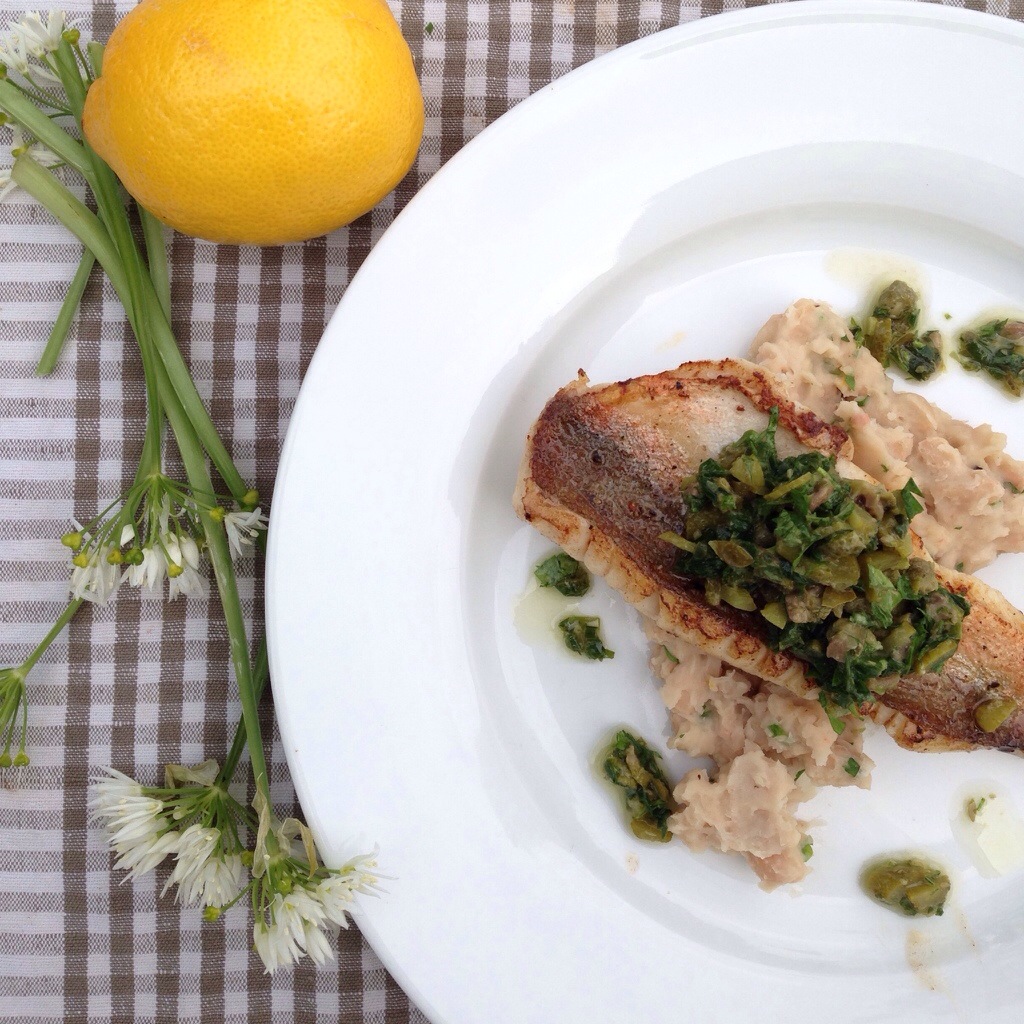
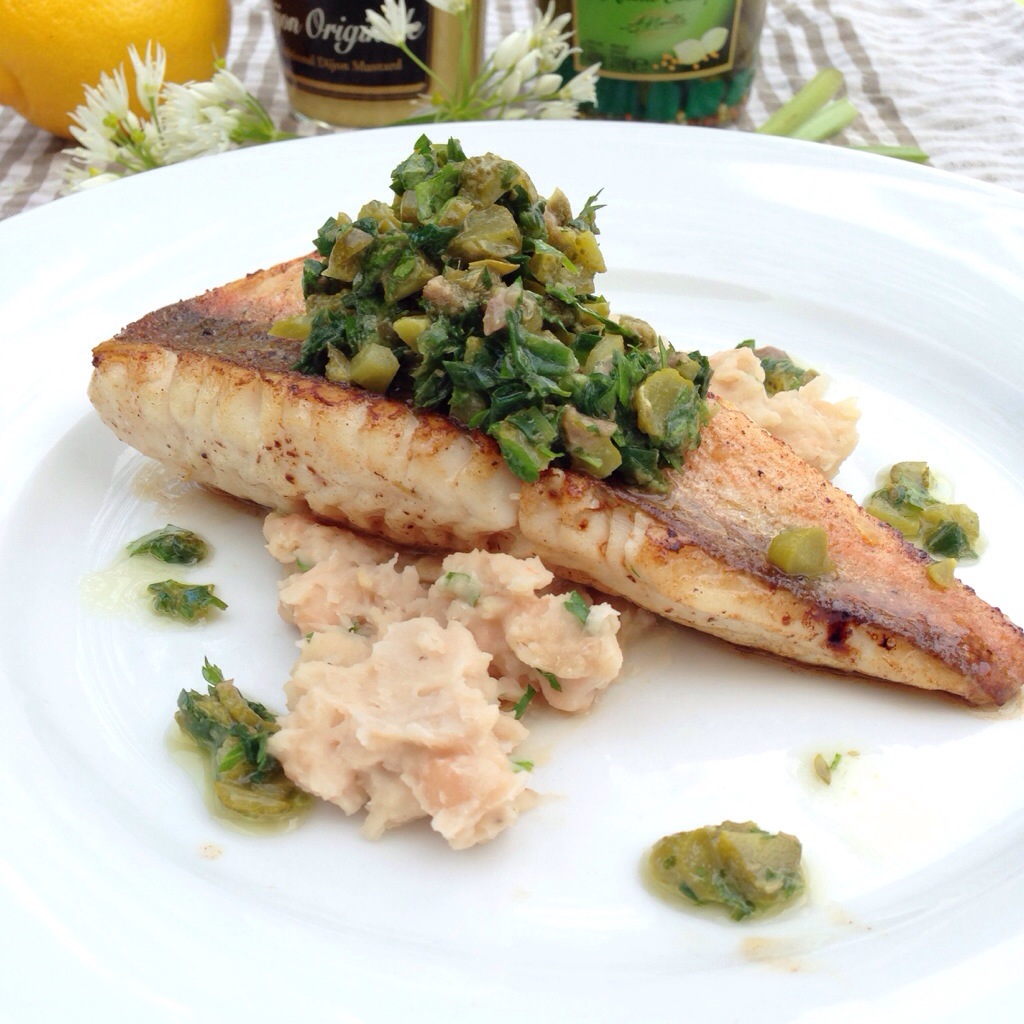
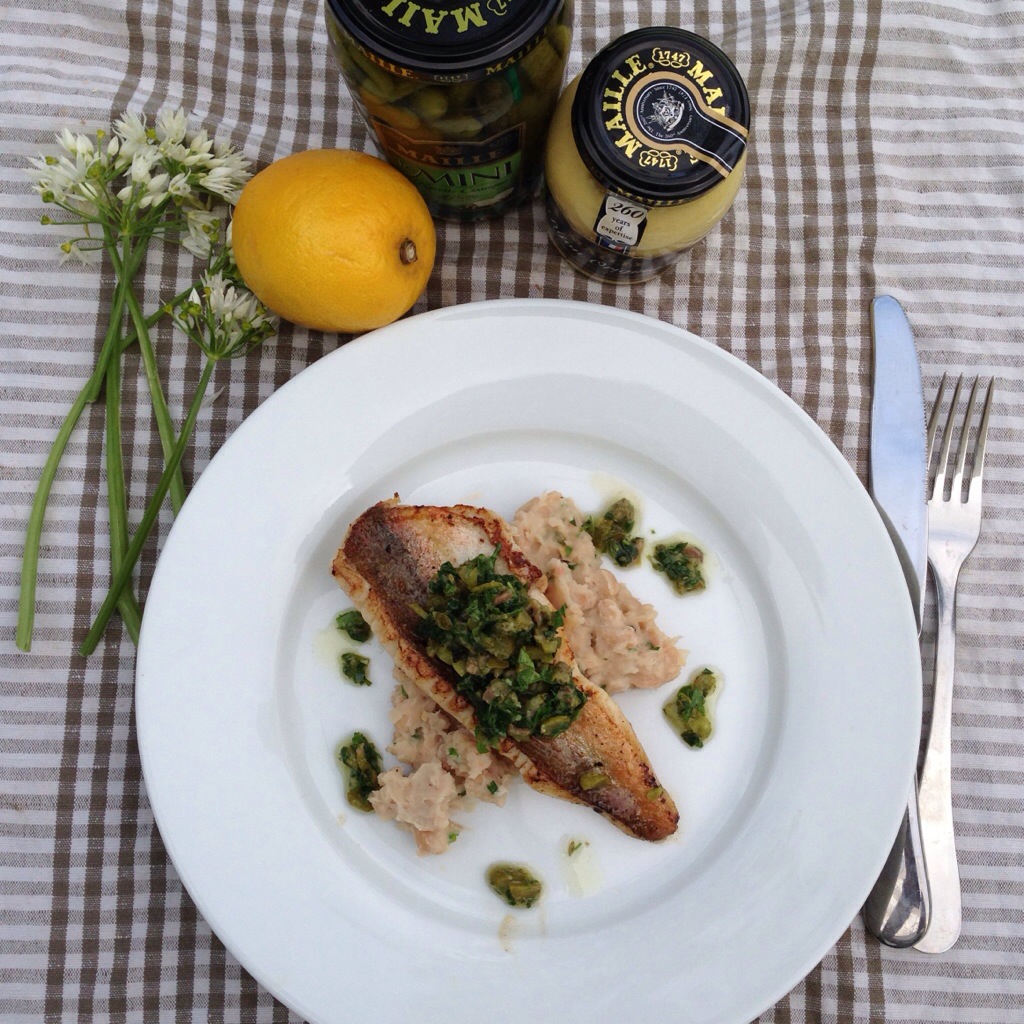
Gurnard, Cannellini beans and Wild Garlic Salsa Verde

I have been on the search for some wild garlic for weeks. Everywhere I went, my eyes had been peeled for the beautiful white flowers and my nose was seeking out that allium aroma which is such a giveaway of this springtime plant. Up until last weekend I had begun to think that this year’s abnormal weather had affected the wild garlic and caused it to disappear. Then, when away in Dorset, I found some. Under the woodland canopy, in a damp corner, there it was. I hurriedly gathered some and my mind began to race with ideas.

Recently I was contacted by Maille, purveyors of all things mustard, and asked if I’d like to enter a competition using their products. I’ve always said that I wouldn’t do reviews or product promotions; but as I use their mustards all the time I feel I can do so with a clear conscience. Armed with mustard and wild garlic I knew exactly what to make. Salsa Verde. This sauce is a brilliant way to use fresh herbs from the plot and a fantastic accompaniment to fish and meat. The acidity of the salsa combines particularly well with the flavour of meaty fish like Gurnard (a great sustainable option, which is only really caught as bi-catch and if we bought more of it would alleviate the pressure on other species).

20140427-135759.jpg

You will need (serves 2)
2 decent sized Gurnard fillets

For the Cannellini beans
salt and freshly ground black pepper
Olive oil  
1/2 clove garlic (crushed) 
Small sprig fresh rosemary
1 tbsp. chopped parsely
Grated zest 1/4  lemon   
1 can Cannellini beans

For the salsa verde
Parsley, mint and basil leaves (a small handful of each)
A handful of wild garlic leaves
1/2 tbsp. each of capers
1/2 tbsp. gherkins (I used Maille le Mini Recette Classique, they have a natty cage inside the jar so you don’t have to delve into the jar to grab a gherkin)
1 tsp. Dijon mustard (I used the Mailles Dijon Orginale)
1 anchovy fillet
Enough olive oil to bring the salsa verde together into a pourable sauce

20140427-135730.jpg

For the beans, put a splash of olive oil in a saucepan, and mix in the garlic. Add the rosemary sprig, and the lemon zest and warm through. Remove the rosemary and add the drained and rinsed beans, before adding to the pan and warming through. Take a third of the beans and whizz in the blender, then return to the pan. Finally add a small handful of chopped parsley.

The salsa verde is simple to prepare. Start by blanching the wild garlic leaves, refreshing in cold water, and allow to cool. Finely chop the garlic, herbs, gherkins, capers and anchovy using a sharp knife and combine with the mustard and enough oil to make a pourable sauce. Put to one side for the flavours to mingle and mature. Season the cod cheeks with salt and pepper and fry in a little olive oil for 2 minutes on each side. In the last minute, add the chopped garlic and a little lemon juice.

To cook the gurnard, season the skin side of the fillet, then add skin side to a hot buttery pan. Fry until the skin becomes crispy, around 3 minutes. Turn over and cook for a further minute.  To serve, spread the bean mix on the plate, place the fillet on top and then place some salsa verde on top.

20140427-135737.jpg

20140427-135751.jpg

20140427-135744.jpg


Favourite Five Gluten Free

favorite five

Those of you who follow @spadeforkspoon on Twitter may have noticed an increase in tweets about gluten free cooking over the last few weeks. This is because my son has recently been diagnosed as coeliac and therefore needs to follow a gluten free diet. Adapting meals to fit in with his new dietary requirements has been a bit of a challenge, but we’re getting there. Little Button Diaries asked me to create a Gluten-free Favourite Five for their blog. So, take a look and see what made the final five.

What would be in your favourite five gluten-free dishes?

Time for (Mint) Tea

In out house we are not aversed to a cup of tea. In fact we drink a load of it throughout a typical day. Whilst I really enjoy a fine cup of Earl Grey (never with milk mind you), I like the idea of growing my own tea. Not blessed with a Himalayan climate here on the south coast, I’m not sure if it’s even possible (I know that there is a commercial tea plantation in Cornwall). So, I’ve decided to embrace the herbal tea and have turned excess spring mint growth into a warm, yet refreshing brew. It turns out that mint tea made with mint leaves (not from a bag) is not only easily made, but also infinitely more refreshing and clean tasting. It tastes so healthy that I had to find out what benefits it could be bringing me and it transpires it has some real health benefiting properties. As well as the obvious plus of being caffeine free, mint tea has long been recognised as aiding digestion, relieving stress and even helping with nausea. What’s more it’s the perfect drink to make at the allotment on a spring day.
mint tea
You will need
A cups worth of just boiled water
4 or 5 sprigs of mint (take the new growth as it’s the freshest)
Kettle or teapot

Once your water is boiled, place the mint leaves into your teapot and pour the water over the mint. Leave it to steep for 5 minutes or so before pouring into your cup to drink. I used a natty camping kettle with a strainer built in, but anything which allows you to filter the liquid would be fine. Pop a couple of mint leaves in your cup and sit back and enjoy a refreshing cuppa.

Mint tea and kettle

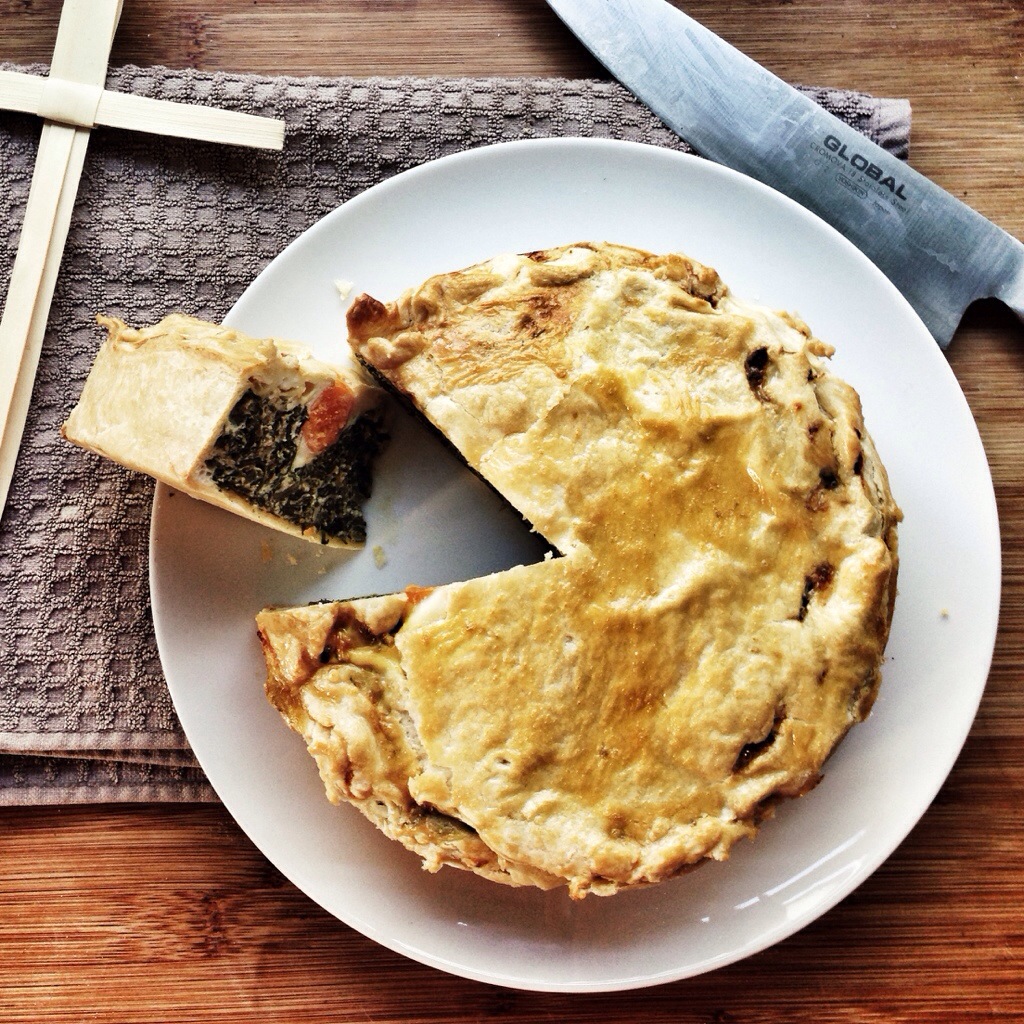
Torta Pasqualina – A Pie for Easter

Swiss chard is one of the heroes of my plot, and I’ve blogged about my love of it before. Its vibrancy always makes a visit to the plot a joy, but recently its been joined by many green shoots and leaves emerging all over the plot. Spring is such a great season and the prospect of new life and a season of growing ahead is an uplifting one. Although much is growing at the allotment, there is not a vast amount able to be harvested; and with Easter coming up I was looking for a dish which could combine some allotment ingredients and celebrate Easter at the same time. Cue the arrival of the Guardian the other day and Yotam Ottolenghi’s recipe for a Torta Pasqualina. It seems the Italians also have a need for an Easter dish which uses seasonal vegetables. The combination of chard and ricotta is always a good one, and having discovered Genius Gluten Free Puff Pastry recently its a dish I can make for the whole family. Here’s my recipe, loosely based on Ottolenghi’s.

Torta pasqualina

You will need (makes enough for 8)

2 tbsp olive oil
1 small onion, peeled and finely chopped
1kg Swiss chard (we have the Rainbow variety which adds great colour to the dish), stalks stripped and finely chopped, leaves shredded
2 sticks celery, finely sliced
Handful of parsley leaves, finely chopped
Small handful of new fennel tops, finely chopped
½ tsp ground mace
¼ tsp grated nutmeg
250g ricotta
50g parmesan
9 eggs
Salt and black pepper
500g Genius Gluten-free puff pastry
Gluten-free plain flour, for dusting

Start by sweating the onion for a few minutes until it is softened, then add the chopped chard stalks and celery. Continue to cook for a few minutes, before adding the leaves and allowing them to wilt. Take the pan off the heat, cool, then place the mix into a tea towel and squeeze out any liquid. The dryer the mix, the better it will hold its form later. Add the cheese, herbs, spices and 3 eggs to the chard mix and mix thoroughly (seasoning with a little salt and pepper as needed).making a torte pasqualina

Roll out the 2/3 of the pastry and use it to line a 20cm loose bottom cake tin. Place the chard mixture into the pastry case and make 5 indentations, breaking an egg into each, before rolling out the remaining pastry and making a lid for the pie. Trim the edges and then crimp them to provide a secure seal. Brush with  beaten egg and prick a few holes in the pastry, before placing in a preheated oven (180°C) for 45 minutes, until golden on top. Leave to cool and serve.

torta pasqualina


Lost & Found

As readers may have noticed, I like to make something from nothing, to ‘Make Do and Mend’. There’s something really rewarding in finding a ‘lost’ item and finding it a new purpose. When I see pallets now, I don’t think of rubbish; I see possibilities, fence panels, vertical planters, even tables. At the allotment I can do that, I can look at things in a different way.

However, I’m still learning to bring this way of thinking into my thoughts about life in general. I used to be able to do it; I was even quite good at it. But since my depression I’ve found it all too easy to lose myself in one frame of mind or thought process. As I suggested, I’m getting better at it, but I’m not there yet. To use the lost and found analogy; I’ve been lost and I’m beginning to be found. Losing confidence and facing depression and anxiety has possibly been the hardest thing I’ve had to cope with in life. It has totally altered my life and the things I desire from life. Initially I was totally lost, but with the support of friends and family, I’ve dragged myself upward, leaving work and learning to appreciate my family more in the process.

Although I’ve begun to find myself again, I now face a different kind of loss. What to do next? Rather than the isolation of deep depression, its a feeling of being lost in a crowd. Like the child in a crowded supermarket looking for their Mum, there’s loads of people who could be their mother; for me there are lots of things I could do, but which one is the right one?

Favourite Five Egg Recipes

favorite five

It’s Easter in a few weeks and I couldn’t let it go past without a post about eggs. Not the chocolate variety which have been over-populating the shelves of supermarkets since January, but the real ones. If our allotments allowed chickens, then I’d have chickens because eggs are one of nature’s best products. They are so versatile; being useful as a raising agent in cakes, giving pastry a sheen, enriching dough and that’s before I mention egg as eggs. We eat a lot of eggs in this country; the largest egg retailer in the UK., Tesco, sell around 1.3 billion eggs every year. Apparently we are enjoying a period of relative low prices for eggs (although not as low as during the days of battery farming); in the 1950s a dozen eggs cost the equivalent of £7 today, whereas a dozen free-range in my local supermarket is £2.90. So, eggs offer a budget helping ingredient for us all. Here are my favourite five uses of the humble egg. Some use its pour to give rise in foods, and some just celebrate the egg.

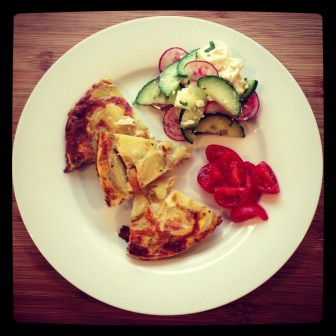
Frittata  – This is one of my favourite simple summer lunches, and is delicious hot or cold. Take your eggs (allow 2 per person) and beat them, adding salt, pepper, grated parmesan and any other ingredients you want. I tend to use a mixture of chopped fresh herbs, perhaps some cold sliced potatoes, or some green beans (whatever the allotment has to offer). Beat once more. Gently heat a little oil in a frying pan and pour in the egg mixture. Use a spatula to move the mixture away from the sides of the pan, then allow to cook for (covered) for a few minutes until the egg is set, before turning the frittata and cooking the top side for a few minutes. Remove from the pan when slightly golden, slice and eat (or wait until cold and devour on a picnic).frittata and saladOmelette Arnold Bennett – A classic, and a good one. Start by poaching some smoked haddock in milk. Once just cooked, remove the fish and use the milk to make a white sauce. Fold the flaked haddock into the sauce with some chopped parsley. Make an omelette your usual way, then top with the fish and sauce. Sprinkle with some parmesan, then grill until golden brown. Makes a fantastic light lunch.
Pancakes – Adapted from a Jamie Oliver recipe to fit into my son’s gluten-free diet, these are a frequent weekend breakfast. Separate 3 eggs, whisking the whites to stiff peaks. Add 115g gluten-free flour, 1tsp. gluten-free baking powder and 130ml milk to the yolks and mix to form thick batter. Fold the eggs into the batter. Heat non-stick pan. Ladle some batter into a pan and fry for a couple of minutes until it starts to look golden, flip the pancake over and continue frying until both sides are golden. We like to serve with sliced banana and maple syrup drizzled on top.

Scotch Egg – The scotch egg is the perfect picnic food. Claimed to be invented by Fortnum & Mason in 1738 to provide stagecoach passengers with a portable snack, they team sausage meat with a hardboiled egg and a crispy crust. Homemade scotch eggs are so much better than shop bought, and are pretty easy to make. Cook your eggs your usual method for a hard boiled egg (I like to slightly undercook them to get a slightly soft yolk inside), then cool and peel. For two scotch eggs you will need a three good sausages. Remove the meat from the skins and season a little more, adding some ground fennel seed is always a good idea. Using a wet hand divide the sausage meat and shape around the egg. If you have time, chill the wrapped eggs in the fridge for a few minutes. Dust the eggs in flour, then roll in egg and cover in breadcrumbs, before frying for 4-5 minutes until golden and crisp. Remove from oil with slotted spoon and place on kitchen towel to absorb excess oil. Eat; or pop in your picnic basket.scotch egg and salad

Goat’s Cheese & Chive Soufflé – Soufflé’s have a reputation as being tricky, but this recipe is easy and pretty reliable. Prepare ramekins by buttering them and placing a tube of greased parchment in each to act as a collar for the soufflé. Start by infusing 150ml of warm milk with a bay leaf, an onion and a few sprigs of thyme. Make a roux and add the strained infused milk slowly, stirring until it makes a smooth thick paste. Remove from the heat and add 50g diced goats cheese. Add two egg yolks to the mix, allow to cool a little, then mix a further 50g cheese and a few finely chopped chives into the sauce. Whisk the egg whites until stiff. Gently fold the egg whites into the cheese mix. Dust 2 greased ramekins with parmesan, then share out the mix between them. Bake on a preheated baking tray (220°C) in the oven for 23-25 minutes or until golden-brown and risen.

What ways do you use eggs in your cooking?

April at Plot 4

March has been a bit of a mixed bag at the allotment. We’ve had barmy, sunny, spring days; but also frost nipping at the young shoots of growth. I’ve started sowing then had to wrap things up as it became colder and colder. Its been a stop start spring. All this has meant that I’ve not really got myself sorted in terms of planning where I will plant everything, and even now I’m a bit behind the digging. On the plus side, after 9 years of having the allotment I have finally finished creating a fence around it all. The wonderful and free resource that is pallets has been my supporter in this task, and I’ve even used pallets to create a vertical salad planter.

The plot is still producing, though only a few of the vegetables from last year are ready for harvest at the moment. There is still Swiss chard of course, and we’ve used the last of the root vegetable supply recently to make some super delicious Homemade Root Vegetable Crisps. Perhaps the star of the show has been the increasingly frequent emergence of the ‘Allotment Salad’ on our plates. Its been a delight to sit down at lunch (once or twice outside even) to a vibrant salad of fresh leaves from the allotment. Teamed with a mustard dressing, they have really given this month a lift and convinced us it really is spring.

As I mentioned above I’ve been sowing with earnest and the tomatoes in particular are really developing well; they’ve been pricked out to one plant per module and I’m looking forward to potting them on during the month ahead.  I’ve already sown a few peas, but the majority of them have been snaffled by some small rodent visitors to the greenhouse. I decided to grow them in the greenhouse in order to avoid mice digging them up outside, but it seems I’ve been thwarted and they have followed the seeds into the glazed warmth. Not to be deterred, I’ll re-sow this month; and will do so in raised lengths of guttering to add a further obstacle into the path of my rodent friends. Whilst at the fabulous Weald Allotment shop I picked up some new 6ft tall climbing peas (a heritage variety called Telephone) to give a go. It will be interesting to see if we get many of the harvest peas home this year, they’re usually grabbed and devoured at the plot by the family before they get a chance to be put in the pot. April is also the time to start to sow winter squashes. They’re hungry crops, so need a good amount of manure and other organic matter to be put on the bed before they’re planted out later in the year. We’re going to sow Crown Prince again this year; but also a couple of Italian varieties, Pumpkin Marina di Chioggia and Pumpkin Padana. This selection should keep us going into the winter months. What winter squashes do you grow?

One of the big jobs last month was to finish the fence around the plot, but it does leave me with the task of painting it and also tying in the blackberry so that it is easily managed when the fruits form in the months to come. One of the last construction jobs to do is to create another cover to prevent birds eating the brassicas. I’ve got some old blue piping and I’m going to be constructing a hooped design to hang netting on. Hopefully the birds will then not compete with the mice for the amount of crops they can eat! As the soil warms up, so do the weeds and so one of the big jobs over the next few weeks is to give the plot a good weed and try to keep on top of those perennials which I don’t really want reappearing. The potatoes will go in to, although I think I’ll wait until the end of April for the majority of them, planting them in 15cm deep trenches about 5-6cm apart.

Garden share collective badge

This post is contributing to The Garden Share Collective; an international group of bloggers who share their vegetable patches, container gardens and the herbs they grow on their window sills.