Roasted Jerusalem Artichoke and Cauliflower Soup – A Guest Post from @MissAmyPhipps

Recently my friend  of the fabulous Little Button Diaries recommended I check out one of her friends’ blogs. Amy blogs about her life; you’ll find recipes, craft projects, tips on gardening, and design inspiration. Amy and I met the other week and we decided to swap posts and write for each others blogs.

Here is Amy’ guest post. It looks delicious Amy. I’ll be giving it a go with the last of my Jerusalem artichokes.

Roasted Jerusalem Artichoke and Cauliflower Soup
The sun might be shining but let’s not forget it is only march and deceptively chilly in the shade… enough so to enjoy a hearty soup of a lunchtime. Especially when its harvest season for some of the most delicious root veg! I love cooking this recipe because not only is it jam packed with cold fighting ingredients, but yields enough for a dinner for the family or to fridge and last for 3 or 4 lunches. Fresh and creamy but totally vegan and gluten free!

Roasting the vegetables traps in their goodness and gives the most wonderful caramelised flavour. Do not be put off the slightly porridge look of the blended soup for what it lacks in visuals it makes up in abundant flavours!cauliflower and artichokes

You will need:
5/6 medium Jerusalem artichokes
A medium head of cauliflower (or half a giant one like the one pictured!)
1 bulb of garlic
1 red onion
1 white onion
1 lemon
A couple of good sprigs of rosemary
100ml rapeseed oil
2 litres of wheat free vege stock such as Kallo or Marigold
A food processor or good stick blender is essential!

To make the soup…
Pre heat your oven at 180 degrees. Chop the veg into medium sized chunks and muddle together in a large roasting tray. Break up your garlic bulb and throw it in with skins on. Fear not, roasting whole takes the edge of that zingy garlic flavour. Season with salt & pepper then drizzle all over with the rapeseed oil. The lemon really compliments caramel flavours of the roasted veg and livens up the whole recipe.
roasting tray and veg
Roast for an hour turning veg occasionally until edges start to crisp and go brown. Remove from the oven and leave to rest for 15 minutes or so.
roasted veg
Discard lemon pieces and remove the garlic cloves to peel their skins off before placing into your soup pan with the rest of your veg.
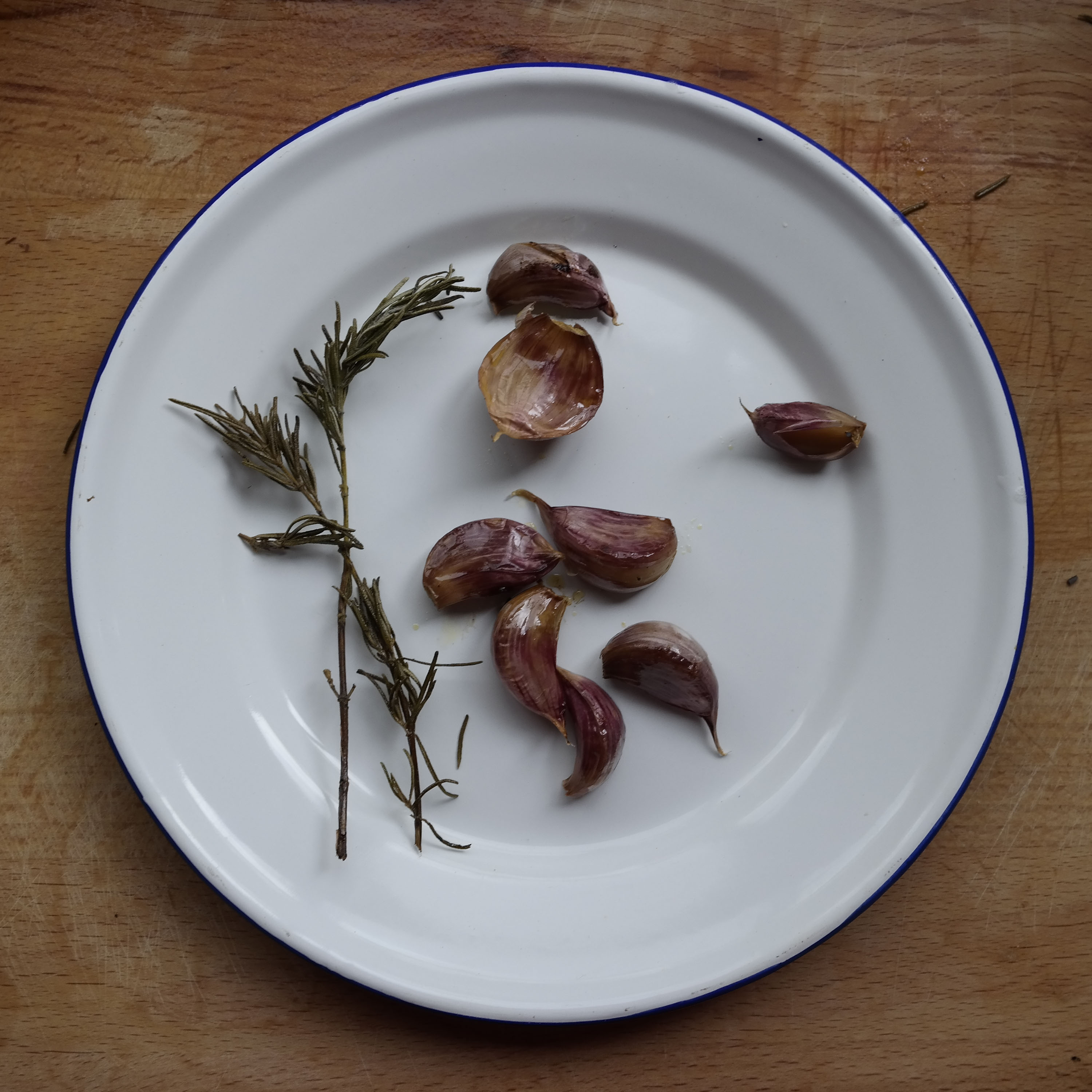
discarded lemon and garlic
Make 2/3 litres of stock and pour over the veg before blending thoroughly in a large pan. If your artichokes are too big to blitz with stick blender you might need to whizz them separately in a food processor! Re-heat and serve.
Roasted Jerusalem artichoke and Cauliflower soup
Enjoy!
My post for Amy’s blog about salad grown in a Pallet Planter can be found here.


Spring has Sprung

You make me feel so young
You make me feel like spring has sprung
Every time I see you grin
I’m such a happy an individual

Mack Gordon “You Make Me Feel So Young”

Spring is the season at the allotment when things start, and need to start, happening. Despite it not quite being March, every visit to the plot brings another shoot or stem emerging from the ground. Some seeds have been sowed, with many more to go, and new life is starting to peep out of the seed trays in the greenhouse.

My life is a little like the plot at the moment. Like the allotment, my emergence out of the dark and malaise of depression and anxiety is showing a few signs of life. As we enter spring I feel that I’m starting to turn a corner. I’m beginning to think about the future and what I might do with it. The allotment has shown me that I can succeed at things, but crucially my break from work has also taught me that I need a life that works for me and all the family if I’m to be happy.


Last week I found a jar of seeds saved from last year. Unfortunately they were a random mix of unknown seeds; but I’ll sow them and see what emerges. In a way I’m in a similar situation to the pot of seeds. Inside I have the potential to do a lot of things, but what will it be and what might stop me finding it? When will the shoots emerge, and what will it grow into, are still questions I ponder on.


The Macro Allotment

In my attempts to become a happier person, I’ve tried to take pleasure in the little things in life; whether it is a one-liner from one of the kids, the splash of water on the deck outside as I write this, or the simple beauty of a tiny narcissus flower. It’s hard to get into this mindset, but when you do, you begin to see the world in a new light.

Going to the allotment on a regular basis means you can appreciate the little details and subtle changes of the crops. I try to include this in the photos I take, but it’s hard to capture the minutiae, especially when using my iPhone for all the photos on the blog. However, I’ve invested in a new clip-on macro lens for the phone; which is enabling me to attempt to show the minute beauty of crops at the allotment, and take pleasure in the smallest of things.


Swiss Chard

Whenever I’m asked by people about what to grow when you take over an allotment, or start a veg bed at home, the answer is always the same. Potatoes and Swiss chard. Potatoes are great, as they do some of the soil improving work for you, not least when you have to dig your harvest in the summer. However, Swiss chard is the real star, it just keeps on giving. We got turned on to chard when we used to get a veg box from the fantastic Barcombe Nurseries. We’d get home from work to find a small box of vegetable and fruit delights; each week a different selection, but nearly always including Swiss chard. It’s just so versatile. It can be used as a spinach alternative, mixed with ricotta to fill cannelloni or ravioli for example; but its earthy, iron-rich flavours are robust enough to be an accompaniment to a piece of meat after only a wilting with some garlic and a dash of lemon juice and olive oil. Its stalks can be chopped and added to curries, or steamed, then made into a cheesy gratin.

I’ve found that Swiss chard is also pretty easy to grow and incredibly hardy, often lasting for over a whole season. Like spinach and beetroot (to which it is related) it has a seed cluster, and each cluster can produce three or four seedlings. I tend to grow mine in modules (a cluster to each section) and then prick out weaker plants, before transplanting out. This seems to allow the plants to establish before setting them in the path of the slugs that prowl my allotment; the plants larger size is defence enough from the potential mollusc attack. Once established the plants grow well, and if picked sparingly from the outer leaves, will give you a harvest for a significant season. The baby leaves are an excellent addition to a mixed salad, and if you sow the ruby or rainbow varieties, add colour too. Indeed, I would suggest rainbow chard is worth sowing for the vibrant colour of the leaves alone.

Last night we used this delicious leaf in a simple chard pilaf to accompany a range of curries which had been in the freezer in small portions.

You will need
400g Swiss chard
200g uncooked rice, pre-soaked for 10 minutes
50ml olive oil
75g chopped spring onions
1 lemon, squeezed
A handful of chopped fresh coriander

Wash the Swiss chard well. Remove the stalks and finely chop, then shred the leaves and set aside to drain. Heat the oil and soften the spring onions before seasoning with salt and a pinch of garam masala.  Add the rice and toss it in the onions for a few minutes, so that it is coated in the spicy oil. Then throw in the chard stalks, leaves, and coriander and cook for a minute or so.  Add 400ml boiling water (or better still stock) and bring to the boil. Cover, reduce the heat to a simmer and cook for about 15-20 minutes or until the rice is just cooked. Allow the pilaf to stand for a few minutes before serving.
 

20140211-113925.jpg

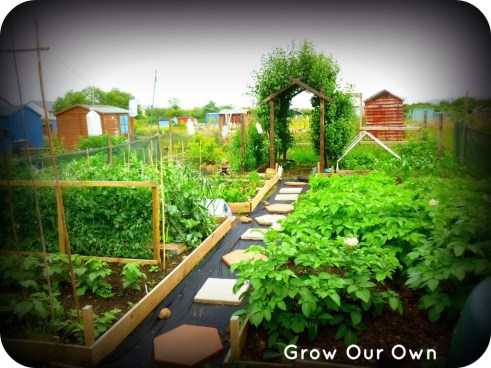
Allotmentherapy – A Guest Post from Grow Our Own

I’m really excited to have a guest post from Northern Ireland based blogger Carrie, author of Grow Our Own. Like me, she finds the allotment can be a mood enhancing place; somewhere which provides reward, happiness and joy. Here’s Carrie’s post.

Allotmentherapy

Hello I’m Carrie from ‘Grow Our Own’ – An Allotment Blog. I tend my plot along with my husband, here in Northern Ireland; it’s very hard work, often frustrating, time consuming and utterly amazing.20140126-201139.jpg

We are moving into our 6th year at this and there is still so much to learn, fun to be had and wonderful harvests to look forward too. My husband is the brains behind the operation but I get a real kick out it too, especially documenting the changes and eating the crops. I have chronic depression and an acute anxiety disorder and have found that being at one with nature and the changing seasons can have a wonderful effect on my mood. It isn’t a panacea at all, don’t get me wrong but anything that helps (and is good for you in so many other ways too) is always worth praising.

The adventure starts on the sofa at this time of year by picking what you want to grow out of the thousands of vegetable and flower options available. Gathering up all your packets of seed and tubers is a powerful expression of hope and optimism. It’s good for the soul and the imagination. A gardener is inherently an optimist you see, we put so much love and time into our soil and our plans for the coming year – you can’t be anything else.

Seedlings are a joy to behold. Once that dried up little speck of a seed comes to life it is rampant and completely addictive to watch as it matures and come to bear fruit. There’s even satisfaction to be found in locating it’s ‘enemies’ (slugs, snails, aphids etc.) and engaging in battle to save those precious crops.

Eating food you have grown yourself, picked ripe, not covered in pesticides and jetlagged is a whole new experience. They have a flavour you have only ever had a hint of before. Plus sharing this bounty with others is also rewarding, be they friends and family or the birds that soon learn that there is goodness is to be found on the ground you tend.20140126-201148.jpg

But really, is there anything better than your own slice of Eden? A place where the plants are a feast for the eye and the stomach. A place that pushes you in all types of weather to spend time in nature. A shed to make a cup of tea, a bench to sit upon and a garden bursting with life…this is happiness that can’t be bought, can’t be bottled but only experienced with wonder in the heart and pure joy in the soul.

Encouraging Beneficial Insects

Having put up a few bird boxes and some bird feeders, I thought I should really try and provide some support for the invertebrates at the plot. After all, many of the insects and other minibeasts on the plot are a secret army of helpers; keeping many pests under control by gobbling them up, and pollinating crops.

Growing some flowering plants will encourage hoverflies and bees, but as it’s early in the year there aren’t too many flowers that bloom in January. So in order to help your plot’s invertebrates, we’ll have to start at home. Everyone needs a comfortable home and minibeasts are no exception. So, given that I had some spare wood off cuts behind the shed I decided to make a bug house to encourage mason bees, lacewing and earwigs to take up residence at the allotment.

A bug box can be any size, so I cut the wood into five sections and used screws to create an open box. For more thorough instructions have a look at this site – which includes step by step photos. Once you have a box, fill it with short pieces of cane (or old sunflower stems as I did), as well as other pieces of old pot and stones. The idea is to create dry and secure places where the invertebrates can take up residence.

New Start? Get An Allotment

I’ve blogged before about the benefits to myself of an allotment. It continues to be a place I can achieve peace and relaxation, as well as have small horticultural successes. It seems that I’m not alone in seeing the mental health benefits in having an allotment. Last month my local allotment association published a press release with the results of a survey they had been carrying out.

92% of plot holders either agreed or strongly agreed that allotments improved their mental health or provided stress relief.

Many people across my city are gaining from the health benefits of spending time on an allotment; whether it be through a sense of purpose and relaxation, or a place of exercise. Given that NHS England estimates the cost of mental illness in England alone at £105 billion a year, allotments seem to be extremely good value.

So, if you’re in need of a new start, a new project, a new outlook on this stressful world; then why not get gardening, get a allotment.

December at Plot 4

It’s getting colder now and most days when I visit the plot after the school run I’m greeted with a delicate frosty blanket on the sage bush near the gate. It’s definitely winter and the log burner in the shed is coming into its own, proving a great place to go and warm up or dry off if the weather deteriorates. Despite this there are many things I want or need to do this month.

The shed itself needs a little more work on it, with a combination of bubble wrap and the leftover insulation from my brother’s extension. The plan is to cut the sheets to size, fitting them between the uprights of the shed. The bubble wrap I’ve got insulating the wall at present will be repurposed in the greenhouse; allowing us to continue to grow throughout the colder months.

There is still a bit of harvesting to be done with the last of the Cime di Rapa, as well as Cavalo Nero and the broccoli to pick. I’ll also be giving the brassicas a bit of a helping hand through winter; removing any yellowing leaves which may harbour disease, as well as firming the soil around the roots to give them a secure base. The winter digging will of course continue, with more manure and last years compost to add to the soil as space becomes available.

Winter is also the time when we should look after the birds that visit the allotment; so I plan to increase the number of feeders, including some for the ground feeders like Robins. I’m also planning to put up a new bird box to encourage nesting next summer. I’ve just got to source some wood which hasn’t been earmarked for the log burner!

Time to Dig

As the first frosts hit the plot, its time to clear away the final signs of a summer of growing. The ever-growing nasturtium have wilted under the frost and the courgette plants have long given up producing their fruits. With the weather dry and bright, if  a little chilly, I’ve taken the opportunity to clear and dig over the big bed at the front of the plot.

20131126-123755.jpg

I always used to hate digging, but recently have found it to be a very therapeutic activity. First of all its a good workout; apparently you can burn 600-700 calories in an hours digging, and even three hours of general gardening burns a similar amount of calories. The active part of having an allotment really helps to clear the head and increase motivation, but I find that the very nature of turning over soil to start again is a useful metaphor for trying to forge a new balance and direction in my life.

I also took the opportunity to add some organic material, manure, to the soil. Although we’ve been improving the soil since taking on the plot, it still benefits from the addition of some well rotted manure to loosen and aerate the clay soil. Hopefully the winter frosts can help to break up the soil and lead to a fertile start to next year.

November at Plot 4

We’re getting a new shed at the allotment; a larger one, with a wood burner. The site of the shed is the present compost area, so I’ve had to respite the bins. This is a good time to empty compost bins, allowing more space for the autumn clear up. I’ll spread the compost on the empty beds, turning it in as we have really heavy soil. The worms and frost should work together over the winter to give a better structure to the soil.

Some of the compost will also be used as a mulch for our dahlias. It tends to be relatively mild in general; so the dahlia tubers don’t need to be lifted, but can be covered in 10cm or so of compost as an insulating blanket. That should keep the dahlias snug through the winter, ready to flourish again next year.

Whereas dahlias could need lifting, I’ve been planting daffodil bulbs and I’ll be planting tulips soon too. We’ve always had a few tulips at the plot, but this year I intend to plant more – so we can have a few cut flowers for the house. I’ll plant some under the apple tree to add some early season colour; I’ll also plant some as part of a corridor of bulbs (lining the main path). The tulip bulbs need to be in the ground before the cold comes, so allowing their roots to establish. They should be planted in a hole roughly three times their height; and if, like our plot, the soil doesn’t have good drainage, they benefit from some grit at the bottom of the hole.

The plot also needs a bit of a tidy, with brambles and trees to prune and wood chip paths to replenish. Still this should give some fuel for a bonfire in a few days time!