Homemade Root Vegetable Crisps

Since my son’s diagnosis as coeliac we’ve had to take a look at everything we eat and see how it can fit in with a gluten free diet. With the sun showing a lot more of itself recently, the prospect of a picnic becomes a real one, and one which usually involves a bag of crisps. We don’t eat many crisps, but they kind of have to be involved in a picnic. The trouble is that many crisps seem to not be gluten free, due to different flavourings and being unable to guarantee that no cross-contamination occurs in the factory. As a result, we have a limited source of commercially available crisps (although PomBears are gluten free and were a favourite anyway). This, and the discovery of a rogue beetroot at the allotment when digging last week, led me to the decision to make our own. I can guarantee no cross-contamination; it’s my kitchen.

Vegetable crisps have been around for a while, probably since the mid-19th century when the potato crisp was also popularised, however they have never been a mass market snack. They are however, delicious. They’re also pretty simple to make.

root vegetables

You will need (for the equivalent of a large bag of crisps)
1 beetroot
1 large carrot
1 large parsnip
Oil for frying (I used rape-seed oil, but any mild flavoured oil is good)
Flaked sea salt

First, make sure the vegetables are clean and free of soil on the outside of the skin (they’re best with the skins left on I think). Using a speed peeler, peel thin slices of the vegetables to form the ‘crisps’. You’ll find that the initial peelings are usually a little too small, but as you get further into the vegetable they will become more of a suitable size. Once you’ve got a pile of shaved vegetables; it’s best to remove some of the moisture by placing them on a paper towel and pressing from above with another piece to absorb any liquid. This helps to give you a crisper crisp.

The next stage is to fry the crisps and to do this you need a saucepan of hot oil. I’ve never been a fan of deep frying things, but if you get the oil to a high temperature you don’t tend to get a greasy result; just a crispy one. So, heat some oil to 150ºC and fry the vegetable slices in batches (it’s probably best to leave the beetroot to last as it does give the oil a rosy hue) until lightly golden and crisp, 2 to 5 minutes per batch. When the crisps are crisp, remove them from the oil with a slotted spoon, allowing excess oil to drain away before placing the chips on a paper towel covered baking tray. Salt the hot crisps immediately and start the next batch of vegetables. Once you’ve fried all the crisps, toss them in a bowl and you’re ready to devour these moreish snacks.

Obviously, this recipe is adaptable. You can use lots of different root vegetables. Celeriac works really well, both as a snack, but also a garnish for soup. Parsnip or Jerusalem artichoke crisps on their own would be an excellent accompaniment to a simply roasted guinea fowl, or a steak. But of course, a bag of these makes a great snack for a picnic.
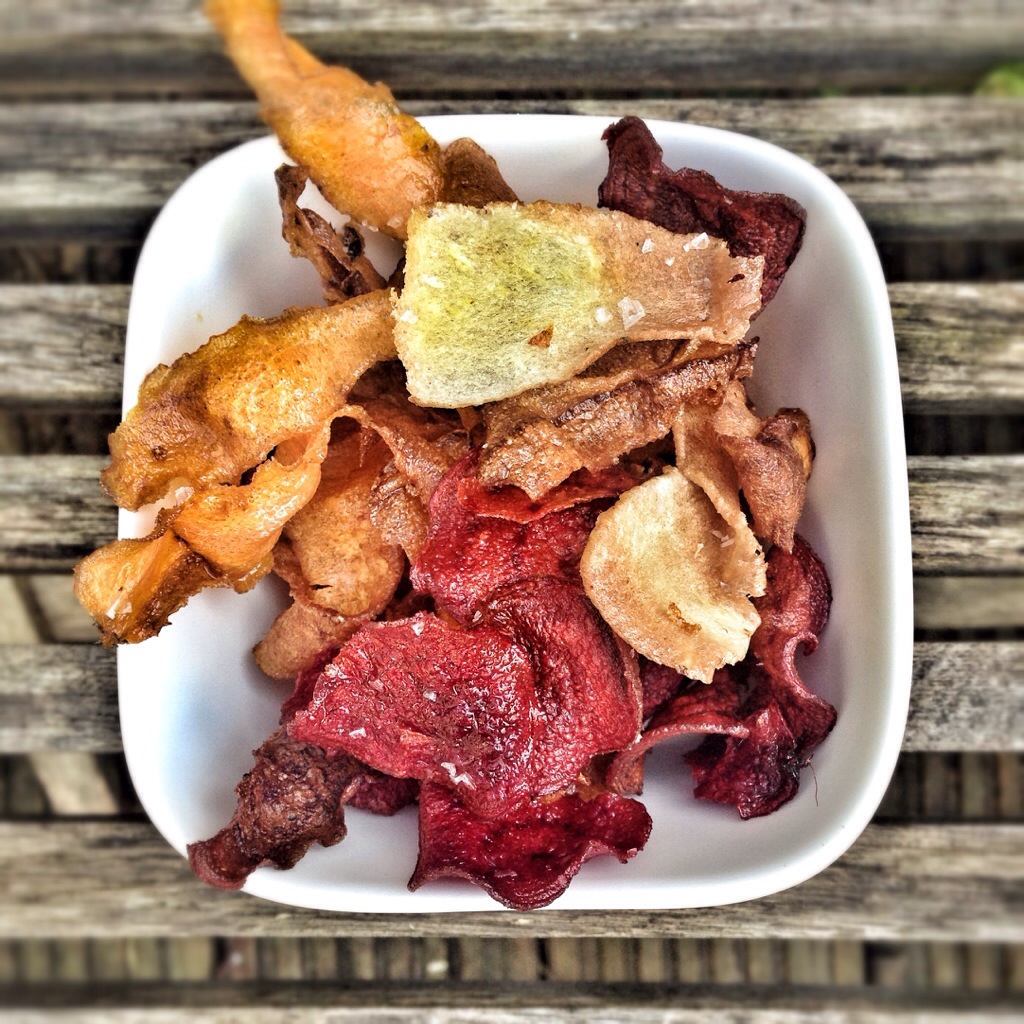

root vegetable crisps


20140411-194544.jpg

The Macro Allotment

Spring has definitely sprung now and the allotment is full of seedlings emerging and buds bursting. The frogs and toads have filled the pond with spawn and birds are busying themselves exploring nest sites and collecting nesting materials.


Peg Plant Labels

As the sown seed trays mount, knowing what is likely to emerge from them becomes increasingly useful. I’ve always used the standard white plastic type, writing on them with a Sharpie and cleaning it off each time I need to change the plant it marks. When clearing out a cupboard recently I found some old wooden clothes pegs. So, I decided to use some of my blackboard paint to convert them into plant markers. I like using natural materials, rather than plastic, whenever possible; the fact that I can move a marker to a different pot easily, or wash off the chalk writing is a bonus.

To make these plant markers is an easy process. Just paint the pegs with blackboard paint (I used a mix of dipping them in the paint and using a paintbrush), allow to dry, then write on them with a chalk pen.


There’s also still time to nominate the blog for Best Food Blog in the MAD parent blogger awards. To do so please go to http://www.the-mads.com/vote/ vote for a Best Blog of your choosing and then vote for Spade Fork Spoon as Best Food Blog. Thank you!

20140312-110850.jpg

Roasted Jerusalem Artichoke and Cauliflower Soup – A Guest Post from @MissAmyPhipps

Recently my friend  of the fabulous Little Button Diaries recommended I check out one of her friends’ blogs. Amy blogs about her life; you’ll find recipes, craft projects, tips on gardening, and design inspiration. Amy and I met the other week and we decided to swap posts and write for each others blogs.

Here is Amy’ guest post. It looks delicious Amy. I’ll be giving it a go with the last of my Jerusalem artichokes.

Roasted Jerusalem Artichoke and Cauliflower Soup
The sun might be shining but let’s not forget it is only march and deceptively chilly in the shade… enough so to enjoy a hearty soup of a lunchtime. Especially when its harvest season for some of the most delicious root veg! I love cooking this recipe because not only is it jam packed with cold fighting ingredients, but yields enough for a dinner for the family or to fridge and last for 3 or 4 lunches. Fresh and creamy but totally vegan and gluten free!

Roasting the vegetables traps in their goodness and gives the most wonderful caramelised flavour. Do not be put off the slightly porridge look of the blended soup for what it lacks in visuals it makes up in abundant flavours!cauliflower and artichokes

You will need:
5/6 medium Jerusalem artichokes
A medium head of cauliflower (or half a giant one like the one pictured!)
1 bulb of garlic
1 red onion
1 white onion
1 lemon
A couple of good sprigs of rosemary
100ml rapeseed oil
2 litres of wheat free vege stock such as Kallo or Marigold
A food processor or good stick blender is essential!

To make the soup…
Pre heat your oven at 180 degrees. Chop the veg into medium sized chunks and muddle together in a large roasting tray. Break up your garlic bulb and throw it in with skins on. Fear not, roasting whole takes the edge of that zingy garlic flavour. Season with salt & pepper then drizzle all over with the rapeseed oil. The lemon really compliments caramel flavours of the roasted veg and livens up the whole recipe.
roasting tray and veg
Roast for an hour turning veg occasionally until edges start to crisp and go brown. Remove from the oven and leave to rest for 15 minutes or so.
roasted veg
Discard lemon pieces and remove the garlic cloves to peel their skins off before placing into your soup pan with the rest of your veg.
discarded lemon and garlic
Make 2/3 litres of stock and pour over the veg before blending thoroughly in a large pan. If your artichokes are too big to blitz with stick blender you might need to whizz them separately in a food processor! Re-heat and serve.
Roasted Jerusalem artichoke and Cauliflower soup
Enjoy!
My post for Amy’s blog about salad grown in a Pallet Planter can be found here.


March at Plot 4

February has been a pretty rough month here on the south coast. It seems its rained for most of the month and the allotment is wetter than ever. Still, the last week of the month has brought glimmers of spring and I’m writing this sat in my light filled kitchen with thoughts of seed sowing and the spring preparations in my head.

We are well and truly into the ‘hungry gap’ and I’ve only been able to harvest a bit of produce from the plot. The Swiss chard continues to be a stalwart and has provided us with many a meal over the last few weeks. The rocket and other salads have also been gracing our plates, recently teamed with a rather delicious tartiflette made by my wife. We still have some Jerusalem artichokes in the ground and they need to be eaten before they begin to sprout and start growing again. However hard you try you can never get all the tubers out of the soil, so you’re guaranteed a crop next year. Many of the artichokes have gone into a beautifully creamy puree to accompany fish or grilled meats.

Hopefully we have had the last of the winter storms and the weather will be warming a little; I’ve rebuilt or reglazed the greenhouse too many times this winter, and the greenhouse is bound to fill up this month as sowing starts with earnest. I’ll be sowing tomatoes in the greenhouse, bought from the fabulous Franchi Seeds (a little more pricey than some seed companies, but the packets are always packed with seeds and they have a great range of varieties so justify the few extra pennies). Like the celeriac of last month, the parsnips need a good length of growing, so I’ll be pre-germinating some seeds this month before sowing in plugs in the greenhouse.

Last month’s rain has meant that many of the jobs I wanted to get completed in February have not been finished. I potted up some strawberry runners at the end of last year and have been gifted some strawberry plants too. So, I need to prepare a new strawberry bed by digging in some manure and compost to give the plants the best start possible. Strawberries are such a good crop to grow, as they cost a bomb in shops, and are pretty simple to grow. Apart from protecting them from the birds later in the year, the only problem is managing to get them home to use in meals, rather than being picked and eaten there and then. Its not just beds for strawberries that need preparation, once the wet soil drains a little I need to dig in compost and manure and prepare the whole plot for the growing season. In particular, I’ll be piling manure onto the squash patch, so when I plant squash out later in the year they will have an abundant source of organic matter to gorge themselves on.

Garden share collective badge

This post is contributing to The Garden Share Collective; an international group of bloggers who share their vegetable patches, container gardens and the herbs they grow on their window sills.

Spring has Sprung

You make me feel so young
You make me feel like spring has sprung
Every time I see you grin
I’m such a happy an individual

Mack Gordon “You Make Me Feel So Young”

Spring is the season at the allotment when things start, and need to start, happening. Despite it not quite being March, every visit to the plot brings another shoot or stem emerging from the ground. Some seeds have been sowed, with many more to go, and new life is starting to peep out of the seed trays in the greenhouse.

My life is a little like the plot at the moment. Like the allotment, my emergence out of the dark and malaise of depression and anxiety is showing a few signs of life. As we enter spring I feel that I’m starting to turn a corner. I’m beginning to think about the future and what I might do with it. The allotment has shown me that I can succeed at things, but crucially my break from work has also taught me that I need a life that works for me and all the family if I’m to be happy.


Last week I found a jar of seeds saved from last year. Unfortunately they were a random mix of unknown seeds; but I’ll sow them and see what emerges. In a way I’m in a similar situation to the pot of seeds. Inside I have the potential to do a lot of things, but what will it be and what might stop me finding it? When will the shoots emerge, and what will it grow into, are still questions I ponder on.


The Macro Allotment

In my attempts to become a happier person, I’ve tried to take pleasure in the little things in life; whether it is a one-liner from one of the kids, the splash of water on the deck outside as I write this, or the simple beauty of a tiny narcissus flower. It’s hard to get into this mindset, but when you do, you begin to see the world in a new light.

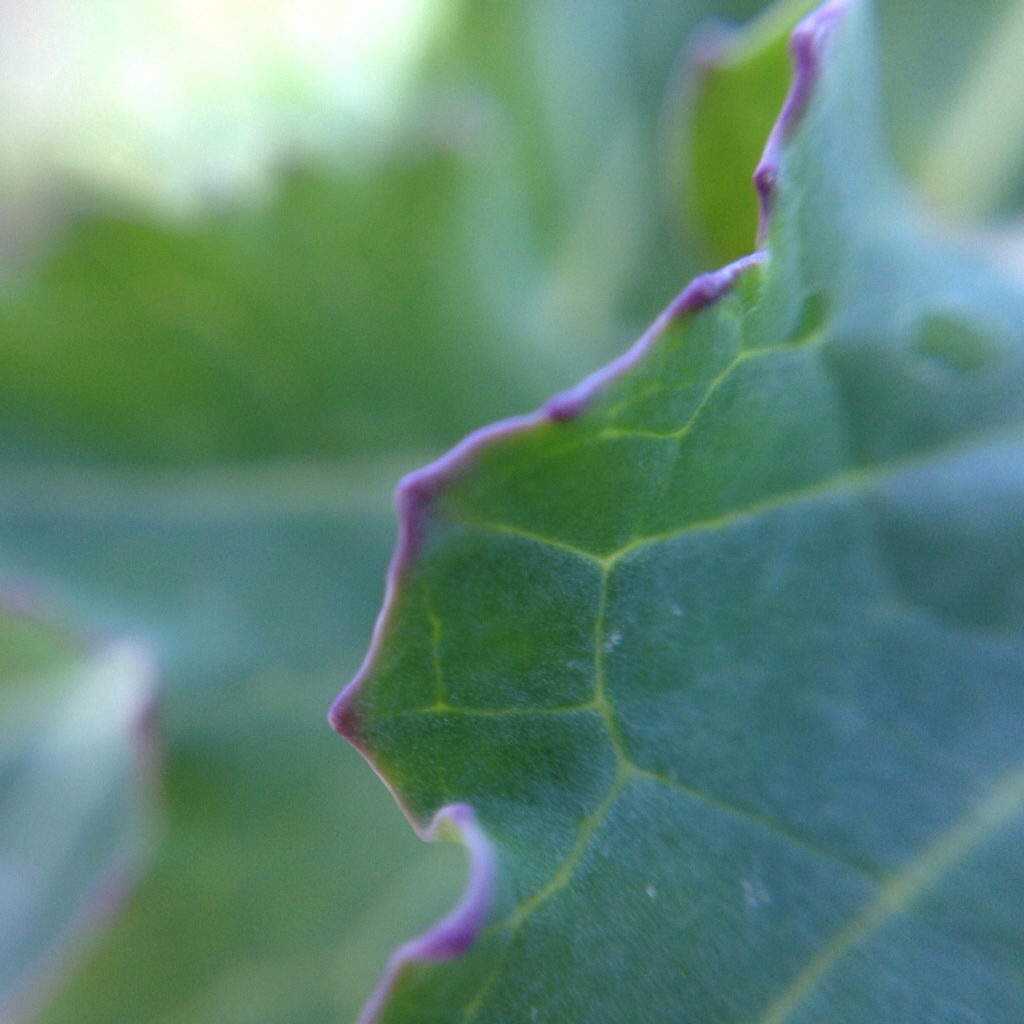
Going to the allotment on a regular basis means you can appreciate the little details and subtle changes of the crops. I try to include this in the photos I take, but it’s hard to capture the minutiae, especially when using my iPhone for all the photos on the blog. However, I’ve invested in a new clip-on macro lens for the phone; which is enabling me to attempt to show the minute beauty of crops at the allotment, and take pleasure in the smallest of things.


Swiss Chard

Whenever I’m asked by people about what to grow when you take over an allotment, or start a veg bed at home, the answer is always the same. Potatoes and Swiss chard. Potatoes are great, as they do some of the soil improving work for you, not least when you have to dig your harvest in the summer. However, Swiss chard is the real star, it just keeps on giving. We got turned on to chard when we used to get a veg box from the fantastic Barcombe Nurseries. We’d get home from work to find a small box of vegetable and fruit delights; each week a different selection, but nearly always including Swiss chard. It’s just so versatile. It can be used as a spinach alternative, mixed with ricotta to fill cannelloni or ravioli for example; but its earthy, iron-rich flavours are robust enough to be an accompaniment to a piece of meat after only a wilting with some garlic and a dash of lemon juice and olive oil. Its stalks can be chopped and added to curries, or steamed, then made into a cheesy gratin.

I’ve found that Swiss chard is also pretty easy to grow and incredibly hardy, often lasting for over a whole season. Like spinach and beetroot (to which it is related) it has a seed cluster, and each cluster can produce three or four seedlings. I tend to grow mine in modules (a cluster to each section) and then prick out weaker plants, before transplanting out. This seems to allow the plants to establish before setting them in the path of the slugs that prowl my allotment; the plants larger size is defence enough from the potential mollusc attack. Once established the plants grow well, and if picked sparingly from the outer leaves, will give you a harvest for a significant season. The baby leaves are an excellent addition to a mixed salad, and if you sow the ruby or rainbow varieties, add colour too. Indeed, I would suggest rainbow chard is worth sowing for the vibrant colour of the leaves alone.

Last night we used this delicious leaf in a simple chard pilaf to accompany a range of curries which had been in the freezer in small portions.

You will need
400g Swiss chard
200g uncooked rice, pre-soaked for 10 minutes
50ml olive oil
75g chopped spring onions
1 lemon, squeezed
A handful of chopped fresh coriander

Wash the Swiss chard well. Remove the stalks and finely chop, then shred the leaves and set aside to drain. Heat the oil and soften the spring onions before seasoning with salt and a pinch of garam masala.  Add the rice and toss it in the onions for a few minutes, so that it is coated in the spicy oil. Then throw in the chard stalks, leaves, and coriander and cook for a minute or so.  Add 400ml boiling water (or better still stock) and bring to the boil. Cover, reduce the heat to a simmer and cook for about 15-20 minutes or until the rice is just cooked. Allow the pilaf to stand for a few minutes before serving.
 

20140211-113925.jpg

Something From Nothing – Newspaper Pots

This time month is the time of year when gardeners and allotmenteers are starting to sow seeds ready for the season ahead. I’ve got loads of pots waiting at the allotment, but my seed trays have seen better days. I always try and spend the smallest amount of money I can at the allotment, so replacing a load of seed modules without having to buy new ones is desirable. A while ago we got a wooden seed pot maker; so armed with that and the newspapers from the weekend I set about creating some seed modules for my early sowings. Obviously using newspaper is great as it is always best to reuse rather than simply recycle. However, its other advantage is that seedlings can just be planted out in their paper modules; the newspaper will breakdown in the soil and allow roots to spread and establish. Its a little time consuming making loads of these, but the satisfaction in making something from a resource which would only be thrown away (well recycled) makes up for the extra effort.

You will need
Newspaper
Pot making mould (or something cylindrical in shape about the size of pot you require)
Compost

Start by cutting newspaper into 8cm strips (larger if cylinder mould being used is bigger, you need enough paper to fold underneath the tube to make the base).Wrap the newspaper strip around the mould and then press down on a hard surface to form a firm base. Once your pot is made, you can fill with compost and sow seeds, or plant out seedlings.

February at Plot 4

The year has started with unusually wet and mild weather for this time of the year. Indeed, yesterday it was announced it has been a record wet January in this part of the country. The plot is really quite damp, with our clay soil almost impossible to walk on, let alone dig, and puddles forming everywhere!

We’ve been still managing to harvest the last of the tenderstem broccoli, often used with penne, tomatoes, anchovies and chilli, in a version of this Cime di Rapa dish. As well as broccoli, we’ve been enjoying cavalo nero, chard and the final few apples. The apples were cooked and topped with a crumble like the one on the Blackberry and Apple Crumble I blogged about in the autumn.

February is the month when I’ll be starting to sow seeds with a vengeance. On the list are some more sweet peas (I started some off a few weeks ago) and celeriac. Celeriac needs a long season of growth, so will benefit from an early start in the greenhouse. I love this root, but have never grown it and am really looking forward to using it later in the year to make remoulades and soups. It’s also time to sow some more salad leaves; started in the greenhouse, but hopefully put out as the weather improves.

This month is one of the last months to get general jobs done at the plot. The tool shed is in need of a tidy and before the rush for seed trays in the Spring they need to be cleaned and organised. I also plan to use this time to finish insulating the shed, which my brother and I started last week. In true allotment style we reused some leftover insulation from my brother’s house extension, and intend to try to complete the job using reclaimed and recycled materials to skin the shed interior and protect the insulation. The final seed purchases will also be made; there are a few varieties in the Franchi Seed catalogue which I fancy giving a go this year.

Garden share collective badge

This post is contributing to The Garden Share Collective; an international group of bloggers who share their vegetable patches, container gardens and the herbs they grow on their window sills.