MAD Blogging Awards

MAD Blog Awards

I’m very proud to have been nominated by someone for the Best Food Blog at The MADS (Mum and Dad blogging awards). Thank you whoever you are; I’m chuffed that anyone reads the blog, but to have someone nominate me for an award is special! If you too want to vote for me, or any one of the amazing blogs out there, you can do so by following the link or clicking on the image above.

Favourite Five Marmalade Recipes

As I have blogged previously this month, I love marmalade and enjoy nothing more at the start of my day than a slice of thick-cut white toast spread with chunky marmalade. However, marmalade is an ingredient that can be used for a range of recipes, lending both sweet and savoury dishes some of its bittersweet brilliance. So here are my five favourite uses of marmalade as an ingredient.

Marmalade cake  – The marmalade gives this cake a lovely moist texture. Grease and line a 20cm cake tin and preheat oven (170°C). Cream butter (175g) and sugar (175g) until the mixture becomes pale and fluffy. Gradually add 3 eggs.  Sift in flour (175g), pinch of salt and 1/2 tsp baking powder and gently fold in.  Add marmalade (3 tbsp.) and milk (2 tbsp.)Spoon mixture into tin and bake for about 50 mins until golden brown and firm. Warm 2 tbsp. of marmalade and brush over the top of the warm cake. Leave to cool completely. You can add icing once the cake is cool.

Marmalade Breakfast Booster Bars – This is a great and adaptable recipe, based on one created by Hugh Fearnley- Whittingstall. I’ve blogged a bonfire version before, but it’s also delicious when the lemon zest is swapped for a few tablespoons of bittersweet marmalade.

Microwave Marmalade Puddings – A steamed pudding is a thing of comfort and we often covert one, only to realise that the time taken for it to be made is just too long to wait. This microwave version is often employed in our house when we can’t make a steamed pudding quick enough. Put 100g of sugar, margarine and self-raising flour in a food processor, along with 2 eggs and 2 tbsp. of  milk. Whizz and then pour into a large microwaveable basin (or individual basins) on top of a good 2 tbsps. of marmalade (or any other topping like syrup). Cook in the microwave for 5 minutes and leave for a further minute or so, before devouring with the aid of custard!

Marmalade Glaze – A really good sharp marmalade makes an easy glaze for meat, especially for pork chops. Brush the glaze on before panfrying.

Marmalade Breakfast Booster Bars – Bread and butter pudding is a classic, and also a good way to finish off a slightly stale loaf. Grease a ovenproof dish with a little butter, then fill with marmalade sandwiches and a sprinkle of sultanas. Mix 400ml of milk with 2 lightly beaten eggs and a tbsp. of sugar. Pour the liquid over the sandwiches and allow it to soak in. Sprinkle a little more sugar over the top and bake for 35 minutes or so at 180°C til golden and crispy.

What ways do you use marmalade in your cooking?

The Macro Allotment

In my attempts to become a happier person, I’ve tried to take pleasure in the little things in life; whether it is a one-liner from one of the kids, the splash of water on the deck outside as I write this, or the simple beauty of a tiny narcissus flower. It’s hard to get into this mindset, but when you do, you begin to see the world in a new light.

Going to the allotment on a regular basis means you can appreciate the little details and subtle changes of the crops. I try to include this in the photos I take, but it’s hard to capture the minutiae, especially when using my iPhone for all the photos on the blog. However, I’ve invested in a new clip-on macro lens for the phone; which is enabling me to attempt to show the minute beauty of crops at the allotment, and take pleasure in the smallest of things.


Swiss Chard

Whenever I’m asked by people about what to grow when you take over an allotment, or start a veg bed at home, the answer is always the same. Potatoes and Swiss chard. Potatoes are great, as they do some of the soil improving work for you, not least when you have to dig your harvest in the summer. However, Swiss chard is the real star, it just keeps on giving. We got turned on to chard when we used to get a veg box from the fantastic Barcombe Nurseries. We’d get home from work to find a small box of vegetable and fruit delights; each week a different selection, but nearly always including Swiss chard. It’s just so versatile. It can be used as a spinach alternative, mixed with ricotta to fill cannelloni or ravioli for example; but its earthy, iron-rich flavours are robust enough to be an accompaniment to a piece of meat after only a wilting with some garlic and a dash of lemon juice and olive oil. Its stalks can be chopped and added to curries, or steamed, then made into a cheesy gratin.

I’ve found that Swiss chard is also pretty easy to grow and incredibly hardy, often lasting for over a whole season. Like spinach and beetroot (to which it is related) it has a seed cluster, and each cluster can produce three or four seedlings. I tend to grow mine in modules (a cluster to each section) and then prick out weaker plants, before transplanting out. This seems to allow the plants to establish before setting them in the path of the slugs that prowl my allotment; the plants larger size is defence enough from the potential mollusc attack. Once established the plants grow well, and if picked sparingly from the outer leaves, will give you a harvest for a significant season. The baby leaves are an excellent addition to a mixed salad, and if you sow the ruby or rainbow varieties, add colour too. Indeed, I would suggest rainbow chard is worth sowing for the vibrant colour of the leaves alone.

Last night we used this delicious leaf in a simple chard pilaf to accompany a range of curries which had been in the freezer in small portions.

You will need
400g Swiss chard
200g uncooked rice, pre-soaked for 10 minutes
50ml olive oil
75g chopped spring onions
1 lemon, squeezed
A handful of chopped fresh coriander

Wash the Swiss chard well. Remove the stalks and finely chop, then shred the leaves and set aside to drain. Heat the oil and soften the spring onions before seasoning with salt and a pinch of garam masala.  Add the rice and toss it in the onions for a few minutes, so that it is coated in the spicy oil. Then throw in the chard stalks, leaves, and coriander and cook for a minute or so.  Add 400ml boiling water (or better still stock) and bring to the boil. Cover, reduce the heat to a simmer and cook for about 15-20 minutes or until the rice is just cooked. Allow the pilaf to stand for a few minutes before serving.
 

20140211-113925.jpg

Something From Nothing – Newspaper Pots

This time month is the time of year when gardeners and allotmenteers are starting to sow seeds ready for the season ahead. I’ve got loads of pots waiting at the allotment, but my seed trays have seen better days. I always try and spend the smallest amount of money I can at the allotment, so replacing a load of seed modules without having to buy new ones is desirable. A while ago we got a wooden seed pot maker; so armed with that and the newspapers from the weekend I set about creating some seed modules for my early sowings. Obviously using newspaper is great as it is always best to reuse rather than simply recycle. However, its other advantage is that seedlings can just be planted out in their paper modules; the newspaper will breakdown in the soil and allow roots to spread and establish. Its a little time consuming making loads of these, but the satisfaction in making something from a resource which would only be thrown away (well recycled) makes up for the extra effort.

You will need
Newspaper
Pot making mould (or something cylindrical in shape about the size of pot you require)
Compost

Start by cutting newspaper into 8cm strips (larger if cylinder mould being used is bigger, you need enough paper to fold underneath the tube to make the base).Wrap the newspaper strip around the mould and then press down on a hard surface to form a firm base. Once your pot is made, you can fill with compost and sow seeds, or plant out seedlings.

Marmalade Memories

Foods can be amazing at recalling memories; the smell of certain ingredients, or the taste of others can take you back to a different time or place. Whenever I have marmalade on crispy thick cut white toast, it takes me into my grandparents’ kitchen and sharing breakfast with my Grandpa. I love the dark and slightly bitter taste of good marmalade, its a real treat in the morning.

You will need (makes 5-6 450ml jars)

1kg Seville Oranges
75ml Lemon Juice
2kg Demerara Sugar

20140202-091847.jpgGive the oranges a good clean and remove the buttons at the top of the fruit, then cut in half. Squeeze out the juice and keep it to one side. I’ve found that the seville oranges need to have some of the pith from inside the skin removed, which I do using a spoon and scraping away the thicker parts. Using a sharp knife, slice the peel, pith and all, into shreds, according to your preference. Put the sliced peel into a bowl with the juice of the oranges and cover with 2.5 litres of water. Leave to soak overnight.marmalde making

Pour the whole mixture into a preserving pan and simmer until the fruit is tender (about 2 hours), before adding the sugar and the lemon juice. Bring to the boil, stirring until the sugar has dissolved. Boil rapidly until setting point is reached, about 20-25 minutes. Take off the heat. Leave to cool for 8-10 minutes to help the chunks to be distributed evenly. Pour into warm, sterilised jars and seal immediately.

Over the years I have eaten three-fruit, fine-shred, lime, even ginger infused marmalade; but chunky classic marmalade has always taken me back to my Grandpa’s kitchen. What are your marmalade memories?

February at Plot 4

The year has started with unusually wet and mild weather for this time of the year. Indeed, yesterday it was announced it has been a record wet January in this part of the country. The plot is really quite damp, with our clay soil almost impossible to walk on, let alone dig, and puddles forming everywhere!

We’ve been still managing to harvest the last of the tenderstem broccoli, often used with penne, tomatoes, anchovies and chilli, in a version of this Cime di Rapa dish. As well as broccoli, we’ve been enjoying cavalo nero, chard and the final few apples. The apples were cooked and topped with a crumble like the one on the Blackberry and Apple Crumble I blogged about in the autumn.

February is the month when I’ll be starting to sow seeds with a vengeance. On the list are some more sweet peas (I started some off a few weeks ago) and celeriac. Celeriac needs a long season of growth, so will benefit from an early start in the greenhouse. I love this root, but have never grown it and am really looking forward to using it later in the year to make remoulades and soups. It’s also time to sow some more salad leaves; started in the greenhouse, but hopefully put out as the weather improves.

This month is one of the last months to get general jobs done at the plot. The tool shed is in need of a tidy and before the rush for seed trays in the Spring they need to be cleaned and organised. I also plan to use this time to finish insulating the shed, which my brother and I started last week. In true allotment style we reused some leftover insulation from my brother’s house extension, and intend to try to complete the job using reclaimed and recycled materials to skin the shed interior and protect the insulation. The final seed purchases will also be made; there are a few varieties in the Franchi Seed catalogue which I fancy giving a go this year.

Garden share collective badge

This post is contributing to The Garden Share Collective; an international group of bloggers who share their vegetable patches, container gardens and the herbs they grow on their window sills.

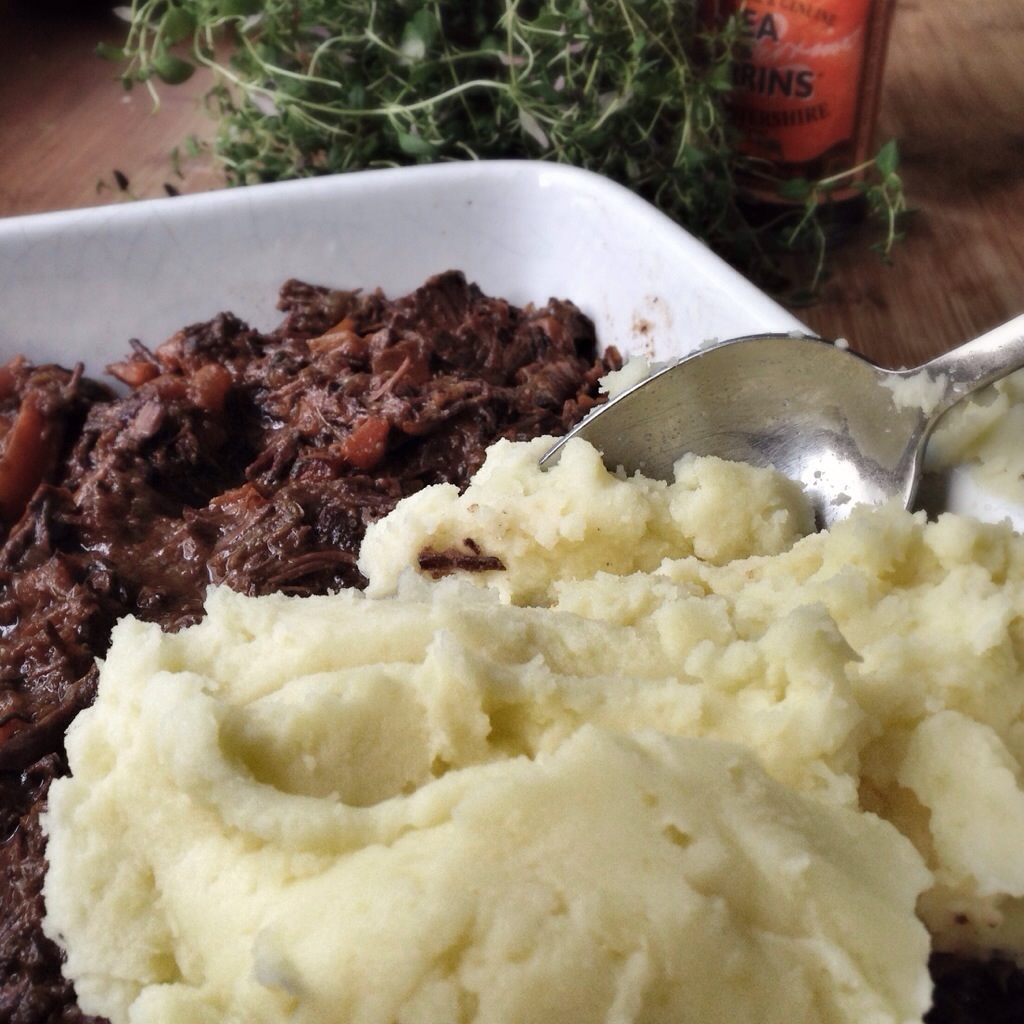
Ox cheek cottage pie

This recipe came from an idea in the Waitrose Kitchen magazine and the discovery of half a kilo of ox cheeks in the discount section of my local supermarket (£1.78 by the way). I’ve started to look on these shelves on a regular basis. Not necessarily out of necessity, but more out of a desire not to see waste and if I can save money then all the better.

If you have the time (close on four hours), cuts like ox cheek, oxtail and breast of lamb are delicious, frugal and very comforting. The combination of the meat with vegetables from the plot made this dish easily stretch to feed the family with some leftover.

Ox Cheek Cottage Pie

You will need

500g Ox Cheeks
1 finely chopped onion
Stick of celery finely chopped
1 finely chopped leek
1 finely chopped carrot
Small bunch of thyme
1 bay leaf
500g potatoes
Glass of red wine
Dash of Worcestershire sauce
Litre of beef stock
Salt and pepper to season
Grated cheese

Start by trimming any large pieces of fat or sinew from the meat and cutting into large chunks, before tossing in seasoned flour. Brown the meat in a little oil and remove from the pan with a slotted spoon. Add the onions, leeks, carrot and celery to the pan and gently cook until soft and the onion is translucent. When the vegetables have softened, add the thyme and the bay leaf, then pour in the wine and allow the alcohol to boil off. Return the browned ox cheeks to the pan and pour in the stock and a dash of Worcestershire sauce. Bring the liquid to the boil before placing in a preheated oven (160°C) for three hours. Whilst the meat is cooking peel, boil and mash the potatoes.

After three hours the meat should be super tender and you can pull it apart with a couple of forks. I like to keep a few small pieces, so there is a variety of textures within the meat mix. Construct the cottage pie by putting the meat mix into an ovenproof dish and then topping with mash. Leave some texture on tip, as this helps to get a crispy crust to the mash, and grate a little cheddar or similar cheese over the mash. Place in an oven at (180°C) for 30 minutes, until the top of the mash is browned, then serve with wilted greens (something like the iron rich Cavolo Nero I grow at the plot).

Ox cheek cottage pie


Allotmentherapy – A Guest Post from Grow Our Own

I’m really excited to have a guest post from Northern Ireland based blogger Carrie, author of Grow Our Own. Like me, she finds the allotment can be a mood enhancing place; somewhere which provides reward, happiness and joy. Here’s Carrie’s post.

Allotmentherapy

Hello I’m Carrie from ‘Grow Our Own’ – An Allotment Blog. I tend my plot along with my husband, here in Northern Ireland; it’s very hard work, often frustrating, time consuming and utterly amazing.20140126-201139.jpg

We are moving into our 6th year at this and there is still so much to learn, fun to be had and wonderful harvests to look forward too. My husband is the brains behind the operation but I get a real kick out it too, especially documenting the changes and eating the crops. I have chronic depression and an acute anxiety disorder and have found that being at one with nature and the changing seasons can have a wonderful effect on my mood. It isn’t a panacea at all, don’t get me wrong but anything that helps (and is good for you in so many other ways too) is always worth praising.

The adventure starts on the sofa at this time of year by picking what you want to grow out of the thousands of vegetable and flower options available. Gathering up all your packets of seed and tubers is a powerful expression of hope and optimism. It’s good for the soul and the imagination. A gardener is inherently an optimist you see, we put so much love and time into our soil and our plans for the coming year – you can’t be anything else.

Seedlings are a joy to behold. Once that dried up little speck of a seed comes to life it is rampant and completely addictive to watch as it matures and come to bear fruit. There’s even satisfaction to be found in locating it’s ‘enemies’ (slugs, snails, aphids etc.) and engaging in battle to save those precious crops.

Eating food you have grown yourself, picked ripe, not covered in pesticides and jetlagged is a whole new experience. They have a flavour you have only ever had a hint of before. Plus sharing this bounty with others is also rewarding, be they friends and family or the birds that soon learn that there is goodness is to be found on the ground you tend.20140126-201148.jpg
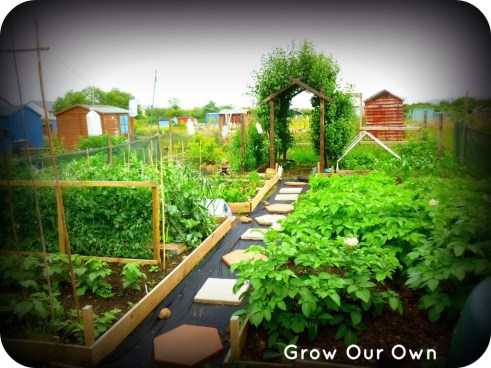
But really, is there anything better than your own slice of Eden? A place where the plants are a feast for the eye and the stomach. A place that pushes you in all types of weather to spend time in nature. A shed to make a cup of tea, a bench to sit upon and a garden bursting with life…this is happiness that can’t be bought, can’t be bottled but only experienced with wonder in the heart and pure joy in the soul.

Encouraging Beneficial Insects

Having put up a few bird boxes and some bird feeders, I thought I should really try and provide some support for the invertebrates at the plot. After all, many of the insects and other minibeasts on the plot are a secret army of helpers; keeping many pests under control by gobbling them up, and pollinating crops.

Growing some flowering plants will encourage hoverflies and bees, but as it’s early in the year there aren’t too many flowers that bloom in January. So in order to help your plot’s invertebrates, we’ll have to start at home. Everyone needs a comfortable home and minibeasts are no exception. So, given that I had some spare wood off cuts behind the shed I decided to make a bug house to encourage mason bees, lacewing and earwigs to take up residence at the allotment.

A bug box can be any size, so I cut the wood into five sections and used screws to create an open box. For more thorough instructions have a look at this site – which includes step by step photos. Once you have a box, fill it with short pieces of cane (or old sunflower stems as I did), as well as other pieces of old pot and stones. The idea is to create dry and secure places where the invertebrates can take up residence.