Time for (Mint) Tea

In out house we are not aversed to a cup of tea. In fact we drink a load of it throughout a typical day. Whilst I really enjoy a fine cup of Earl Grey (never with milk mind you), I like the idea of growing my own tea. Not blessed with a Himalayan climate here on the south coast, I’m not sure if it’s even possible (I know that there is a commercial tea plantation in Cornwall). So, I’ve decided to embrace the herbal tea and have turned excess spring mint growth into a warm, yet refreshing brew. It turns out that mint tea made with mint leaves (not from a bag) is not only easily made, but also infinitely more refreshing and clean tasting. It tastes so healthy that I had to find out what benefits it could be bringing me and it transpires it has some real health benefiting properties. As well as the obvious plus of being caffeine free, mint tea has long been recognised as aiding digestion, relieving stress and even helping with nausea. What’s more it’s the perfect drink to make at the allotment on a spring day.
mint tea
You will need
A cups worth of just boiled water
4 or 5 sprigs of mint (take the new growth as it’s the freshest)
Kettle or teapot

Once your water is boiled, place the mint leaves into your teapot and pour the water over the mint. Leave it to steep for 5 minutes or so before pouring into your cup to drink. I used a natty camping kettle with a strainer built in, but anything which allows you to filter the liquid would be fine. Pop a couple of mint leaves in your cup and sit back and enjoy a refreshing cuppa.

Mint tea and kettle

Torta Pasqualina – A Pie for Easter

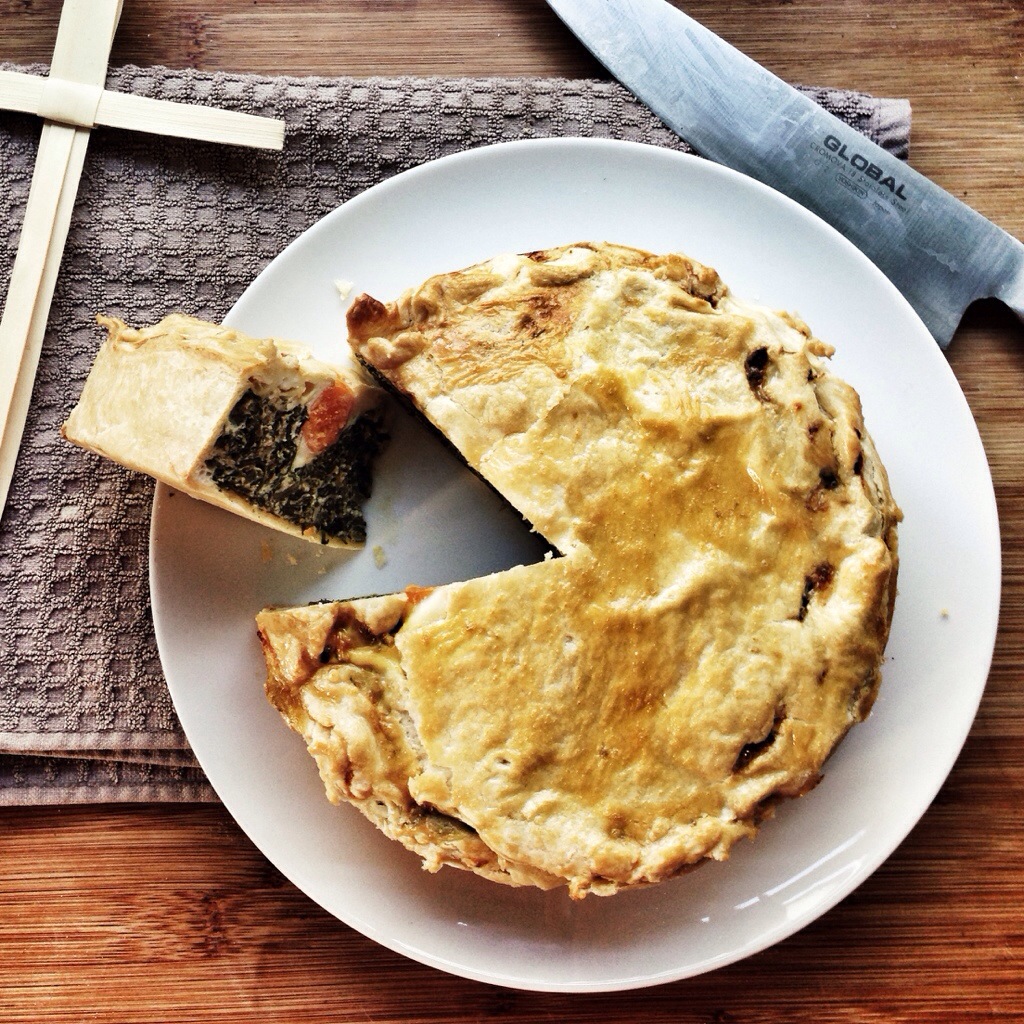
Swiss chard is one of the heroes of my plot, and I’ve blogged about my love of it before. Its vibrancy always makes a visit to the plot a joy, but recently its been joined by many green shoots and leaves emerging all over the plot. Spring is such a great season and the prospect of new life and a season of growing ahead is an uplifting one. Although much is growing at the allotment, there is not a vast amount able to be harvested; and with Easter coming up I was looking for a dish which could combine some allotment ingredients and celebrate Easter at the same time. Cue the arrival of the Guardian the other day and Yotam Ottolenghi’s recipe for a Torta Pasqualina. It seems the Italians also have a need for an Easter dish which uses seasonal vegetables. The combination of chard and ricotta is always a good one, and having discovered Genius Gluten Free Puff Pastry recently its a dish I can make for the whole family. Here’s my recipe, loosely based on Ottolenghi’s.

Torta pasqualina

You will need (makes enough for 8)

2 tbsp olive oil
1 small onion, peeled and finely chopped
1kg Swiss chard (we have the Rainbow variety which adds great colour to the dish), stalks stripped and finely chopped, leaves shredded
2 sticks celery, finely sliced
Handful of parsley leaves, finely chopped
Small handful of new fennel tops, finely chopped
½ tsp ground mace
¼ tsp grated nutmeg
250g ricotta
50g parmesan
9 eggs
Salt and black pepper
500g Genius Gluten-free puff pastry
Gluten-free plain flour, for dusting

Start by sweating the onion for a few minutes until it is softened, then add the chopped chard stalks and celery. Continue to cook for a few minutes, before adding the leaves and allowing them to wilt. Take the pan off the heat, cool, then place the mix into a tea towel and squeeze out any liquid. The dryer the mix, the better it will hold its form later. Add the cheese, herbs, spices and 3 eggs to the chard mix and mix thoroughly (seasoning with a little salt and pepper as needed).making a torte pasqualina

Roll out the 2/3 of the pastry and use it to line a 20cm loose bottom cake tin. Place the chard mixture into the pastry case and make 5 indentations, breaking an egg into each, before rolling out the remaining pastry and making a lid for the pie. Trim the edges and then crimp them to provide a secure seal. Brush with  beaten egg and prick a few holes in the pastry, before placing in a preheated oven (180°C) for 45 minutes, until golden on top. Leave to cool and serve.

torta pasqualina


Favourite Five Egg Recipes

favorite five

It’s Easter in a few weeks and I couldn’t let it go past without a post about eggs. Not the chocolate variety which have been over-populating the shelves of supermarkets since January, but the real ones. If our allotments allowed chickens, then I’d have chickens because eggs are one of nature’s best products. They are so versatile; being useful as a raising agent in cakes, giving pastry a sheen, enriching dough and that’s before I mention egg as eggs. We eat a lot of eggs in this country; the largest egg retailer in the UK., Tesco, sell around 1.3 billion eggs every year. Apparently we are enjoying a period of relative low prices for eggs (although not as low as during the days of battery farming); in the 1950s a dozen eggs cost the equivalent of £7 today, whereas a dozen free-range in my local supermarket is £2.90. So, eggs offer a budget helping ingredient for us all. Here are my favourite five uses of the humble egg. Some use its pour to give rise in foods, and some just celebrate the egg.

Frittata  – This is one of my favourite simple summer lunches, and is delicious hot or cold. Take your eggs (allow 2 per person) and beat them, adding salt, pepper, grated parmesan and any other ingredients you want. I tend to use a mixture of chopped fresh herbs, perhaps some cold sliced potatoes, or some green beans (whatever the allotment has to offer). Beat once more. Gently heat a little oil in a frying pan and pour in the egg mixture. Use a spatula to move the mixture away from the sides of the pan, then allow to cook for (covered) for a few minutes until the egg is set, before turning the frittata and cooking the top side for a few minutes. Remove from the pan when slightly golden, slice and eat (or wait until cold and devour on a picnic).frittata and saladOmelette Arnold Bennett – A classic, and a good one. Start by poaching some smoked haddock in milk. Once just cooked, remove the fish and use the milk to make a white sauce. Fold the flaked haddock into the sauce with some chopped parsley. Make an omelette your usual way, then top with the fish and sauce. Sprinkle with some parmesan, then grill until golden brown. Makes a fantastic light lunch.

Pancakes – Adapted from a Jamie Oliver recipe to fit into my son’s gluten-free diet, these are a frequent weekend breakfast. Separate 3 eggs, whisking the whites to stiff peaks. Add 115g gluten-free flour, 1tsp. gluten-free baking powder and 130ml milk to the yolks and mix to form thick batter. Fold the eggs into the batter. Heat non-stick pan. Ladle some batter into a pan and fry for a couple of minutes until it starts to look golden, flip the pancake over and continue frying until both sides are golden. We like to serve with sliced banana and maple syrup drizzled on top.

Scotch Egg – The scotch egg is the perfect picnic food. Claimed to be invented by Fortnum & Mason in 1738 to provide stagecoach passengers with a portable snack, they team sausage meat with a hardboiled egg and a crispy crust. Homemade scotch eggs are so much better than shop bought, and are pretty easy to make. Cook your eggs your usual method for a hard boiled egg (I like to slightly undercook them to get a slightly soft yolk inside), then cool and peel. For two scotch eggs you will need a three good sausages. Remove the meat from the skins and season a little more, adding some ground fennel seed is always a good idea. Using a wet hand divide the sausage meat and shape around the egg. If you have time, chill the wrapped eggs in the fridge for a few minutes. Dust the eggs in flour, then roll in egg and cover in breadcrumbs, before frying for 4-5 minutes until golden and crisp. Remove from oil with slotted spoon and place on kitchen towel to absorb excess oil. Eat; or pop in your picnic basket.scotch egg and salad

Goat’s Cheese & Chive Soufflé – Soufflé’s have a reputation as being tricky, but this recipe is easy and pretty reliable. Prepare ramekins by buttering them and placing a tube of greased parchment in each to act as a collar for the soufflé. Start by infusing 150ml of warm milk with a bay leaf, an onion and a few sprigs of thyme. Make a roux and add the strained infused milk slowly, stirring until it makes a smooth thick paste. Remove from the heat and add 50g diced goats cheese. Add two egg yolks to the mix, allow to cool a little, then mix a further 50g cheese and a few finely chopped chives into the sauce. Whisk the egg whites until stiff. Gently fold the egg whites into the cheese mix. Dust 2 greased ramekins with parmesan, then share out the mix between them. Bake on a preheated baking tray (220°C) in the oven for 23-25 minutes or until golden-brown and risen.

What ways do you use eggs in your cooking?

Little Swiss Chard and Stilton Tarts

I love Swiss chard. There I’ve said it. It has to be my “go-to veg” when sowing at the allotment, if there is a space it’s filled with chard.  As a plant, it’s hardy and forgiving, and just keeps on going. Added to this, it has a beautiful form and, if you sow rainbow chard as I do, the colours are so vibrant. I remember being blown away by the chard at the Eden Project; they’d got it growing in rows like a bedding plant, and it was so beautiful. Swiss chard is also a great vegetable to eat; we just don’t eat enough of it in this country. In Italy, its appreciated more and both the leaves and the stalks are cooked extensively.

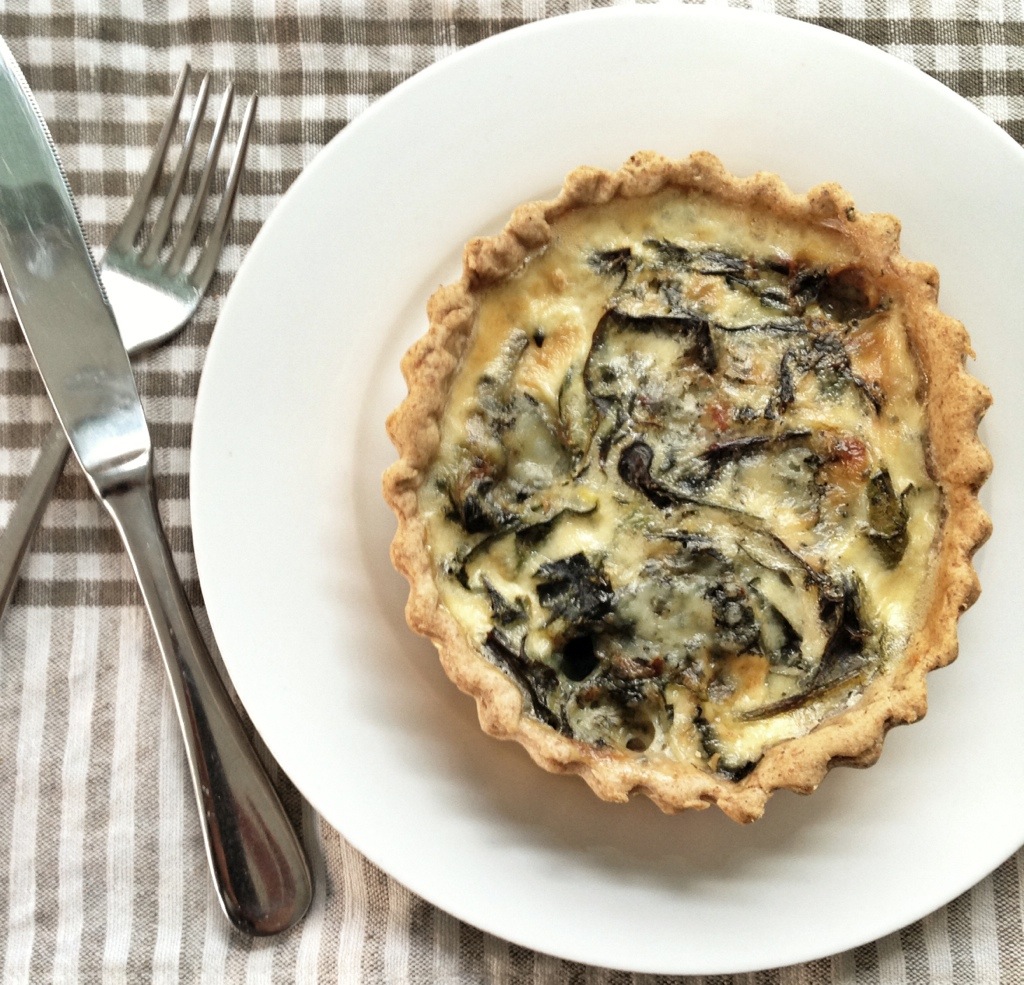
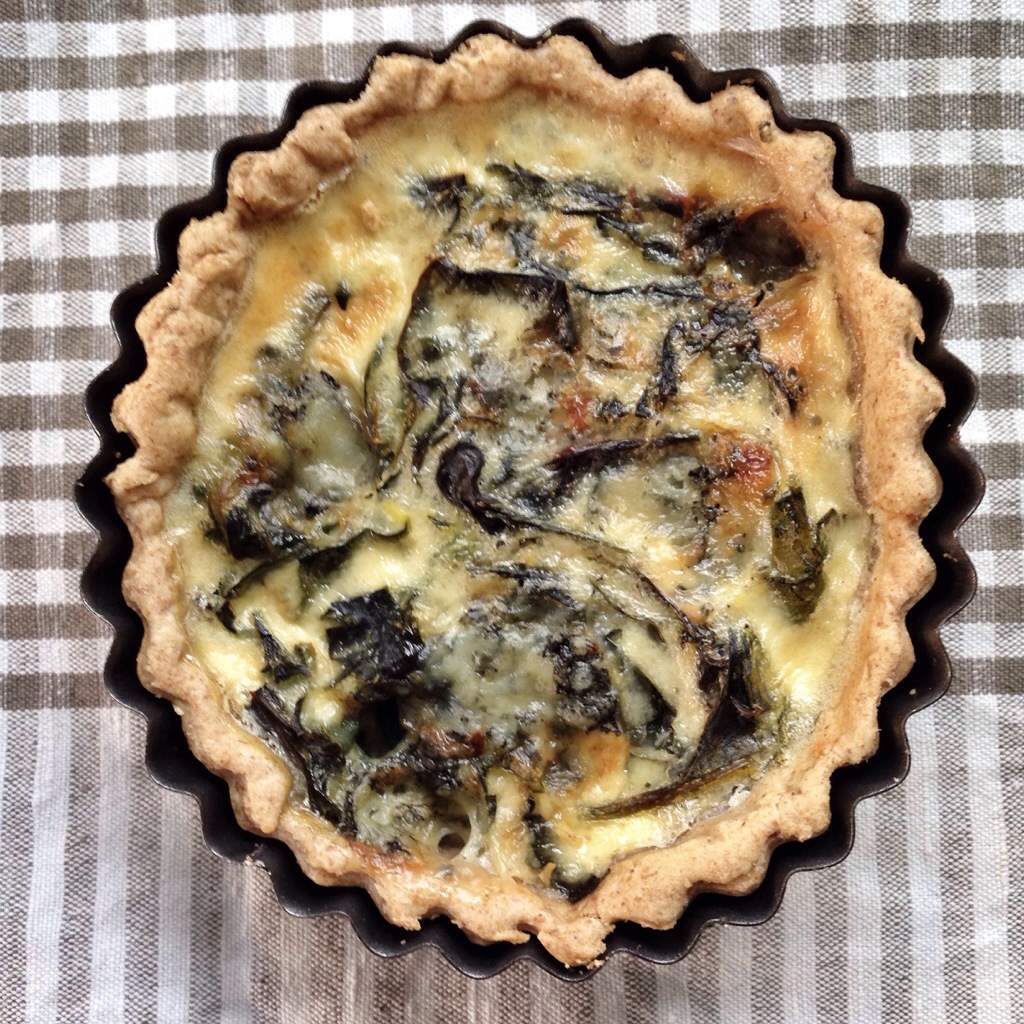
With a limited amount to harvest at the plot, Swiss chard has appeared regularly on the table (often in the form of a chard pilaf). The other day though we had some stilton leftover from something, so I combined the two ingredients in a little tart. Blue cheese has a natural affinity with chard; the iron rich leaves complimenting the twang of the cheese. Combined with the creamy blanket of the egg custard, it makes a delicious tart.

20140328-115017.jpg

You will need (makes 4 small tarts)
250g Swiss chard, washed and stems stripped from the leaves
150g Stilton (or any other strong blue cheese) chopped into small dice
2 eggs
2 egg yolks
350ml double cream
salt and pepper

For the shortcrust pastry
250g wholemeal flour
50g walnuts
125g unsalted butter
A pinch of salt
1 egg yolk
30ml (approximately) milk

Start by making the pastry (it needs time in the fridge to rest before being rolled out). Put the walnuts in a food processor and whizz until a fine powder. Add the flour, salt and butter and pulse until the mixture resembles breadcrumbs. Add the egg yolk, then (with the food processor going) slowly pour in the milk until the dough starts to come together. Remove from the bowl and knead a little before wrapping in cling-film and chilling for at least half an hour.

Roll out the pastry on a floured surface; you want it pretty thin to help get a crisp finish. Use pastry to line four 10cm deep tart cases, line with greaseproof paper and baking beans, and place in a preheated oven at 170°C. Blind bake for 15 minutes. Take out of the oven, remove the beans and paper, and lightly prick the base; before returning to the oven for a few more minutes until the base is dry but not too coloured. Increase the oven temperature to 180°C.

Blanch the chard in boiling water, drain, chop lightly and leave to one side to cool a little. Once cool, divide the chard between the four tart cases, topping each with a quarter of the cheese. Put the eggs, egg yolks, cream and salt and pepper in a jug and beat until smooth. Pour the custard over the filling of the tarts and bake in an oven for half an hour, or until they are slightly browned on top, but still have a slight wobble to them. Remove from the oven and serve warm (or indeed cold if you can wait that long).

20140328-115009.jpg

20140328-135658.jpg


Homemade Root Vegetable Crisps

Since my son’s diagnosis as coeliac we’ve had to take a look at everything we eat and see how it can fit in with a gluten free diet. With the sun showing a lot more of itself recently, the prospect of a picnic becomes a real one, and one which usually involves a bag of crisps. We don’t eat many crisps, but they kind of have to be involved in a picnic. The trouble is that many crisps seem to not be gluten free, due to different flavourings and being unable to guarantee that no cross-contamination occurs in the factory. As a result, we have a limited source of commercially available crisps (although PomBears are gluten free and were a favourite anyway). This, and the discovery of a rogue beetroot at the allotment when digging last week, led me to the decision to make our own. I can guarantee no cross-contamination; it’s my kitchen.

Vegetable crisps have been around for a while, probably since the mid-19th century when the potato crisp was also popularised, however they have never been a mass market snack. They are however, delicious. They’re also pretty simple to make.

root vegetables

You will need (for the equivalent of a large bag of crisps)
1 beetroot
1 large carrot
1 large parsnip
Oil for frying (I used rape-seed oil, but any mild flavoured oil is good)
Flaked sea salt

First, make sure the vegetables are clean and free of soil on the outside of the skin (they’re best with the skins left on I think). Using a speed peeler, peel thin slices of the vegetables to form the ‘crisps’. You’ll find that the initial peelings are usually a little too small, but as you get further into the vegetable they will become more of a suitable size. Once you’ve got a pile of shaved vegetables; it’s best to remove some of the moisture by placing them on a paper towel and pressing from above with another piece to absorb any liquid. This helps to give you a crisper crisp.

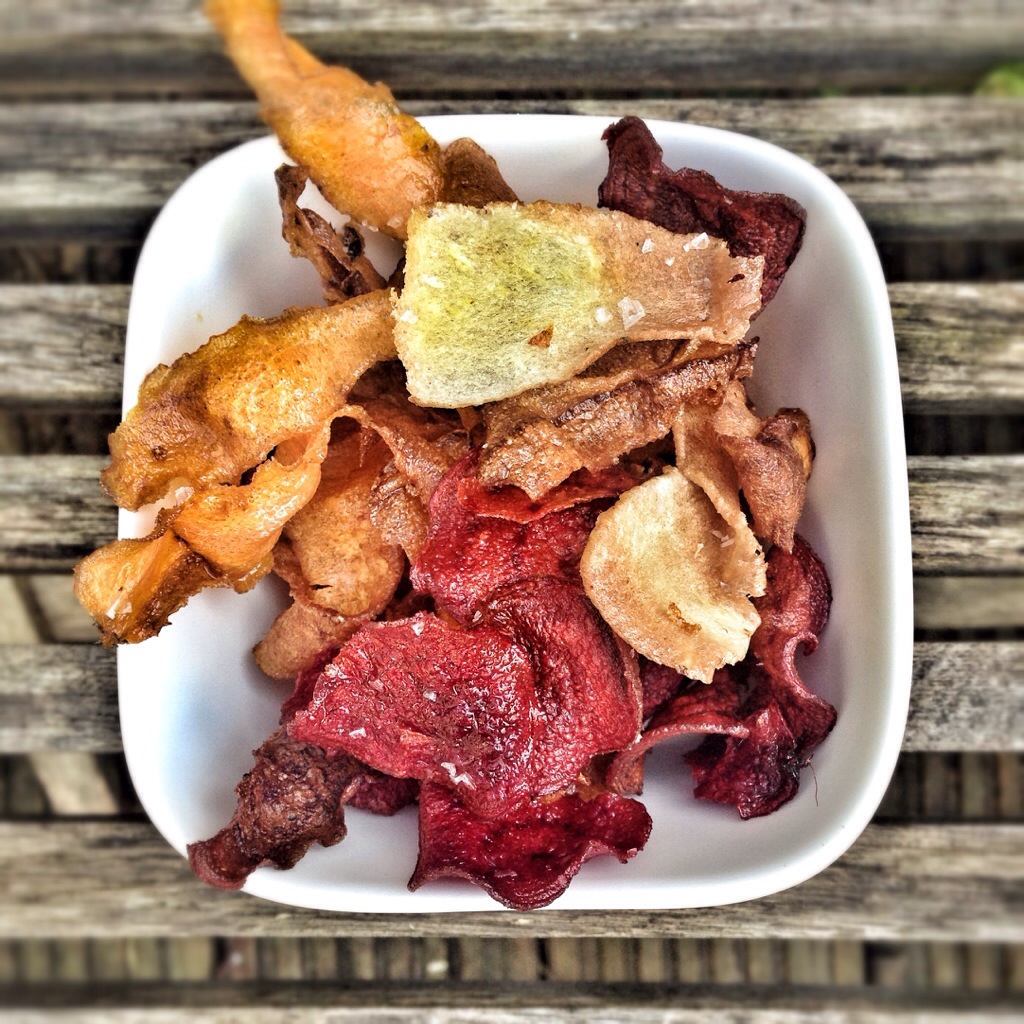
The next stage is to fry the crisps and to do this you need a saucepan of hot oil. I’ve never been a fan of deep frying things, but if you get the oil to a high temperature you don’t tend to get a greasy result; just a crispy one. So, heat some oil to 150ºC and fry the vegetable slices in batches (it’s probably best to leave the beetroot to last as it does give the oil a rosy hue) until lightly golden and crisp, 2 to 5 minutes per batch. When the crisps are crisp, remove them from the oil with a slotted spoon, allowing excess oil to drain away before placing the chips on a paper towel covered baking tray. Salt the hot crisps immediately and start the next batch of vegetables. Once you’ve fried all the crisps, toss them in a bowl and you’re ready to devour these moreish snacks.

Obviously, this recipe is adaptable. You can use lots of different root vegetables. Celeriac works really well, both as a snack, but also a garnish for soup. Parsnip or Jerusalem artichoke crisps on their own would be an excellent accompaniment to a simply roasted guinea fowl, or a steak. But of course, a bag of these makes a great snack for a picnic.

root vegetable crisps


20140411-194544.jpg

Favourite Five Mustard Recipes

Spadeforkspoon Favourite FiveMustard is a great ingredient offering piquancy to many a dish. It is a member of the Brassica family of plants which has tiny round edible seeds as well as tasty leaves. Its English name, mustard, comes from a contraction of the Latin mustum ardens meaning burning must. This refers to the spicy heat of the crushed mustard seeds and the French practice of mixing the ground seeds with must, the young, unfermented juice of wine grapes. Although mustard was considered a medicinal plant initially, it has become a staple of many food cultures. Prepared mustard dates back thousands of years to the early Romans, who used to grind mustard seeds and combine them with wine to form a paste not much different from the prepared mustards we have today. It’s a store cupboard essential and here are my favourite five uses of mustard.

Mustard Soup  – This is a delicious soup which I first tasted in Amsterdam. It combines the piquancy and texture of wholegrain mustard with a silky smooth creme fraiche based liquor. Simple to make and a great winter warmer.

Cheese and Mustard Scones – Cheese scones are one of life’s little pleasures; especially so when served warm and the butter melted slightly on top. The addition of a little grain mustard really brings out the cheesiness, and gives them a slightly more sophisticated flavour. My son has recently been diagnosed as coeliac, so this recipe is for gluten free scones, but the addition of mustard to your usual cheese scone recipe would work. Combine 275g gf plain flour, 50g ground almonds, 3tsp baking powder, 2 tsp xanthum gum and 1 tsp salt in bowl and rub 100g butter into the dry mix to make breadcrumbs. Add 100g of whatever cheese you have around (generally cheddar and Parmesan in our case). Combine 2 eggs with a tbsp wholegrain mustard and 125ml yoghurt. Pour this into breadcrumb mix and bring the ingredients together with a fork. Turn the dough onto a floured surface and flatten to 3cm thick, before cutting out into scone shapes. Transfer onto a baking sheet, brush the tops with a little milk and grate a little more cheese on top. Cook for 10 minutes at 220 °C. Leave to cool slightly before eating.

Piccalilli – This has been my food revelation of the year. For years I’ve seen the yellow pots of Piccalilli on sale and thought they looked over processed and not too tempting. Then early in 2013 I had a dish in Bridport which had a delicious Piccalilli accompanying pig’s head croquettes. It just worked so well. So, when I had a glut of veg at the plot, I made some of my own and it’s been in constant use ever since. As well as vegetables from the plot, it uses a combination of English mustard powder and mustard seeds to make a simple punchy preserve.

Mustard mash – A simple use of wholegrain mustard to give the humble mash a bit of a twist. Boil, drain and mash your potatoes, before adding a knob of butter and a spoonful of wholegrain mustard. It goes brilliantly with sausages, but would work with other meats too.

Mustard and Honey Dressing – This is our ‘go-to’ dressing. Throughout most of the year we have a jar of this in the fridge. It’s speedy to make, lasts a few days, and really compliments a range of salad leaves. To make, just add the following to a jar with a screw-top lid: 3tbsp olive oil, 1tbsp lemon juice, 1 tsp Dijon mustard, 1/2 clove of garlic crushed, 1/2 tbsp honey, pinch of salt and sugar and a few twists of black pepper. Cap and shake vigorously to emulsify. It can be easily upsized for the summer months, when there isn’t a day that goes by without salad featuring on our plates.

mustard dressing
What ways do you use mustard in your cooking?


Roasted Jerusalem Artichoke and Cauliflower Soup – A Guest Post from @MissAmyPhipps

Recently my friend  of the fabulous Little Button Diaries recommended I check out one of her friends’ blogs. Amy blogs about her life; you’ll find recipes, craft projects, tips on gardening, and design inspiration. Amy and I met the other week and we decided to swap posts and write for each others blogs.

Here is Amy’ guest post. It looks delicious Amy. I’ll be giving it a go with the last of my Jerusalem artichokes.

Roasted Jerusalem Artichoke and Cauliflower Soup
The sun might be shining but let’s not forget it is only march and deceptively chilly in the shade… enough so to enjoy a hearty soup of a lunchtime. Especially when its harvest season for some of the most delicious root veg! I love cooking this recipe because not only is it jam packed with cold fighting ingredients, but yields enough for a dinner for the family or to fridge and last for 3 or 4 lunches. Fresh and creamy but totally vegan and gluten free!

Roasting the vegetables traps in their goodness and gives the most wonderful caramelised flavour. Do not be put off the slightly porridge look of the blended soup for what it lacks in visuals it makes up in abundant flavours!cauliflower and artichokes

You will need:
5/6 medium Jerusalem artichokes
A medium head of cauliflower (or half a giant one like the one pictured!)
1 bulb of garlic
1 red onion
1 white onion
1 lemon
A couple of good sprigs of rosemary
100ml rapeseed oil
2 litres of wheat free vege stock such as Kallo or Marigold
A food processor or good stick blender is essential!

To make the soup…
Pre heat your oven at 180 degrees. Chop the veg into medium sized chunks and muddle together in a large roasting tray. Break up your garlic bulb and throw it in with skins on. Fear not, roasting whole takes the edge of that zingy garlic flavour. Season with salt & pepper then drizzle all over with the rapeseed oil. The lemon really compliments caramel flavours of the roasted veg and livens up the whole recipe.
roasting tray and veg
Roast for an hour turning veg occasionally until edges start to crisp and go brown. Remove from the oven and leave to rest for 15 minutes or so.
roasted veg
Discard lemon pieces and remove the garlic cloves to peel their skins off before placing into your soup pan with the rest of your veg.
discarded lemon and garlic
Make 2/3 litres of stock and pour over the veg before blending thoroughly in a large pan. If your artichokes are too big to blitz with stick blender you might need to whizz them separately in a food processor! Re-heat and serve.
Roasted Jerusalem artichoke and Cauliflower soup
Enjoy!
My post for Amy’s blog about salad grown in a Pallet Planter can be found here.


Celeriac and Blue Cheese Soup with Celeriac Crisps

The celeriac at the allotment is far from ready; having been sown a few weeks ago, it is only just emerging from the seed compost. Nonetheless its a day for a soup today, and I bought a celeriac the other day; reduced to a matter of a few pence due to a rather unnecessary best before date. Celeriac teams brilliantly with blue cheese, and as if planned, I have a bit of Danish Blue cheese in the back of the fridge. I like to make use of all we have in the fridge and take great pleasure from managing to combine leftover bits into something delicious. The celeriac and blue cheese combine to produce a really smooth soup, but to complete the dish it needs something with contrasting texture. For a long while I’ve been interested in the idea of making vegetable crisps, so I experimented with celeriac crisps as a crispy garnish for the soup. It works well, continuing the flavour, but adding a different texture to the dish.

20140303-145013.jpg

You will need (enough for 4)
A small onion, finely chopped
1 clove garlic, finely chopped
750 g celeriac
1.5L stock (I had some chicken stock which I’d made from a roast, but vegetable stock would be good too)
50g blue cheese
Oil for frying

Slowly sweat the onion and garlic until softened and translucent. Meanwhile, peel the celeriac. Use a peeler to peel enough ‘crisps’ from the celeriac, before cutting the remaining root into dice. Put the peeled ‘crisps’ to one side and add the diced celeriac to the onions and garlic. Cook for a few minutes (you don’t want too much colour on the vegetables), then add the stock and simmer for 20 minutes or so, or until celeriac is tender. When the celeriac is soft, pour the contents of the saucepan into the food processor or liquidiser and blitz til smooth. Add the blue cheese and whizz a little more, before reheating.

20140303-145029.jpg

To make the crisp garnish, heat oil to a depth of 2cm and when the oil is at a hot enough temperature add the saved celeriac peelings. Cook for a few minutes until the celeriac starts to turn a little golden, before removing and placing on kitchen paper to absorb the excess oil. To serve, pour into bowls and place the crisps in the middle of the soup, a twist of black pepper wouldn’t go a miss.

Cod Cheeks, Jerusalem Artichoke Purée and Braised Peas

I got the fabulous Polpo cookbook for Christmas and spent the festive period drooling over the delicious dishes within it. One of the dishes I immediately took a fancy to was the Cod Cheeks, Lentils and Salsa Verde. Having never had cod cheeks, but being a fan of the Italian braised lentils the recipe is accompanied by, I set about finding some cod cheeks to give it a go. My local fishmonger (Fish on Shoreham harbour) stocked them frozen, as the demand is not high enough to warrant being on the slab every day. Easily cooked in a few minutes and relatively cheap, they’re one of those foods (like the ox cheek and breast of lamb) that are not used enough. In the Polpo dish, the sweet flesh of the cheeks contrasts beautifully with the acidity of the salsa verde.

20140227-130342.jpg

With things firmly in the ‘hungry gap’ at the allotment, one of the only crops I’m harvesting is Jerusalem artichokes. They make a beautiful cream coloured purée, which is a great accompaniment to white fish or sweet scallops. So the other day I combined the cod cheeks and the artichoke purée for a early spring supper.

You will need (serves 2)
For the Jerusalem artichoke purée
200g Jerusalem artichokes, peeled and chopped
water, to cover
30g butter
20ml double cream
A little lemon juice
salt and freshly ground black pepper

For the braised peas
Half an onion chopped
3 rashers streaky smoked bacon, chopped
100g frozen peas

For the cod cheeks and salsa verde
Parsley, mint and basil leaves (a small handful of each)
1/2 tbsp. each of capers and gherkins
1 tsp. Dijon mustard
1 anchovy
Enough olive oil to bring the salsa verde together into a pourable sauce
250g cod cheeks, cleaned of small pieces of bone
Chopped clove of garlic

For the Jerusalem artichoke purée, bring the Jerusalem artichokes to the boil in a saucepan and simmer until tender, then drain and allow to cool. Whizz the Jerusalem artichokes into a food processor with the butter, cream and lemon juice to make a smooth purée. When ready to serve, season the purée and heat gently to warm through.

To make the braised peas, heat a little olive oil in a shallow saucepan, then cook the chopped onion and bacon for 8 – 10 minutes until the onion turns golden and the pancetta is brown but not crisp. Turn the heat down, add the peas to the pan, then cover and braise for 5 mins until peas are tender. Add a dash of lemon juice, seasoning and a bit more olive oil, if necessary.

The salsa verde is simple to prepare. Finely chop the herbs, gherkins, capers and anchovy using a sharp knife and combine with the mustard and enough oil to make a pourable sauce. Put to one side for the flavours to mingle and mature. Season the cod cheeks with salt and pepper and fry in a little olive oil for 2 minutes on each side. In the last minute, add the chopped garlic and a little lemon juice.
20140227-195355.jpg

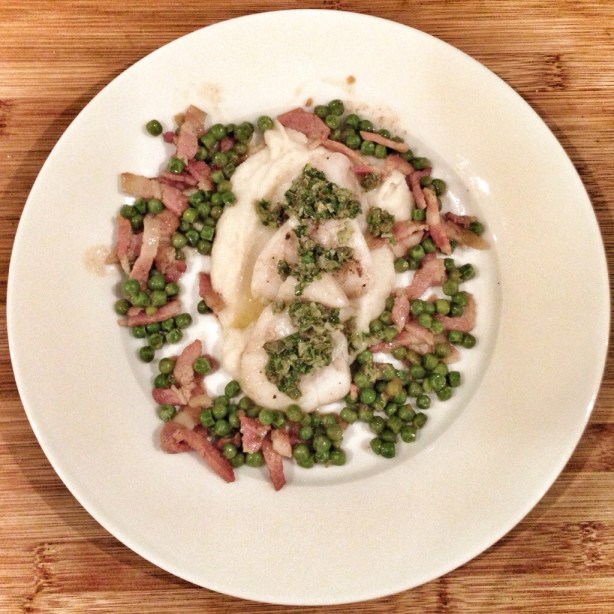
To serve, place a spoonful of artichoke purée onto each plate and smear a little across the plate. Top with the cod cheeks, followed by a drizzle of salsa verde. Scatter the braised peas around the plate.

20140227-195403.jpg

This post has been entered into Delicieux & Eat Your Veg March Four Seasons Food Challenge.

20140303-124341.jpg

Favourite Five Marmalade Recipes

As I have blogged previously this month, I love marmalade and enjoy nothing more at the start of my day than a slice of thick-cut white toast spread with chunky marmalade. However, marmalade is an ingredient that can be used for a range of recipes, lending both sweet and savoury dishes some of its bittersweet brilliance. So here are my five favourite uses of marmalade as an ingredient.

Marmalade cake  – The marmalade gives this cake a lovely moist texture. Grease and line a 20cm cake tin and preheat oven (170°C). Cream butter (175g) and sugar (175g) until the mixture becomes pale and fluffy. Gradually add 3 eggs.  Sift in flour (175g), pinch of salt and 1/2 tsp baking powder and gently fold in.  Add marmalade (3 tbsp.) and milk (2 tbsp.)Spoon mixture into tin and bake for about 50 mins until golden brown and firm. Warm 2 tbsp. of marmalade and brush over the top of the warm cake. Leave to cool completely. You can add icing once the cake is cool.

Marmalade Breakfast Booster Bars – This is a great and adaptable recipe, based on one created by Hugh Fearnley- Whittingstall. I’ve blogged a bonfire version before, but it’s also delicious when the lemon zest is swapped for a few tablespoons of bittersweet marmalade.

Microwave Marmalade Puddings – A steamed pudding is a thing of comfort and we often covert one, only to realise that the time taken for it to be made is just too long to wait. This microwave version is often employed in our house when we can’t make a steamed pudding quick enough. Put 100g of sugar, margarine and self-raising flour in a food processor, along with 2 eggs and 2 tbsp. of  milk. Whizz and then pour into a large microwaveable basin (or individual basins) on top of a good 2 tbsps. of marmalade (or any other topping like syrup). Cook in the microwave for 5 minutes and leave for a further minute or so, before devouring with the aid of custard!

Marmalade Glaze – A really good sharp marmalade makes an easy glaze for meat, especially for pork chops. Brush the glaze on before panfrying.

Marmalade Breakfast Booster Bars – Bread and butter pudding is a classic, and also a good way to finish off a slightly stale loaf. Grease a ovenproof dish with a little butter, then fill with marmalade sandwiches and a sprinkle of sultanas. Mix 400ml of milk with 2 lightly beaten eggs and a tbsp. of sugar. Pour the liquid over the sandwiches and allow it to soak in. Sprinkle a little more sugar over the top and bake for 35 minutes or so at 180°C til golden and crispy.

What ways do you use marmalade in your cooking?