Every Little Helps

Since going on my sabbatical I have been thinking about something I can do that is worthy. Not that teaching isn’t, but I hanker after being helpful and being able to be proud of myself. Helping others is not only good for them and a good thing to do, I’m hoping it will make me a happier person too.

So today, I’ve been volunteering with FareShare outside my local branch of Tesco as part of their #everycanhelps scheme. The premise of this is that shoppers donate tins and packets of food as they come out of the supermarket. This food gets distributed to the local food bank and other community food organisations by FareShare. The #everycanhelps scheme lasts for the whole weekend (29th November-1stDecember) and is being held across the country; with donations of food going to local causes. I noticed the other day that our local Coop Food also had a trolley for FareShare donations – so there is opportunity beyond the weekend to do something for others and make yourself a little happier.

20131129-125933.jpg
During a break from giving out a list of foods that could be donated I grabbed a coffee from the local Caffè Bar Italia and noticed that I could help further by not only buying myself an espresso, but also purchasing a caffè sospeso (a suspended coffee). This is an idea based on Italian traditional goodwill, allowing someone who can’t afford it to pop into the café and enjoy a prepaid warm drink. like Tesco’s involvement with FareShare, perhaps the big coffee houses should embrace the suspended coffee and give our communities an opportunity to help the less fortunate.

You see, every little thing can help others, and hopefully yourself.

Time to Dig

As the first frosts hit the plot, its time to clear away the final signs of a summer of growing. The ever-growing nasturtium have wilted under the frost and the courgette plants have long given up producing their fruits. With the weather dry and bright, if  a little chilly, I’ve taken the opportunity to clear and dig over the big bed at the front of the plot.

20131126-123755.jpg

I always used to hate digging, but recently have found it to be a very therapeutic activity. First of all its a good workout; apparently you can burn 600-700 calories in an hours digging, and even three hours of general gardening burns a similar amount of calories. The active part of having an allotment really helps to clear the head and increase motivation, but I find that the very nature of turning over soil to start again is a useful metaphor for trying to forge a new balance and direction in my life.

I also took the opportunity to add some organic material, manure, to the soil. Although we’ve been improving the soil since taking on the plot, it still benefits from the addition of some well rotted manure to loosen and aerate the clay soil. Hopefully the winter frosts can help to break up the soil and lead to a fertile start to next year.

Jerusalem Artichoke & Apple Soup

November has traditionally been a month when our allotment’s harvest is limited; although this year I seem to have succeeded in keeping the cropping season going for longer. There are brassicas ready for accompanying a hearty stew and plenty of the bright and earthy beetroot and chard. However, one crop which I always grow and often fail to take advantage of are Jerusalem artichokes. They are not artichokes like those found in delicious Italian antipasti, but those which are tubers below a sunflower type plant. Indeed the Jerusalem part of the name comes from the Italian for sunflower, Girasole, whereas the artichoke part is down to their taste being similar to globe artichokes. Whatever their origins they are one of the easiest plants to grow; planted as tubers in spring, they grow up to 2m in height with small sunflowers on top. The tubers can be dug from September, and as long as you don’t dig out all the tubers (it’s almost impossible to find every one), they’ll come back year after year to provide you with colour and a great screening plant.

In terms of flavour they are similar to the globe artichoke, but nuttier, and apparently are one of the best non-meat sources of iron. We’ve made a delicious gratin of Jerusalem artichokes in the past, but a the weather was cold I decided on a soup and teamed the nutty artichokes with sharp apples to make a velvety soup.

20131125-110638.jpg

What you will need
1 tbsp  lemon juice
450 g  Jerusalem artichokes
3 tbsp  butter
1 onion, chopped
4 apples, peeled, cored and sliced
1 tsp  salt
1/4 tsp  white pepper
500 ml chicken stock
Chopped chives to garnish

Jerusalem artichokes are usually pretty knobbly, but this year they seem to have grown quite smooth. Even so, they need to be peeled and sliced and then put into a bowl of acidulated water (1 tbsp. of lemon juice in a pint of water) to maintain their creamy white colour. Meanwhile, gently sweat the onion in the butter until it is soft and translucent, at which point add the sliced artichokes (retaining the lemon water for use later). Cook for a few minutes before adding the apple, salt and pepper. After a further five minutes add a little of the lemon water and the chicken stock and simmer until the artichokes are soft. Blend the mix into a smooth soup, adjust the seasoning and serve with a garnish of chopped chives.

Autumn Fruit and Chestnut Frangipane Tarts

One of the things I love to do is collect chestnuts from the countryside. We forage around under the sweet chestnut tree, and on finding the glossy brown nuts, break open the shells to get at the sweet nuts. I’ve noticed them piled high outside our local grocers too – for those times when I can’t forage for them.

20131118-113001.jpg

Although I love the nuts fresh, I wanted to use them cooked and use them to flavour a dessert. So, after roasting and peeling I whizzed them in the food processor to create a seasonal alternative to ground almonds in a frangipane. Combined with some poached winter fruits they made a sophisticated tart inspired by an Angela Hartnett recipe.

What you will need
Pastry
225g plain flour, plus extra for dusting
110g butter
110g caster sugar
3 medium egg yolks, lightly beaten
Frangipane
125g butter, softened
125g caster sugar
2 eggs
125g ground chestnuts (roasted and peeled)
1 tbsp plain flour
Poached Pears and Quince
250g caster sugar, plus 2 tsp extra
2 good-sized pears and 2 quince
1 cinnamon stick, broken in half
3 cloves
1/2 lemon
2-3 strips thickly pared orange zest
1/2 vanilla pod

First make the pastry by adding the butter, flour and sugar into the food processor until the mixture resembles breadcrumbs. Add the egg yolks into the mix slowly, until the dough comes together in a ball – you might need to add 1 teaspoon cold water if the dough is very crumbly. Wrap the dough in cling film and pop into the fridge for 30 minutes or so. To make the frangipane filling cream the butter and sugar together in a large bowl until light and fluffy (or whizz in the food processor). Gradually beat in the eggs, one at a time, then fold in the ground chestnut and flour. Mix well and chill until needed. To poach the pears and quince put the sugar in a saucepan, pour in 500ml water and place over a medium heat. Stir until the sugar has dissolved. Peel the fruit and add to the pan, along with the cinnamon. Squeeze the juice from the lemon into the pan and add the squeezed lemon and orange zest. Split the vanilla pod in half, scrape out the seeds and add to the pan with the pod. Add some more water to just cover the pears. Simmer for 25 minutes, then remove the fruit to a plate with a slotted spoon. Set aside for 15 minutes, or until cool enough to handle.

20131118-112613.jpg

Preheat the oven to 190°C/fan170°C/gas 5. On a lightly floured work surface, roll out the pastry to a circle large enough to line the tart tin. Don’t worry if it breaks up, as this is a very short, crumbly pastry – you can just patch it together in the tin , making sure it is even all over. Trim off any excess pastry and spread the frangipane evenly on top. Cut the fruit in half lengthways and, using a teaspoon, scoop out and discard the core from the centre. Cut each piece of fruit into slices and arrange on top of the frangipane filling. Bake for 55 minutes to 1 hour, until the pastry is golden and the filling is set (I made smaller tarts, so baked for a sh0rter period). Sprinkle with the extra 2 teaspoons caster sugar and bake in the oven for a further 15 minutes to finish off the browning. Cool in the tin slightly, then remove and transfer to a wire rack. Serve warm or at room temperature with a dribble of cream.

20131118-112457.jpg

The Liebster Award

20131114-112959.jpg
The fabulous The Dessert Course has nominated my blog for the Liebster Award. It’s always nice to be recognised as doing something which others enjoy and benefit from, so thank you. The Liebster Award is awarded by fellow bloggers, and is intended to promote new bloggers. The word ‘Liebster’, as my GCSE German tells me, has a variety of meanings, but essentially it’s kindest or sweetest. I love the sentiment of this; bloggers sticking together and being supportive to each other, despite geographical separation. As part of the Liebster Award process, I need to answer some questions set by The Dessert Course. So without further ado, here are my responses.

Which cook book could you not be without?
Like many food bloggers, I’ve got many cookbooks and probably don’t use all of them that regularly. I have some favourites and tend to use them more than others. Hugh Fearnley-Whittingstall’s Everyday and Nigel Slater’s Appetite are favourites and I’d always want them in my kitchen.
Who taught you everything you know about cooking/baking?
My mum was the cook in our house, so it was mum who gave me my grounding in cooking. I have fond memories of great food as a kid, and always enjoy heading home for home cooked deliciousness.
What is your favourite holiday destination?
I’ve had a number of great holidays, but perhaps my favourite was to Dubrovnik and the Dalmatian coast. It was about ten years ago and we arrived at 2am in a thunderstorm; even so it was 30+ degrees. We stayed in an apartment in the old town and spent our days swimming off the rocks, drinking coffee, having the best (and cheapest) ice creams, and enjoying fantastic Italian food. Given the chance I’d go back any time.
When you were a child, what job did you see yourself doing?
From an early age I always saw myself as a teacher. My grandfather and aunt were both teachers and I suppose I felt I should follow in their footsteps; although basically I always felt I could be a good teacher and help children, in the way I was helped by some great teachers.
What food can you not stand the sight of?
I’m pretty sure that all food looks appealing to me, I would certainly try anything which is eaten by others.
Who is your favourite musician/band?
I’m not sure I have a favourite band. I listen to a lot of radio, but it’s usually Radio 4. When I want to relax I tend to listen to jazz singers like Ella Fitzgerald and Billie Holiday.
What issue are you most passionate about?
I’m passionate about my family and making them happy. Happiness is a very underrated thing and not something which just happens – you need to work at it.
What is your biggest fear?
Crikey, that’s a deep one….
Are you a dog or cat person?
Cat. Don’t get me started…
How long have you been running your blog?
Spadeforkspoon has been running since September when I went on sabbatical from my teaching job.

The idea of the Liebster award is to promote new bloggers. I can’t seem to find out who of the bloggers I follow are new and who are more experienced and more followed, so I’ve listed a few blogs I really enjoy reading.
http://mozzarelladiaries.blogspot.co.uk
http://foragesandfinds.blogspot.co.uk
http://therookieallotmenteers.wordpress.com
http://digginwivdebb.wordpress.com
http://lottielandgirl.com
http://littlebuttondiaries.com
http://allotmentmum.co.uk

So, here are some questions for my nominees.
Describe yourself in three words.
Why did you start the blog?
What is your favourite food?
What is your most memorable food location?
What is your favourite book?
What is your most prized possession?
Countryside or city?
Book or Ebook?
Marmite or no marmite?
What is your favourite blog post (provide a link)?

A Haven of Calm and Solitude

20131114-125530.jpgIn my role as a teacher I was constantly talking, or listening to others talk. A typical day involved me spending virtually no time on my own. I was also working in a stressful environment. Teaching is not an obviously stressful job – it’s not like a heart surgeon or an air traffic controller. The stress is in the desire to do the best for the children, to give them the best start to life, to ensure they can access the wonderful world of learning.

Since starting my sabbatical I’ve discovered silence and the power of solitude. I’ve come to realise that one needs to have space to think, to do what you want, to just be. The allotment is a vehicle for this. Yes, the plot is hard work to maintain, but there are no targets or pressures from outside. Also, I can go there and do nothing. Just sit, listen and think; and that’s the beauty, I can choose to do something or not. It allows me to control my time and if I want just enjoy the haven of calm.

Where is your haven of calm?

Gnocchi

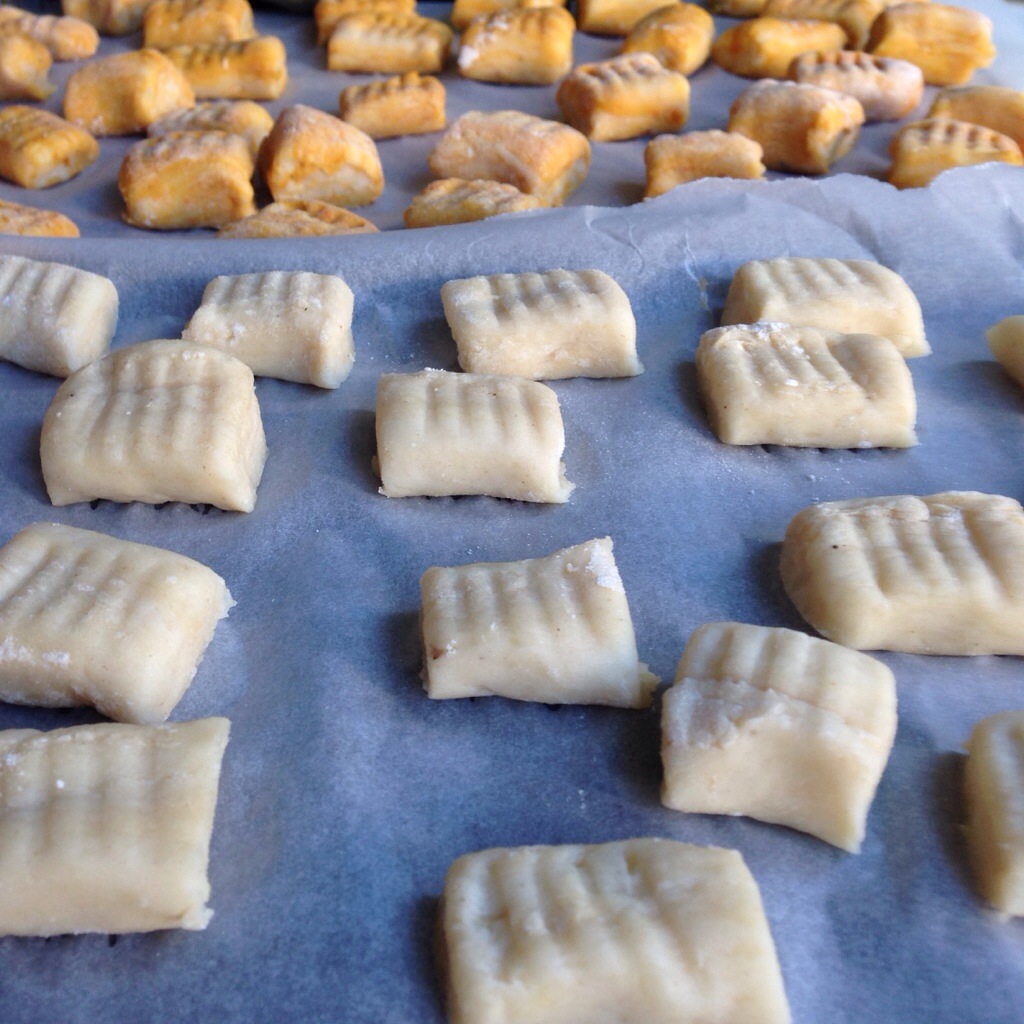
I love these pillow soft potato dumplings. Up until now we’ve bought them, but with some leftover mash in the fridge I decided to have a go at making them myself. Not only was it really easy, the resulting gnocchi were even better than any shop bought ones we’ve had.

20131114-125910.jpg
Like many families, we eat a lot of pasta. Not many days go by without a dish of pasta pesto, macaroni cheese, or pasta with a tomato sauce. Gnocchi gives us a different vehicle for our range of sauces. Today the gnocchi were split, with the children having them with pesto (a firm favourite with my son), and my wife and I having them combined with crown prince squash and blue cheese.
What you will need (makes enough for 4-6 people)
1kg potatoes
Salt and pepper
1 egg
250g plain flour (you may need more flour depending on the water content of the mash)
Flour for dusting.

Peel and dice the potatoes and bring to the boil, cooking until tender. Cool a little, then mash, and allow to cool completely. Combine the cooked potato with the other ingredients to form a sticky smooth dough; it is best to work the dough quickly to give the gnocchi a light structure. Sprinkle flour on a surface and roll the dough into long sausage shapes. Cut into 2cm lengths, using a fork to press the distinctive ridges in the gnocchi (the ridges allow the sauce to stick easily). If you want, you can open freeze the gnocchi at this point, cooking them straight from frozen for twice as long. To cook the dumplings, bring a saucepan of salted water to boil, drop the gnocchi in, and simmer until they all rise to the surface (about 2 mins). Take the gnocchi out if the water with a slotted spoon, drain well and add to your sauce of choice.

Crown Prince Squash, Blue Cheese Gnocchi
1 Crown Prince Squash
1 red onion (peeled and cut into 8)
3 garlic cloves
1 handful of rosemary leaves
75g blue cheese

Peel and deseed the squash, and chop it into 2cm dice. Place in a roasting tin and add the onion and garlic, as well as half of the rosemary. Roast the vegetables for 30 minutes at 180C until they are soft and slightly coloured. When the squash and onion are soft and cooked, add the remaining rosemary and the blue cheese in small chunks. Allow the cheese to melt a little, then combine with the cooked gnocchi and serve.

Arancini – worth having leftovers for!

Ever find you make too much risotto? I’ve become pretty good at portion control – enabling us to not waste too much food. We’re also good at using leftovers in other meals; leftover Hunter’s Chicken for example, makes a super sauce for pappardelle when pushed through a sieve and combined with a bit of the pasta cooking water

That said I always end up making too much risotto; the usual 500g packets provides enough rice for a couple of overly generous meals for two, but not three sensible sized meals. Luckily leftover risotto can be transformed into delicious Arancini; balls of risotto encased in crispy breadcrumbs. I like them so much I subconsciously over cater every time I make risotto. Arancini are easily made and comfortably use up any amount of leftover risotto.

20131109-152808.jpg
What you will need
Leftover risotto
Flour for dusting (seasoned with salt and pepper)
1 egg (beaten)
Breadcrumbs
Vegetable oil (or other oil suitable for deep frying)

Take your leftover risotto and form into golf ball sized balls. It helps to have wet hands to prevent the mix sticking to you. if you have some mozzarella, you can put a small piece in the centre of each ball at this point. The cheese will melt in the heat of the oil later, giving you a gooey cheesy centre. Once your rice balls are formed place them in the fridge for a few minutes to firm up. Coat the balls with breadcrumbs by rolling in the seasoned flour, then beaten egg, and finally breadcrumbs; before returning to the fridge for 30 minutes.

Heat the oil to frying temperature (a few breadcrumbs dropped into the oil should crisp in a few seconds). Lower the rice balls into the oil and cook until golden brown. I always use a saucepan, so I fry three or four balls at a time. Remove them using a slotted spoon and place on a piece of kitchen towel to absorb any excess oil. Serve warm with a tomato sauce, on their own, or cold as a great snack.

Like me you’ll be making too much risotto before you know it.

A Wood Burner and a Shed

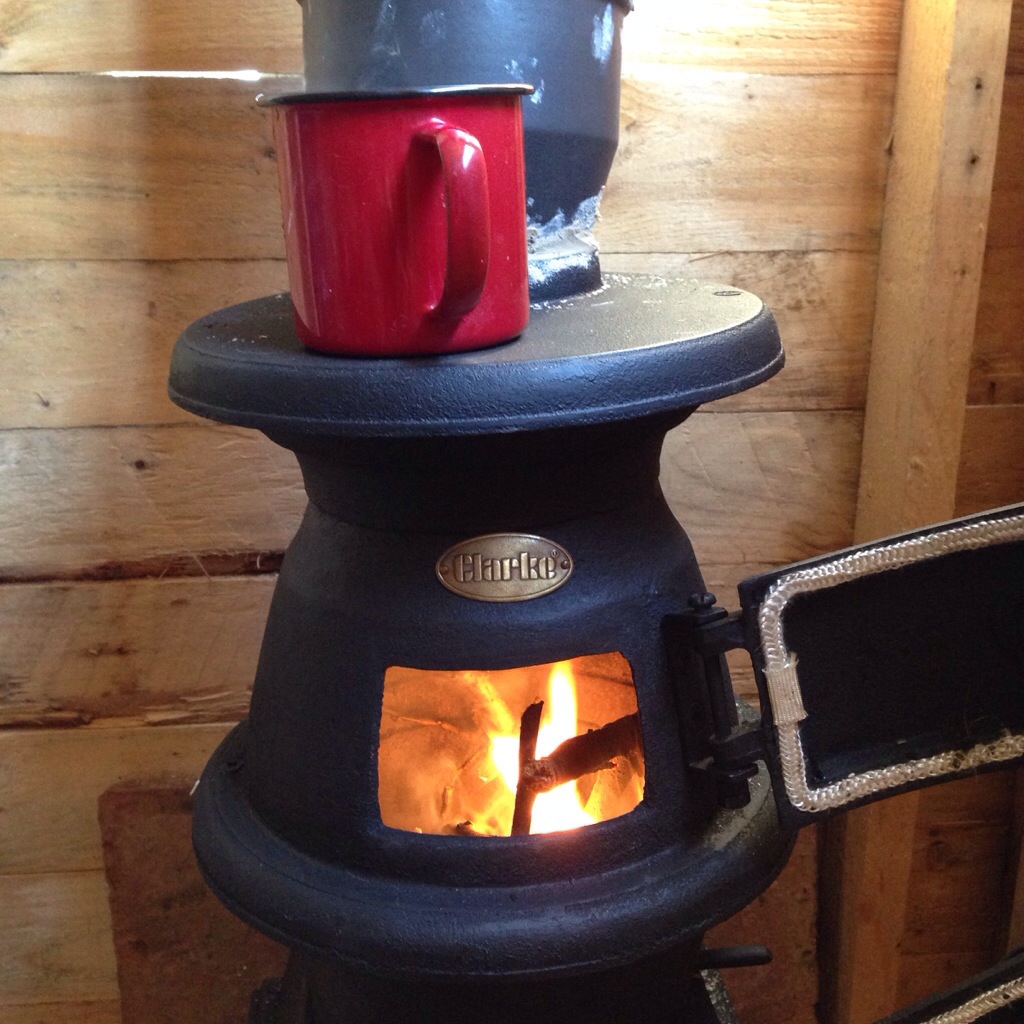
Our new shed is installed. The old one survived the storm, but with cold and wet weather likely to feature over the next few months, we decided that a shed large enough to sit out weather in was needed. My brilliant allotment neighbour built me a 7’x8′ shed out of pallets (for a very reasonable fee) – it even has a reclaimed window in it to offer some light during the darker months. I have always felt that the allotment should be a place where we reuse and recycle and it really pleases me to know that the shed is constructed from such materials – I think we’ll continue that theme when insulating and decorating it.

20131031-162719.jpg
My other allotment neighbour persuaded us that we should also invest in a little wood burning stove for the shed. It’s a bit of an expense; but one thing I’ve learnt over six years of having an allotment and a family, is that if your children are happy and comfortable at the plot, then it means you can get lots done on your visits. Also, I find the allotment the place where I can relax the most, and I’ve been dreading not being able to visit due to the weather. Having the stove and a snug shed should help me to continue to enjoy the peace if he plot – whatever the weather and life throws at me.

20131105-203000.jpg

Apple Flapjack for an Allotment Bonfire Night

Our allotment site is a great slice of society. The plot is surrounded by others tended by young working families, elderly couples, the unemployed, hard worked public sector workers; people of all races and creeds. It is a great and supportive community, and last night we shared on a bonfire celebration. Allotment holders from across the site got together and sat around a raging fire enjoying the local firework display, cider made from our own apples, and pizzas cooked on the wood burning pizza oven.

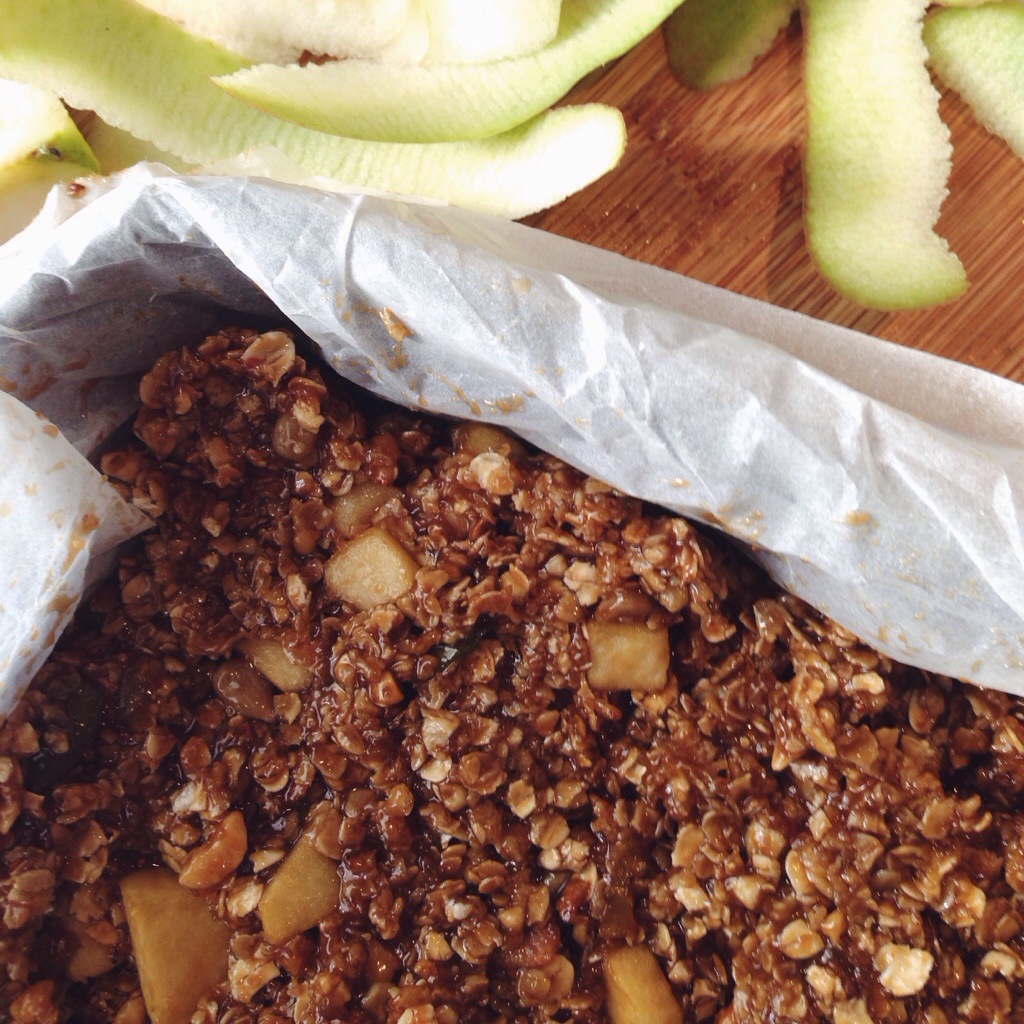
Wanting to contribute something to the proceedings, I decided to create a bonfire flapjack. As we still have quite a few windfall apples I chose to flavour it with them, and use some of the pumpkin seeds and sunflower seeds I’d collected last months. I often make River Cottage Honey and Peanut Butter Booster Bars, which used to be a big hit with my former colleagues. So I used the recipe as a basis for my Bonfire Apple Flapjack. To give it a more bonfire dark stickiness, I used dark muscovado sugar, and added a combination of grated and diced apple instead of huge dried fruits.

20131104-082434.jpg
What you will need
125g unsalted butter
125g dark brown muscovado sugar
100g no-sugar-added crunchy peanut butter
75g honey, plus a little more to finish
Grated cooking apple
Finely grated zest of 1 lemon
250g porridge oats (or the equivalent weight in oats and crushed leftover cereal)
A large apple peeled, cored and diced
100g mixed seeds (I used pumpkin and sunflower)

20131102-163320.jpg
Start by greasing and lining a baking tin, about 20cm square. Put the butter, sugar, peanut butter, honey, grated lemon zest and cooking apple in a deep saucepan over a low heat. Heat until the mixture is melted, stirring occasionally. Combine the oats, diced apple and most of the seeds into the melted butter mixture and stir until it’s thoroughly combined. Spread the mixture out evenly in the baking tin, smoothing the top as you go. Finally scatter the rest of the seeds over the surface and trickle with a little more honey. At this point I tend to use the palm of my hand to press down the mix slightly.
Pop the tin in an oven preheated to 160°C/Gas Mark 3 and bake for about 30 minutes, until the flapjack is golden all over and slightly crispy on the edges. It’s really important that it is left to cool completely before turning out and cutting into squares with a sharp knife. As Hugh Fearnley-Whittingstall suggests in his original recipe; this is a tricky task, but the flapjack will cut much better if you can manage to hang on before devouring. The crispy oats contrast well with the soft sweet apples, and the muscovado sugar hints of toffee apples on a cold afternoon. A perfect treat to munch whilst watching fireworks and watching the dancing flames of a bonfire.

20131103-093237.jpg