Delicious autumn! My very soul is wedded to it, and if I were a bird I would fly about the earth seeking the successive autumns ~ George Eliot


Delicious autumn! My very soul is wedded to it, and if I were a bird I would fly about the earth seeking the successive autumns ~ George Eliot
August has seen some scorching weather, but also unseasonably cool and wet days. The slightly odd weather and the fact that we’ve been away for a decent portion of the month, has seen some super growth by veg and weeds alike.


August has offered much to harvest. The beetroot have swollen to a good size, and the French beans have been plentiful, giving us a load of different dishes, including a new found classic – tagliatelle with pesto, green beans and new potatoes. Last year’s cucumber monster has reared his head once more, and we have an ongoing supply of the coolest of vegetables. The soft fruit this year has been amazing; raspberries have followed on from the strawberries, and now we have a bumper crop of blackberries to devour. Our early apple tree has been laden with fruit for a while, but they have just become ripe and we are inundated in apples. The trouble with having an early variety of apple like Beauty of Bath is that they don’t store well, so I’ve been bottling and making to use them as well as I can.
A new row of salad is due to be sown in the next few days, and I will sow more Cime di Rapa too, as the first few rows have been decimated by the weather, pests and (if I’m honest) a little neglect on my behalf. I’ve failed to prepare properly for the winter period, so may have to source some kale and other brassicas from somewhere to fill a gap or two. In the greenhouse the tomatoes, peppers and chillis are doing their own thing, but I’ll look to sow some salads as space becomes available.
As I mentioned, our trips away from home during August have resulted in a little wild growth, and as a result there are many jobs to do in September. One of the major jobs is to prepare ground for the autumn/winter growing period. Depending on my success in finding crops to pop in, or sow, this may also involve the sowing of green manures. I’ve had little success in the past with these, ending up on one occasion with a mass spreading of rye grass across a section of plot, and failing to remove it all properly. However, this year if I have space, I’m going to revitalise the ground with a green manure. Any ideas which work best?

This post is contributing to The Garden Share Collective; an international group of bloggers who share their vegetable patches, container gardens and the herbs they grow on their window sills.
Summer afternoon—summer afternoon; to me those have always been the two most beautiful words in the English language. ~Henry James


Originally cooked in the ashes of the hearth, and typical of Province, Fougasse is a marvellous bread to eat. It’s pretty simple to make too; combining olive oil with flour, yeast and salt. Traditionally the Fougasse was a flatbread made to check the temperature of the wood fired oven; the time taken for the bread to bake indicated how hot the oven was. That said, it doesn’t need to be cooked in a wood fired oven; a really hot traditional domestic oven is fine.
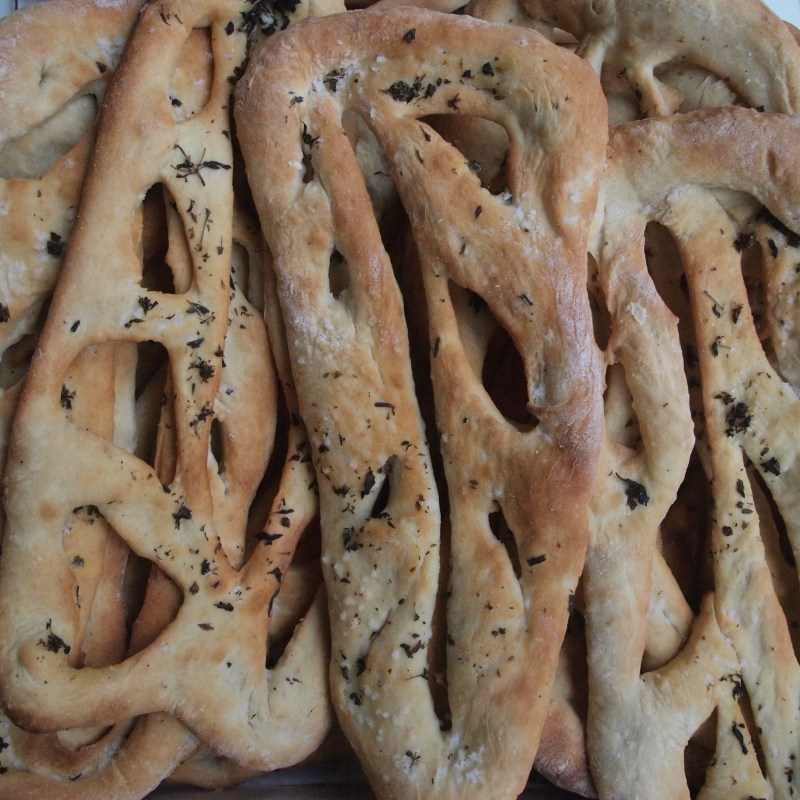
Fougasse is a great vehicle for flavours, and the allotment is good at providing them at the moment. The red onions, which have been busy swelling over the last few months, are dried and ready to be used; and the woody herbs at the plot are all looking lush and fragrant. So, to combine the flavours of rosemary and red onion, or marjoram and sea salt, makes sense to me. I always think if they grow together (the rosemary and onions look at each other over the allotment path), then they probably will work together in food.
You will need (makes 8)
1kg strong white flour
100g refreshed sourdough starter (this is optional, but adds a depth of flavour)
625ml warm water
100ml olive oil
10g dry yeast
15g salt
For the flavourings
1 red onion, finely sliced and fried until soft and succulent
1tsp. chopped rosemary
1tbsp. torn marjoram leaves
2tsp. sea salt


Mix all the ingredients into a loose dough, then leave to stand for 10 minutes to allow the flour to absorb the water and for gluten strands to begin to develop. Tip the mix onto a work surface, before kneading the dough until the dough comes off the work surface and has lost some of its stickiness. The dough will be sticky, but try not to add any extra flour; your bread will benefit from it if you don’t. Form the dough into a ball, place an oiled plastic sheet over it and leave for 90 minutes to 2 hours to ferment. Tip onto an oiled surface and stretch and fold the dough. Let it rest, covered once more, for a further half hour, the portion into 200g pieces. If including flavourings in the dough, flatten each piece and place a small amount of flavouring (cooked onion and finely chopped rosemary in my case), fold the dough over the filling and ball them up to rest again for a further 10 minutes. Roll out the balls of dough into rough triangular shapes. At this point you can add any toppings you want, gently pushing them into the dough with your fingers. Dust each triangle with flour, then use a sharp knife to cut slashes through the dough. Start with a slash down the middle, followed by diagonal slashes on each side of the centre to form a leaf-like effect. Carefully open the holes a little, stretching the dough as you do, before sliding onto a lined baking tray and baking in a hot oven for 10-12 minutes until golden brown.
Recipe inspired by those of Community Chef and Emmanuel Hadjiandrou.

July seems to have whizzed by and the children are eagerly anticipating the summer holidays and a month of enjoying the great outdoors in the summer sun (well hopefully).


There continues to be much to harvest, with the last of the broad beans being enjoyed in salads and pasta dishes. The raspberries have been excellent and we have been able to pick a large punnet or so every other day. With so many raspberries in the kitchen, we’ve been using them in loads of dishes and have the prospect of more when the autumn varieties ripen. The yellow French beans have also started to crop in earnest, and the onions and shallots have been pulled and dried ready for use.
I’ve continued to sow salad and radishes and I’ve also been sowing crops for the winter ahead. Included in these has been Cime di Rapa, an Italian version of purple sprouting broccoli which I grew with success last year. The beetroot already growing is doing well, but there’s still time for one last row, and whilst I’m at it I’ll probably put in another row of Swiss chard. You can never have enough chard. With the autumn and winter in mind, some brassicas will also be going in. I think I’ve missed the boat in terms of sowing purple sprouting broccoli, but I think I’ll try and get some plants to plant out.
We, like many families, are going away during the summer holidays, so one of the jobs this month is to create some kind of drip irrigation system which allows the greenhouse tomatoes to stay watered during our break. The plan is to utilise the water butt beside the greenhouse and a piece of old hosepipe to dribble a little water into the plants over the period of our absence. Needless to say, I think we’ll need to still call on the kindness of allotment neighbours to keep an eye on the plot; not least because many of the crops will undoubtedly be ready for harvest whilst we’re enjoying the Sicilian sunshine.
This post is contributing to The Garden Share Collective; an international group of bloggers who share their vegetable patches, container gardens and the herbs they grow on their window sills.
The allotment has been a real haven for me over the last year. I’m sure I’m not alone in benefiting from the communal and restorative properties of time outside growing. At our allotment site we have a community plot, Plot 22, which offers people just that. So I asked Emma, who runs the project, to write a guest post.
PLOT 22 is an allotment garden project that offers people who may not otherwise have access to a garden the chance to enjoy and participate in creating a peaceful, abundant and edible oasis in the middle of our busy city.
I think of courgettes as cheerful generous friends! They are easy to grow and so gallopingly bountiful it can be hard to keep up with them. That said, the planting out stage is their most vulnerable but those that make it through and survive the slugs have a prickly and reassuring sturdiness. New fruits seem to double in size over night. And for us, gardening and cooking collectively on site at PLOT 22 this ensures a feast several days a week in the summer months. This month we are dining out on a variety gifted to us by another allotment holder: a yellow courgette that produces sweet round fruits. Happily the slugs didn’t decimate these plants as they did some of our own courgettes grown from seed. This may have been because we planted these yellow ones in raised beds, waist high, certainly out of the eye line of slugs, or more likely their scent detectors.

Courgettes are most definitely a vegetable made for cooking outside. There’s very little preparation required and no need for saucepans at all! We’ve had delicate raw ribbons in our salads, using a potato peeler – easier with the long variety than the round sort, marinated multi-coloured courgette and halloumi kebabs grilled on the BBQ, and thick, colourful slices seared on the hot bars and dropped straight into fresh herby, garlicky dressing to soak up all the flavours. Next week we’ll try a recipe shared by a Japanese friend: grating the juicy pulp into spelt flour then mixed with a dash of oil to make thick green pancakes, cooked quickly in a skillet on the fire they are a treat I’ve been looking forward to for months!
It is true that you can have too much of a good thing. Sometimes a courgette’s generosity can seem like a burden of responsibility – how to make use of all this sudden vegetable goodness before they turn into the size of baseball bats? I’ve often found bags of these oversized beauties left on my doorstep by other gardeners, clearly overwhelmed by their mighty bounty. But that’s the beauty of gluts – there’s so much to go around. It reminds us how abundant Nature is and brings out the generous friend in us!
June has been a really warm month down here on the south coast. We’ve had slightly above temperatures, with occasional heavy downpours. All in all, perfect growing weather. As a result the allotment has flourished, with the crops just about outgrowing the weeds.


The good weather has meant there has been much to harvest. The broad beans have been a roaring success, with literally bagfuls being picked and eaten over the last few weeks. Whilst the original overwintered crop has just finished, the spring sown bean are about to be ready to pick; so we’ll be enjoying these sweet and tasty beans well into July. The strawberries have also been excellent, with a really good harvest of big berries. They too have begun to reach the end, but as they finished the summer raspberries have ripened and are providing us with a great crop. Salads are hard to get germinating when its so hot, but those which had grown have been giving us a constant alternative to the hermetically sealed bags of overpriced salad in the supermarkets.
Over the last few weeks I have been sowing more Swiss chard, as well as some Florence fennel. Hopefully they can get going and provide us with a good crop into the autumn. There’s still time to sow more peas and dwarf beans, so once the potatoes are dug, I’ll put a row or two of each for a late summer crop of fresh peas and beans. This is the month I start to think about the winter, so I’ll be rifling through the seed box and working out which of the brassicas I can sown now to give me a crop when the days are colder and shorter. For a quick fix, I’ll also be sowing some more radishes. They’re so quick to germinate and swell, and they add an amazing heat and crunch to any salad.
The ongoing jobs of watering and weeding will continue this month. I’m trying to be smart with the watering; only watering those plants that really need it, and making sure that they don’t go from drought to flood too much. In terms of the tomatoes, this consistency is crucial to ensure that the fruits don’t split or become diseased. The pumpkins, squashes, cucumbers, beans and indeed tomatoes, all need tying in to their supports as their tendrils and shoots grow in the summer’s heat. This year I’m trying to control the pumpkin and squash growth by training them up a step ladder and around an old parasol frame. The plan is to tie them in every so often, so I can let the plants become big without them taking over the whole allotment!
This post is contributing to The Garden Share Collective; an international group of bloggers who share their vegetable patches, container gardens and the herbs they grow on their window sills.
Like Monty Don, in his book ‘Growing Out of Trouble’, it seems the “earth keeps me sane“. I’ve come to recognise that I need to be outside some of the time each week to maintain my mental health. It’s been something that I have realised over the last year. Whether it be going for a weekend walk with the family, an afternoon at the allotment, or just an evening stroll to the seafront. If I’m feeling low, one way I can help myself is to get outside.


As a teacher I always thought that I had done well to avoid an office based job, with its connotations of stuffiness and a lack of natural light. After all, my classroom was blessed with large windows down one side, and a beautiful village green beyond them. Yet, I still spent much of my time inside, and evenings at home were usually spent working in front of the computer. In many ways this was not too far away from the office based job I prided my self in avoiding. Now I have time to go to the allotment, I can enjoy the space and fresh air of the plot, and it undoubtedly has had a positive effect on my mood. Growing things just adds to this positivity and feeling of wellbeing; again Monty Don sums it up brilliantly when he says
“we all get – and feel – better for being outside and growing things … Looking after something else always results in looking after a part of ourselves“.
He’s right, nurturing plants does fulfil something in people, allowing them to recognise what they need to do to flourish, as well as what the plants need.
In out house we are not aversed to a cup of tea. In fact we drink a load of it throughout a typical day. Whilst I really enjoy a fine cup of Earl Grey (never with milk mind you), I like the idea of growing my own tea. Not blessed with a Himalayan climate here on the south coast, I’m not sure if it’s even possible (I know that there is a commercial tea plantation in Cornwall). So, I’ve decided to embrace the herbal tea and have turned excess spring mint growth into a warm, yet refreshing brew. It turns out that mint tea made with mint leaves (not from a bag) is not only easily made, but also infinitely more refreshing and clean tasting. It tastes so healthy that I had to find out what benefits it could be bringing me and it transpires it has some real health benefiting properties. As well as the obvious plus of being caffeine free, mint tea has long been recognised as aiding digestion, relieving stress and even helping with nausea. What’s more it’s the perfect drink to make at the allotment on a spring day.

You will need
A cups worth of just boiled water
4 or 5 sprigs of mint (take the new growth as it’s the freshest)
Kettle or teapot
Once your water is boiled, place the mint leaves into your teapot and pour the water over the mint. Leave it to steep for 5 minutes or so before pouring into your cup to drink. I used a natty camping kettle with a strainer built in, but anything which allows you to filter the liquid would be fine. Pop a couple of mint leaves in your cup and sit back and enjoy a refreshing cuppa.

This month I’ve been drawn to the first blossom, flowers and new growth at the plot. The fruit trees have been producing a beautiful display of blossom, but up close it becomes something ethereal and captivating in its own way.



 Spade Fork Spoon