Swiss Chard

Whenever I’m asked by people about what to grow when you take over an allotment, or start a veg bed at home, the answer is always the same. Potatoes and Swiss chard. Potatoes are great, as they do some of the soil improving work for you, not least when you have to dig your harvest in the summer. However, Swiss chard is the real star, it just keeps on giving. We got turned on to chard when we used to get a veg box from the fantastic Barcombe Nurseries. We’d get home from work to find a small box of vegetable and fruit delights; each week a different selection, but nearly always including Swiss chard. It’s just so versatile. It can be used as a spinach alternative, mixed with ricotta to fill cannelloni or ravioli for example; but its earthy, iron-rich flavours are robust enough to be an accompaniment to a piece of meat after only a wilting with some garlic and a dash of lemon juice and olive oil. Its stalks can be chopped and added to curries, or steamed, then made into a cheesy gratin.

I’ve found that Swiss chard is also pretty easy to grow and incredibly hardy, often lasting for over a whole season. Like spinach and beetroot (to which it is related) it has a seed cluster, and each cluster can produce three or four seedlings. I tend to grow mine in modules (a cluster to each section) and then prick out weaker plants, before transplanting out. This seems to allow the plants to establish before setting them in the path of the slugs that prowl my allotment; the plants larger size is defence enough from the potential mollusc attack. Once established the plants grow well, and if picked sparingly from the outer leaves, will give you a harvest for a significant season. The baby leaves are an excellent addition to a mixed salad, and if you sow the ruby or rainbow varieties, add colour too. Indeed, I would suggest rainbow chard is worth sowing for the vibrant colour of the leaves alone.

Last night we used this delicious leaf in a simple chard pilaf to accompany a range of curries which had been in the freezer in small portions.

You will need
400g Swiss chard
200g uncooked rice, pre-soaked for 10 minutes
50ml olive oil
75g chopped spring onions
1 lemon, squeezed
A handful of chopped fresh coriander

Wash the Swiss chard well. Remove the stalks and finely chop, then shred the leaves and set aside to drain. Heat the oil and soften the spring onions before seasoning with salt and a pinch of garam masala.  Add the rice and toss it in the onions for a few minutes, so that it is coated in the spicy oil. Then throw in the chard stalks, leaves, and coriander and cook for a minute or so.  Add 400ml boiling water (or better still stock) and bring to the boil. Cover, reduce the heat to a simmer and cook for about 15-20 minutes or until the rice is just cooked. Allow the pilaf to stand for a few minutes before serving.
 

20140211-113925.jpg

Marmalade Memories

Foods can be amazing at recalling memories; the smell of certain ingredients, or the taste of others can take you back to a different time or place. Whenever I have marmalade on crispy thick cut white toast, it takes me into my grandparents’ kitchen and sharing breakfast with my Grandpa. I love the dark and slightly bitter taste of good marmalade, its a real treat in the morning.

You will need (makes 5-6 450ml jars)

1kg Seville Oranges
75ml Lemon Juice
2kg Demerara Sugar

20140202-091847.jpgGive the oranges a good clean and remove the buttons at the top of the fruit, then cut in half. Squeeze out the juice and keep it to one side. I’ve found that the seville oranges need to have some of the pith from inside the skin removed, which I do using a spoon and scraping away the thicker parts. Using a sharp knife, slice the peel, pith and all, into shreds, according to your preference. Put the sliced peel into a bowl with the juice of the oranges and cover with 2.5 litres of water. Leave to soak overnight.marmalde making

Pour the whole mixture into a preserving pan and simmer until the fruit is tender (about 2 hours), before adding the sugar and the lemon juice. Bring to the boil, stirring until the sugar has dissolved. Boil rapidly until setting point is reached, about 20-25 minutes. Take off the heat. Leave to cool for 8-10 minutes to help the chunks to be distributed evenly. Pour into warm, sterilised jars and seal immediately.

Over the years I have eaten three-fruit, fine-shred, lime, even ginger infused marmalade; but chunky classic marmalade has always taken me back to my Grandpa’s kitchen. What are your marmalade memories?

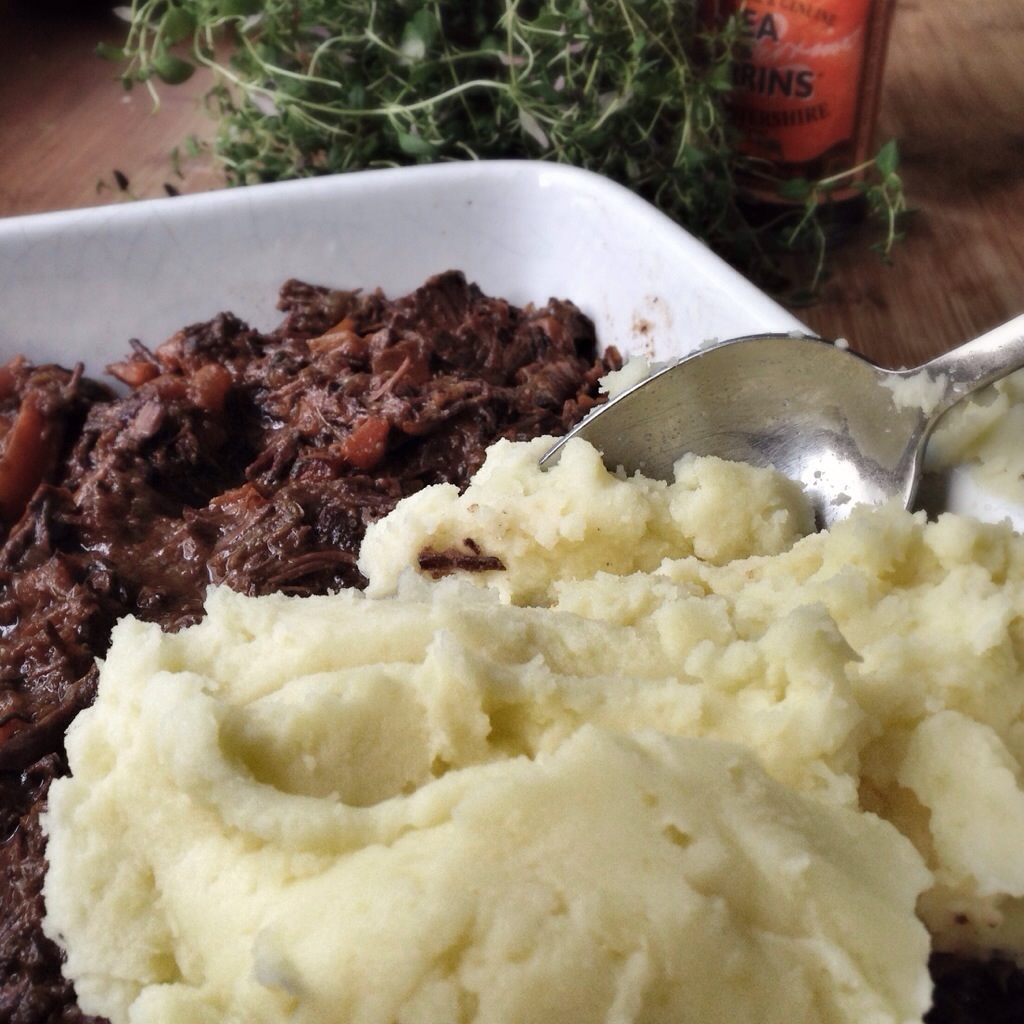
Ox cheek cottage pie

This recipe came from an idea in the Waitrose Kitchen magazine and the discovery of half a kilo of ox cheeks in the discount section of my local supermarket (£1.78 by the way). I’ve started to look on these shelves on a regular basis. Not necessarily out of necessity, but more out of a desire not to see waste and if I can save money then all the better.

If you have the time (close on four hours), cuts like ox cheek, oxtail and breast of lamb are delicious, frugal and very comforting. The combination of the meat with vegetables from the plot made this dish easily stretch to feed the family with some leftover.

Ox Cheek Cottage Pie

You will need

500g Ox Cheeks
1 finely chopped onion
Stick of celery finely chopped
1 finely chopped leek
1 finely chopped carrot
Small bunch of thyme
1 bay leaf
500g potatoes
Glass of red wine
Dash of Worcestershire sauce
Litre of beef stock
Salt and pepper to season
Grated cheese

Start by trimming any large pieces of fat or sinew from the meat and cutting into large chunks, before tossing in seasoned flour. Brown the meat in a little oil and remove from the pan with a slotted spoon. Add the onions, leeks, carrot and celery to the pan and gently cook until soft and the onion is translucent. When the vegetables have softened, add the thyme and the bay leaf, then pour in the wine and allow the alcohol to boil off. Return the browned ox cheeks to the pan and pour in the stock and a dash of Worcestershire sauce. Bring the liquid to the boil before placing in a preheated oven (160°C) for three hours. Whilst the meat is cooking peel, boil and mash the potatoes.

After three hours the meat should be super tender and you can pull it apart with a couple of forks. I like to keep a few small pieces, so there is a variety of textures within the meat mix. Construct the cottage pie by putting the meat mix into an ovenproof dish and then topping with mash. Leave some texture on tip, as this helps to get a crispy crust to the mash, and grate a little cheddar or similar cheese over the mash. Place in an oven at (180°C) for 30 minutes, until the top of the mash is browned, then serve with wilted greens (something like the iron rich Cavolo Nero I grow at the plot).

Ox cheek cottage pie


Sort of Dutch Mustard Soup

I came across this soup on a trip to Amsterdam; where we had it at as a starter at a great little restaurant serving modern Dutch food. I ordered it, as I’m a big fan of mustard and was curious to see how a mustard soup would taste, especially as it was garnished with crayfish. The combination of the piquant mustard and the sweet little pieces of crayfish was a revelation. It’s been a while, but having been given some fantastic beer wholegrain mustard for Christmas, I finally got round to creating my own version of this soup the other day. No crayfish, but the salty bacon compliments the soup well and (it seems) is a traditional garnish.

You will need
1tsp butter
1 chopped onion
1 litre stock
125g crème fraiche
125g cream cheese
2tbsp wholegrain mustard
4tbsp cornflour/water mix
Crispy bacon and parsley to garnish

Melt the butter and gently sweat the onions until they are soft and translucent. Combine the crème fraiche, cream cheese and mustard. Add the stock to the onions and bring to the boil, before whisking in the mustard mix until smooth, then simmer for a few minutes. Add the cornflour mix, stir, and allow the soup to thicken Serve the soup with a sprinkle of crispy bacon bits and a bit of chopped parsley.

20140115-132235.jpg

How can we help birds in our gardens?

One of the great things about having an allotment is having your own bit of the wild in which you can relax and enjoy the natural world. Gardens are increasingly being paved or decked and there is a constant pressure on green spaces in towns. Even in the countryside modern society is impacting on bird habitats; since 1945 more than 300,000 miles of hedgerow have been destroyed. Allotments offer the opportunity to reinstate some hedgerows. As well as providing birds with a place to hide and nest, our blackberry and rose hedge offers a diet of berries and haws to birds and small mammals alike. Hedges can also have advantages to the grower, providing stick supports for peas and beans, as well as defending delicate crops against harmful winds.

Needless to say the birds in our gardens (and allotments) benefit from a bit of additional food at this time of year. So, as well as the peanut wreath I blogged about before Christmas, I’ve hung some homemade seed cakes and fat balls on the trees. As long as you have some bird seed these are easy to make and are loved by birds.

20140106-110806.jpg

Fat Balls

Combine melted lard with a mix of seeds, oats and soaked raisins to a ratio of 1:2 fat to dry. Form into balls around a loop of string. Put in the fridge to set, then hang outside.

Gelatin Seed Cakes (makes 6)

  • 3/4 cup flour
  • 1/2 cup warm water
  • 4 leaves of gelatin
  • 3 tbsp. golden syrup
  • 4 cups birdseed
  • muffin tin or other mould
  • dash of oil
  • drinking straws
  • baking parchment
  • string/twine

Start by mixing the gelatin with the water and stirring until the gelatin has dissolved completely. Add the flour and the syrup and ensure it is all thoroughly combined. At this point stir the seeds into the liquid mix, making sure that they are well coated. Grease the mould, then place a short length of drinking straw in each section, before spooning the seed mix in and firming the mixture down using the back of a spoon. Leave the birdseed cakes for a few hours to set, then remove from mould and remove straws (leaving a hole in each cake). Allow the seed cakes to dry for a further few hour (overnight is even better), after which you can thread string through the hole and hang out for the birds.20140106-110739.jpg Once you’ve set out bird feeders, why not spend a little time seeing what visits your outside space? The RSPB are running its annual Big Garden Birdwatch on the weekend of the 25th-26th January. I’ll be up the plot to see what visits. How do you help the birds in your garden or allotment?

Turkey is not just for Christmas

Turkey is the mainstay of many a Christmas Day meal, but what about the turkey as a source of meat and protein throughout the year? I love turkey and always think it should appear on our dinner tables more, whether roasted (or even better post Christmas cold leftovers), or using minced turkey. So I’ve decided to post my five favourite turkey meals (the first of a monthly series of Favourite Five posts highlighting five microrecipes on a theme). This month’s list is not a definitive five, but I think turkey should (to paraphrase a famous advertising campaign) be for life, not just for Christmas.

favourite five

Turkey meatballs – I’m a big fan of meatballs, and turkey mince makes a really great, light, version. They’re also simple to make, combine turkey mince, a handful of breadcrumbs, a little grated parmesan, sweated onions and mixed herbs (I used a mix of dried herbs from the allotment). Once combined, form the mixture into small meatballs. Brown in a pan, then pour a tomato sauce over the meatballs and cook in the oven for ten minutes.Turkey Meatballs

Turkey Sliders – The kids are big fans of these. The basic mix is similar to the meatballs above, combining turkey mince, breadcrumbs and some mixed herbs. Make into small patties and cook on a griddle pan, so they get charred edges. We tend to serve them in a small bun with a bit of melted cheese on top, gherkins and a red onion relish.

Turkey Noodles – Another family favourite. Combine a tbsp. of honey, oyster sauce and soy, mix and then grate a little fresh ginger into the liquid. Cut some turkey breast into dice and add to the sauce. Slice peppers, onions and cabbage into thin strips and stir fry until cooked with a bit of bite, add the turkey from the marinade and continue to fry until meat is cooked through. Pour in the remaining marinade and then add straight to wok noodles and cook for a couple of minutes before serving.

Turkey Schnitzel – Use a large piece of turkey breast. Place it between two layers of cling film and then use a rolling pin to flatten the breast to 5-8mm thick. This makes it much easier and quicker to cook the meat. Dust the meat in flour, then a beaten egg, and finally cover in breadcrumbs. To cook the turkey, place a knob of butter in a large frying pan and heat until bubbling. Place the meat into the butter and cook for a few minutes on each side; turning when the breadcrumbs are golden.

Turkey and Ham Pie – This is a classic way to use up leftover turkey after Christmas, but a good recipe for anytime of year really. Slowly cook a chopped onion and some thyme in a little oil until soft and fragrant. Stir in a little flour and cook for a short while before adding half a cup of stock. Continue to stir as the liquid thickens, then season. Add cooked turkey and ham in bite size pieces and combine. This is the pie mix. To top you could use mash (as in a shepherds pie), but I tend to use a shop bought puff pastry. Pop in huge oven for 30 minutes and you have a delicious pie.

A Sweet Salami (Salame di Fichi)

I’ve been looking at how Christmas is celebrated with food in different countries and discovered a great sweet treat for the festive table. In Italy, they often combine dried fruits and nuts to create a sweet salami (so called because of its resemblance to conventional salami). A slice with a coffee is the perfect way to use up that leftover dried fruit.20131218-123646.jpg
What you will need
250g dried figs (soaked for a few minutes in recently boiled water with a splash of orange juice)
50g good quality dark chocolate
150g mixed nuts roughly chopped (I used a combination of pistachios and almonds)
Zest of half a lemon
Zest and juice of a clementine

Roughly chop the dried figs and chocolate in the food processor. Add the zest and juice of the citrus fruits and then whizz once more until you have a sticky paste. Stir in the mixed nuts, and knead the mixture to make sure that they are evenly distributed. Form three sausage shapes by rolling the mixture with cling film. Make sure you do this as tightly as possible to prevent it breaking up when you cut it later. Place the sausage shapes wrapped in cling film into the fridge overnight. Once refrigerated take the ‘sausage’ out of the cling film and place in a plastic bag with some icing sugar to give a dusting over the ‘salami’. Wrap in baking parchment and tie with butchers’ twine. Slice into 1cm thick rounds and serve with coffee.

20131218-123702.jpg

A Simple Christmas Dessert

The early apples we have, Beauty of Bath, really don’t keep. However, our plot is overhung by the most wonderful eating apple tree, and these apples keep pretty well. As a child we often had baked apples, stuffed with sultanas and Demerara sugar, for desert and I decided to have one the other day for lunch. Being that it is Christmas, and we had an open jar of mincemeat in the fridge, I chose to fill the centre of the fruit with some of this festive fruit and nut mix. Teamed with a splash of cream over the hot apple, the sharpness contrasts brilliantly with the sweet mincemeat.20131218-122415.jpg

You will need

1 Cooking Apple (A Bramley is ideal)
1 tbsp Mincemeat
Cream to serve
 
Preheat the oven to 180°C. Core your apple and fill the space where the core was with the mincemeat. Bake for 30 minutes until golden on top and soft and fluffy inside. Serve with a splash of cream.

20131218-122658.jpg

A Soup for Christmas Eve

Christmas in our house is all about Christmas Day, although I must admit I enjoy the leftovers of the turkey as much as (or probably even more than) the main roast. However, across the world the main Christmas celebration meal is often had on the evening before.
Wigilia, literally meaning “vigil,” is the main focus of Polish Christmas and is a meatless Christmas Eve meal, also known as the Star Supper, as it doesn’t begin until the first star appears in the sky.

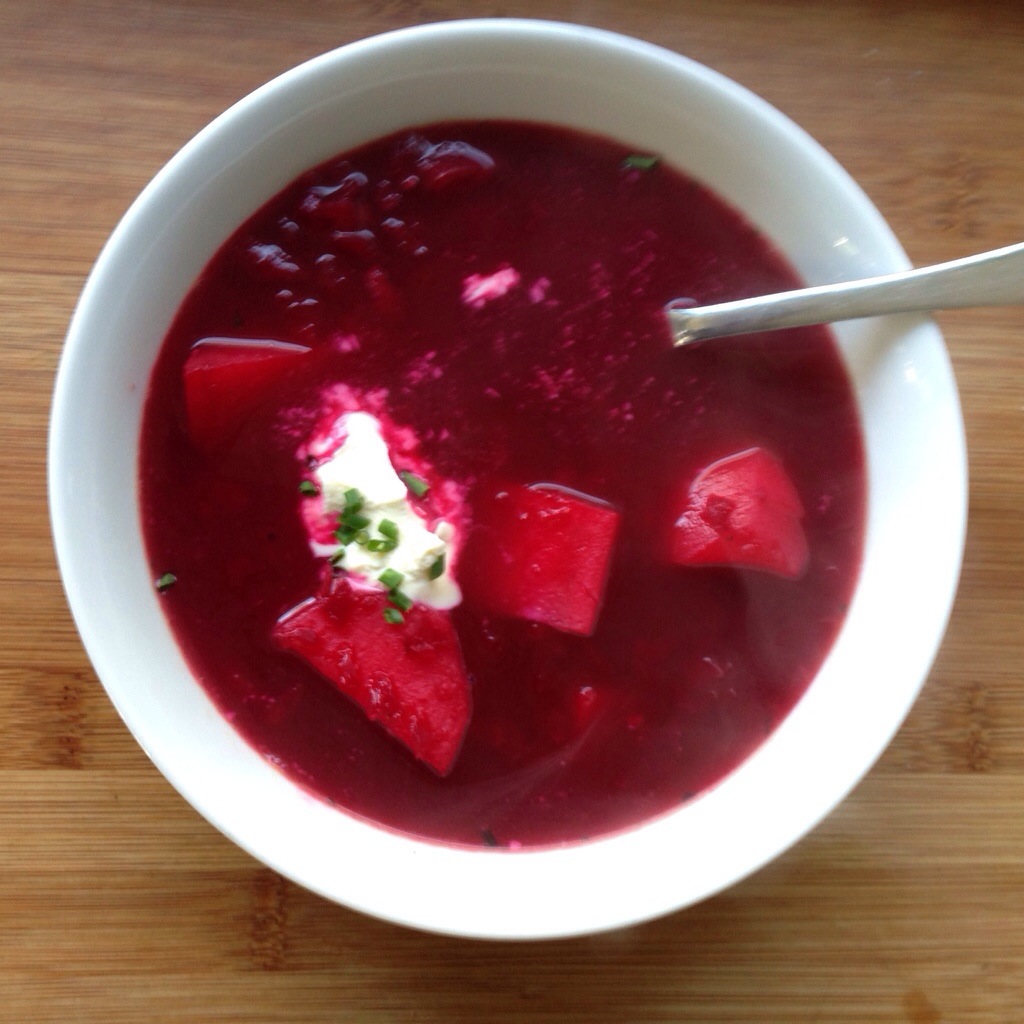
One of the traditional elements of this meal is a soup called barszcz; the Polish version of the Russian beetroot soup, borscht. We have quite a bit of beetroot at the allotment; I love the earthy taste and vibrant colour, which seems to offer some brightness in the cold, dark winter. There are different versions of this soup, but mine is a clear soup with finely chopped beet, served with boiled potatoes and sour cream. The sour cream element is both authentically Polish, and simultaneously unauthentic as the sour cream I use is Lithuanian. Apparently Polish sour cream is superior to that usually found in our supermarkets, having a deeper flavour and thicker consistency. We have a local Eastern European store run by Lithuanians, so I went to find some Polish sour cream. On asking, the shop assistant agreed that Polish sour cream was indeed good, but insisted that Lithuanian was even better! I have to say that the sour cream I left the shop with was amazing; creamy, yet still sour and refreshing, a brilliant accompaniment to the earthy flavours of the soup.

20131212-102102.jpg
You will need (serves 4)
4 good sized beetroot
800ml good vegetable stock
1 clove garlic (crushed)
Tsp sugar
2 tbsp lemon juice
2 large potatoes, cut into large dice and boiled
Sour cream to serve

Preheat the oven to 200°C, wrap the washed beets in aluminum foil and roast until tender (about 30-45 minutes). When they’re cool enough to handle, peel and slice into strips or finely chop. In a medium saucepan, bring the stock to the boil, add chopped beetroot, garlic, sugar, lemon juice and salt and pepper to taste. Simmer for about ten minutes, allowing the flavours to combine. Serve hot with the boiled potatoes and a spoonful of the sour cream.

20131212-102118.jpg

Boulangère Potatoes

Our potato crop was pretty decent this year, despite the hot weather and the fact that across our allotment site people were complaining about low yields. We’ve still got some left over, as well as onions and loads of sage. So this comforting dish was an ideal one for the cold winter nights. I served it as an accompaniment to roast pork, but it could easily be a frugal supper for two. This classic French potato gratin dish translates as “Potatoes in the Style of the Baker’s wife”. The story being that in the past, a French family would prepare these potatoes and then take them to the local boulangerie, the baker, to be cooked in the even heat of his oven, hence the name.

20131203-095846.jpg
You will need
500g potatoes, peeled and thinly sliced (it’s work getting them really thin, so that the layers are deliciously delicate)
1 onion, peeled, halved and thinly sliced
Some fresh sage, leaves picked and finely sliced, some leaves left whole
Sea salt
Ground black pepper
200 ml vegetable stock
1 handful of Parmesan cheese, freshly grated
1 knob butter

Preheat the oven to 180°C/350°F/gas 4. Get an ovenproof dish and grease the bottom with a little of the butter. Place a layer of sliced potatoes over the base, then a layer of sliced onions, followed by a scattering of sliced sage and a sprinkle of salt and pepper. Continue this layering until all the potato is used up, or you run out of room. You want to end with a layer of potato on top, which I overlapped around my dish to give a nice finish. Once you’ve completed the layers, pour your stock over the potatoes. Season the top layer with a little salt and pepper; then place a few whole sage leaves, some small dots of butter, and your Parmesan on top. Pop the dish on the highest shelf of the oven and cook for around an hour, until the top is crisp and golden and the potatoes cooked all the way through.

This post is an entry for #FluffyMarisPiper Linky Challenge sponsored by Potato Council. Learn more at bit.ly/18rWnaB