Raspberry Friands

We always end up having egg whites left over from cooking. Apart from meringue, which can be used to make a favourite of our family, Eton Mess; I struggle to find uses for these leftover whites. I recently discovered friands; a version of the classic French financier which is popular in the antipodes. These little cakes use almond flour and lightly whipped egg whites to form a delicious sweet morsel, which compliments the acidity of raspberries brilliantly.

raspberry friands and coffee

You will need (makes 24 small friands)
4 egg whites
120ml milk
A dash of Rosewater
60g margarine melted
125g ground almonds
250g cups gluten-free icing sugar
70g gluten-free plain flour
A dash of sunflower oil
150g frozen raspberries
50g flaked almonds

Preheat oven to 180°C.  Beat egg whites for 1 minute or so until they are frothy, but not firm. Add the milk to the melted margarine and dash of Rosewater, before combining with egg whites. Fold ground almonds into mix using a wooden spoon, before sifting the icing sugar and flour into the bowl, then gently folding it all together. The less the mixture is moved around at this point, the lighter the friands. Grease a 12-cup mini muffin (or friand )tin with a little oil, then spoon equal amounts into 12 holes. Press 2 raspberries in each friend, so they are covered with mixture and then top with a few flaked almonds.

Bake for 20 minutes or until firm to touch on the centre. Leave in pan for a few minutes before turning friands out onto a wire rack to cool.

20140625-204505-74705831.jpg

friands and coffee


New Baby Chicken

It’s amazing how a situation, and experience, can change how you perceive things. Its definitely the case with food. Fish and chips for example always tastes better on the beach, and the memory of the ice cream I had relaxing on the walls of old Dubrovnik is undoubtedly effected by my happy memories of that holiday.

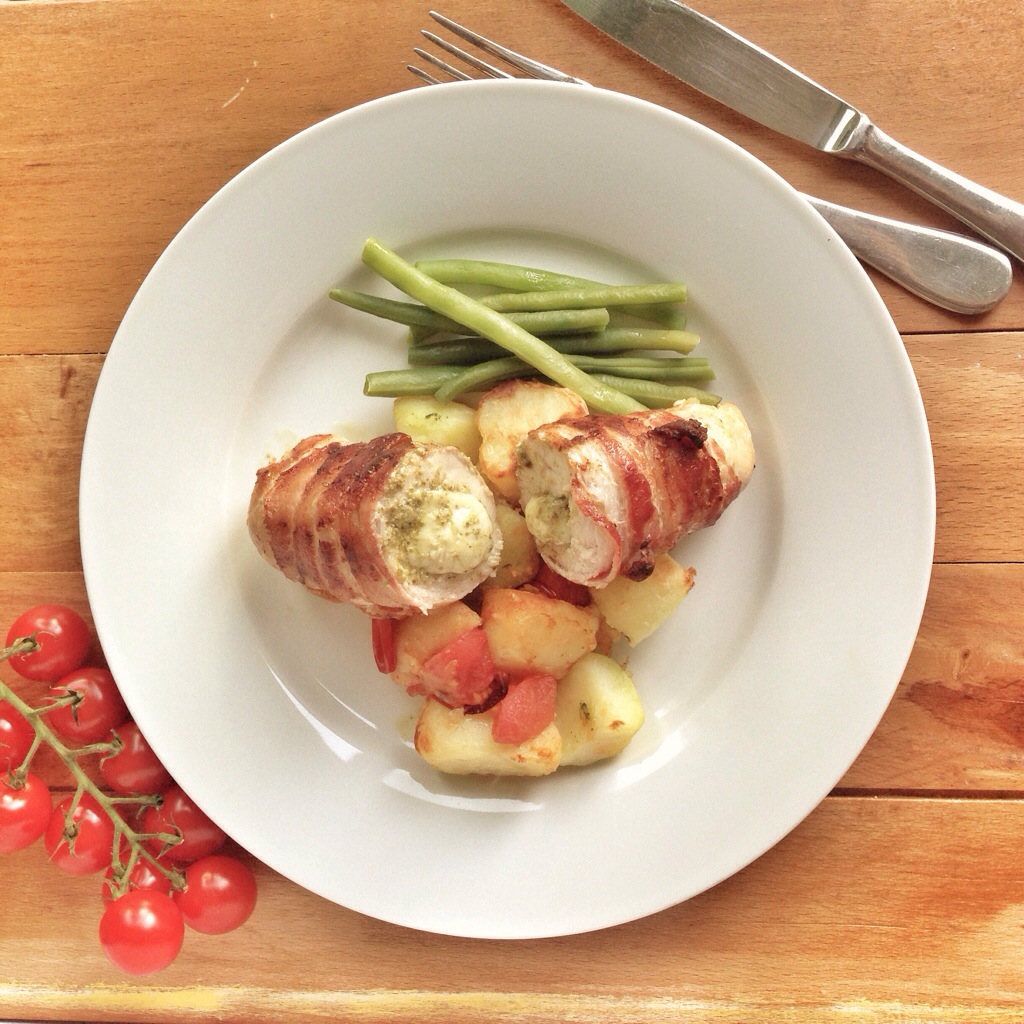
When our daughter was born, my wife and I returned from hospital with our new baby desperate for a good meal. Hospital food is not necessarily the best, although I remember my wife gobbling down all the food given to her during her time in the hospital. So, on our return I set to work making a decent meal.  I don’t recall why, perhaps it was suggested by my wife, but I ended up making a Jamie Oliver recipe (from one of the comic relief mini-books). A tray bake chicken dish, which used pancetta wrapped around chicken stuffed with basil butter. The herby butter oozed out of the chicken, helping to keep the chicken moist, but also infusing the potatoes with a delicious basily butteriness. It was exactly what was needed for a mother recovering from childbirth, and a father coming to terms with the enormity of parenthood. Comforting and buttery, yet fresh with the acidity of the tomatoes and the vibrant flavour of basil. We’ve had the same dish, or very similar versions of it, many times since, but its never ever come close to matching the first one. That’s why it will forever be known as New Baby Chicken.

New Baby Chicken

You will need (serves 2)
600g potatoes, peeled and cut into 2cm dice
salt and black pepper
olive oil
Small bunch fresh basil
50g softened butter
2 skinless chicken breasts
6 slices streaky bacon
Large handful cherry tomatoes, halved
Small bunch of salad leaves (whatever you’ve got, but rocket or watercress go well)
Juice of half a lemon
4 tbsps extra virgin olive oil

Preheat the oven to 220°C and par·boil the potatoes in salted water, then drain and let them steam dry until cool. Toss them in a little oil and seasoning, before baking in a  roasting tray for 10 minutes. Meanwhile, tear the basil leaves and pound them in a pestle and mortar with a little salt until the luscious green juices of the basil are released. Add butter and work the basily liquid into it, to form a green flecked basil butter.

To prepare the chicken turn your first chicken breast over, fold back the small fillet underneath, cut a long, shallow slash into the main breast meat. Spoon a couple of teaspoons of basil butter into this cut and fold the small fillet back into its original position. Next, lay the streaky bacon on a chopping board and, using the side of the knife, flatten and lengthen each rasher. This makes your bacon go further, but also helps it to crispen up better.  Lay out three rashers, slightly overlapping, on a chopping board. Place a chicken breast upside down at the centre of the bacon and wrap the rashers around the chicken breast. Repeat with the remaining chicken and bacon.

chicken and potatoes in the pan

When the potatoes are nearly cooked, throw the tomatoes into the tray with a splash more oil, and place the wrapped chicken breasts on top. Pop back in the oven for about 15-20 minutes. Serve with a salad of leaves and a quick lemon juice dressing (mix the juice of half a lemon with 4tbsp. of oil).

new baby chicken


Throwaway Smoothie

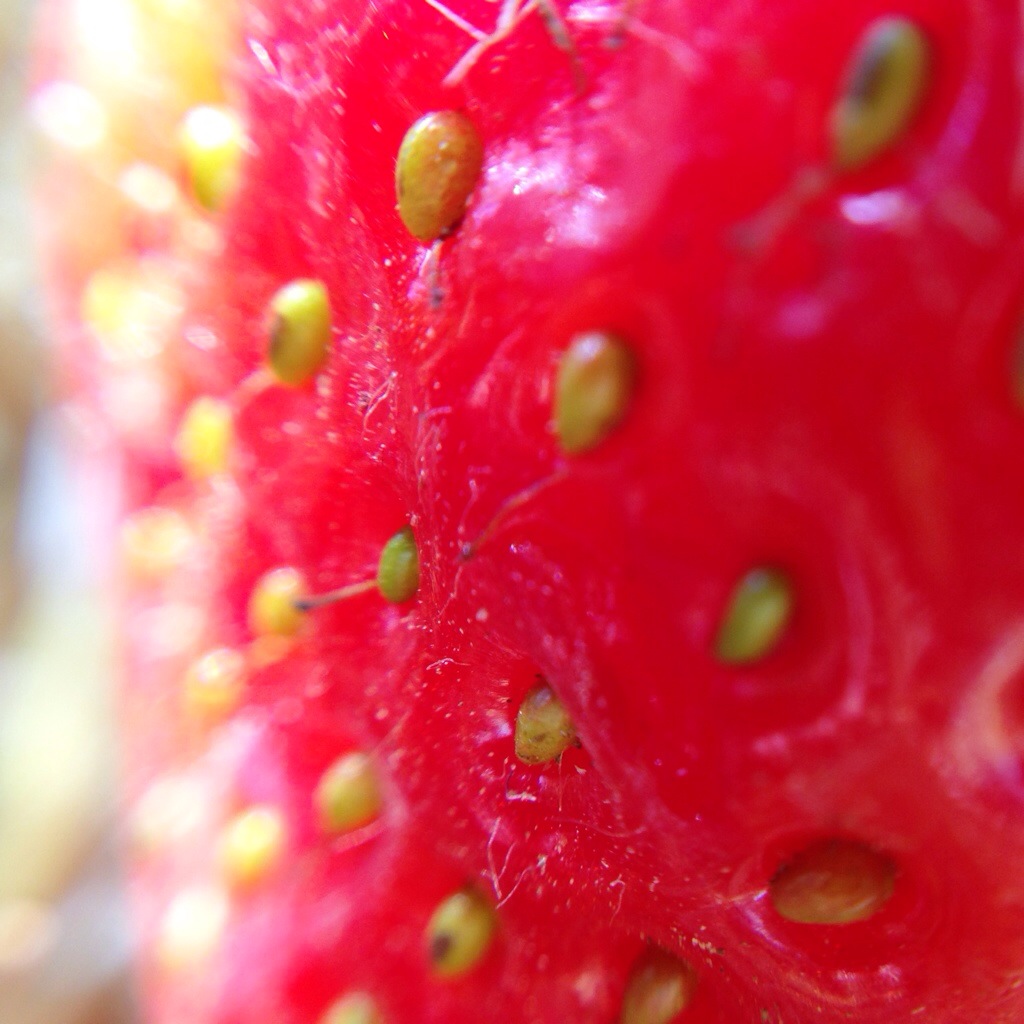
With the summer firmly arrived; we are starting to see the fruits of the hard work at the allotment over the winter and spring. In the case of the strawberries and raspberries this is a literal fruiting; and when it comes to the former, in abundance. The strawberries are ever popular with the kids, but even their insatiable appetite for the berries can’t ensure they all get eaten. The excess crop gets open frozen and put in bags in the freezer, to use at a later date, or to make into a smoothie. I’ve also come to notice the amount of fruit which is thrown away at the local greengrocers and supermarket. The supermarkets seem to still insist that once the best before date has expired, so has the fruit, and this it seems is spreading to the greengrocers as customers reject anything with a bruise or blemish. As a result, I’ve started to check out the shops at the end of the day and have picked up loads of fruit which is slightly bruised, but otherwise fine. Especially when it could go in a smoothie anyway. So once washed and prepared it goes in the freezer to be used another day.

macro strawberry

The advantage of using frozen fruit in these fruit drinks is that you automatically get an ice cold smoothie. You can also just grab a handful of whatever fruit you’ve saved from the compost bin and quickly whizz up a refreshing and fruity drink. The other essential ingredient for a smoothie is a banana, giving the drink body, but also natural sweetness. The blacker and softer the banana, the better, with the sugars inside better developed the riper it is. The freshness of yoghurt works well with the sweet banana flavour and also compliments the fruit. Ever popular as a breakfast, lunch, after school or evening drink. The smoothie is a great way to use up those old fruit.berry smoothie

You will need (makes enough for 2)
1 banana
2 or 3 handfuls of frozen berries
200ml natural yoghurt

Peel and roughly chop the banana and add to a blender with the frozen berries and yoghurt. Whizz until totally smooth. Pour into glasses to serve. To make a more substantial smoothie for breakfast, add a small handful of oats to blended mix, before giving it a few seconds more blending. The resulting ‘thickie’ will keep you going well.

This smoothie is really only a rough recipe. It can be adapted to fit whatever fruit you’ve picked up from the grocers or garden.

smoothie drinker

 This post has been submitted to #CookBlogShare.

 photo 9af5d0df-b279-4c3c-92ad-fc98f562a39a_zpsaca21226.jpg

Early Summer Minestrone

Home grown veg, no matter how small or misshapen, are a world away from those bought from the supermarket. It has that something special, it’s been cared for by you, it’s got soul. Over the year homegrown veg can provide you with so many fresh and vibrant tastes; from the earliest of peas and beans, to the sugary sweetcorn of late summer, to the pumpkins and roots of autumn.
20140609-164951-60591333.jpg
This soup is like taking a seasonal look at the plot. It’s a vehicle for the fabulously mixed flavours of the allotment this month (or any month actually). At its base is a great chicken stock and a softened soffritto (the classic Italian soup and sauce base); but apart from that the soup is about using what is available. As such a recipe is not what you need to make this, all you need to do is go to the garden and pick what is in season. The soup benefits from the freshest of vegetables, balanced with a good source of carbs. In huge spirit of adding what you have in season, then this should be potatoes or dried beans. I often use broken pasta or some of the tiny pasta shapes like orzo, combined with small dice potatoes and cannellini or a similar bean.

You will need (serves 4)
3 tbsp olive oil, plus extra to serve
1 onion, chopped
1 clove of garlic, crushed
2 carrots, cut into fine dice
2 sticks of celery, cut into fine dice
Seasonal vegetables of your choice (at the moment a couple of handfuls of fresh peas and broad beans, 3 large leaves of Swiss chard, shredded, but any veg works)
1.5l good quality chicken stock
1 potato, cut into 2cm dice
100g cooked and drained haricot beans (or whatever bean you have)
150g pasta (I’ve used broken bits of pasta, but orzo or another small pasta is great too)
Grated parmesan and a few mint or basil leaves, to serve

Heat the oil in a heavy-based pan and add the onion and garlic, softening for 5 minutes, before adding the carrot and celery and softening further. Add the rest of the seasonal vegetables in order of cooking time (peas won’t take as long as courgette for example) and allow to soften slightly. Stir in the potato, stir for a moment, then add the stock, the cannellini beans and pasta. Bring to the boil, then simmer for about 15 minutes until the potato and pasta are cooked. Season to taste, drizzle with some olive oil, a grating of parmesan and some torn mint leaves.


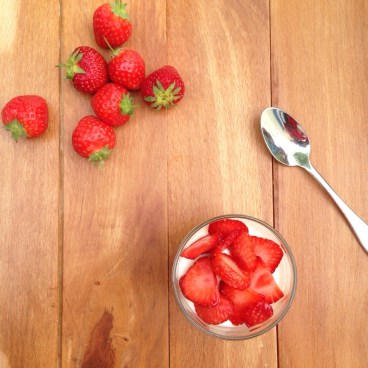
Favourite Five Strawberry Recipes

Strawberries are one of mine, and my family’s, favourite fruits. They are beautifully sweet and their bright red colour always enlightens a plate. We grow them on the allotment and most of the fruit is usually eaten well before it makes its way into the kitchen. In fact it most often doesn’t even make it into a punnet! When they do get home, we use them in a range of desserts. Here are my favourite five recipes.favourite five

Strawberry Eton Mess  – A fabulous combination of cream, strawberries and meringue. Whip cream to stiff peaks, then fold in some of the strawberries whizzed with a touch of elderflower cordial. Break up some meringue and fold into the cream, followed by the remaining strawberries sliced. Pop into small glasses and top with a mint leaf and a couple of sliced strawberries.

eton mess

Elderflower Pannacotta with Macerated Strawberries – I’ve blogged the recipe for this recently, but its such a delicious dessert. The creamy and floral panna cotta combines well with the sweet and juicy strawberries. Macerating the fruit in a little elderflower cordial really heightens their strawberriness.

eledeflower and strawberry panna cotta

Frozen Strawberry Smoothie – A quick and easy way to use up strawberries which have become overripe. Just collect these strawberries and pop them in the freezer as you go along. When you’re ready for a cold smoothie, just whizz the frozen strawberries with a banana, a few tablespoons of yoghurt and a dash of honey. Serve with a straw. The kids always like a straw!

Strawberry tart – This is an adaption of the berry tart I blogged about last year, combining mascarpone cream in a pastry case and topped with sweet berries. For the filling, whip 500g mascarpone, 100ml single cream, 3 tbsp. sugar, a little lemon zest and a knife point of vanilla paste until its shiny. Evenly smear the filling onto a 28cm sweet shortcrust pastry tart case, then top with small strawberries. Glaze with a bit of strawberry jam warmed up.

Strawberry and Ginger Cheesecake – We make this with gluten free ginger biscuits, but any ginger biscuit will do. Crush 80g of biscuits and divide between 4 glasses. Beat 200g soft cheese, 200g yogurt, 4tbsp. sugar and a little vanilla paste together until smooth, before spooning over the crumbs. Chill until ready to serve. Meanwhile hull and slice berries and toss in a little strawberry jam, then place on top of cheesecakes and serve.

What ways do you use strawberries in your cooking?


Elderflower Panna Cotta with Strawberries

Elderflowers give a beautiful perfume to a dish, and add something special to this classic panna cotta. This is a desert which, despite its appearance on fancy restaurant menus, is a simple one to make. All you need is time for the gelatine to do its thing and set the sweetened cream.eledeflower and strawberry panna cotta

You will need (serves 4)
100ml milk
50ml double cream
2 tbsp. elderflower cordial
20g caster sugar
knife tip of vanilla paste
2 leaves of gelatine
150g yoghurt

100g strawberries (sliced)
1 peach (sliced)
1 tbsp. elderflower cordial

Stir the milk, cream, sugar and vanilla together in a pan over a lowish heat until the sugar dissolves and the liquid is just starting to boil. Take off the heat and allow to cool to room temperature.

Soak the gelatine in cold water for five to 10 minutes, then remove from the water and squeeze out water. Add to the warm milk and cream mixture and stir until dissolved. Pass through a sieve into a bowl and leave to cool. Mix in the yoghurt until smooth. Pour the mixture into small glasses, cover and chill for four hours. Meanwhile, hull and slice the strawberries and put in a bowl with the elderflower cordial. Leave to macerate for 30 minutes. I tend to serve these panna cotta in the glasses, with the fruit on top; but if you want to turn out of the moulds, dip the glasses in hot water for a few seconds, then turn onto a plate.

strawberries and elederflower panna cotta

I’m entering this recipe for Four Seasons Food celebrating the vegetables and fruits of spring.  FSF is run by Anneli at Delicieux and Louisa at Eat Your Veg who is hosting this month.

45dad-fsf-spring

Elderflower Cordial

I look forward to the first few Elderflower blooms on the tree at the allotment. For me it really marks the start of the growing season, and in particular the start of the period of cropping from the allotment. At the moment the Queen of the Hedgerow is covering the land with white blooms and its heady scent. Elderflower has historically been known as a medicinal herb; being diaphoretic, anti-inflammatory and anti-catarrhal, and can be prepared as tea, tincture or a cold infusion. In culinary terms it is used in fritters, and perhaps most often made into a cordial. For me an ice cold drink of Elderflower cordial with a sprig of mint is the perfect summer afternoon refresher, and best of all its cheap and easy to make your own.

20140514-180724.jpg

 You will need
About 25 elderflower heads – Elderflowers need to be picked in the first half of the day and in sunshine in order to get the best cordial.
Finely grated zest of 3 lemons and 1 orange, plus their juice (about 150ml in total)
1kg sugar
1 heaped tsp citric acid (optional)

Check out the elderflower heads carefully and remove any bugs and bits. Place the flower heads in a large bowl together with the orange and lemon zest. Pour 1.5 litres boiling water over the elderflowers and citrus zest. Cover and leave to infuse overnight. Strain the liquid through a jelly bag, before pouring into a saucepan. Add the sugar, the lemon and orange juice and the citric acid to help preserve the drink and make it clear. Heat gently to dissolve the sugar, then bring to a simmer and cook for a couple of minutes. Once ready, use a funnel to pour the hot syrup into sterilised bottles. Seal the bottles with swing-top lids, then pasteurise for twenty minutes at 80°C. Even without pasteurisation I have had bottles last for several months, and enjoyed the cordial well into the autumn.

I’m entering this recipe for Four Seasons Food celebrating the vegetables of spring.  FSF is run by Anneli at Delicieux and Louisa at Eat Your Veg who is hosting this month.

45dad-fsf-spring

I’m also dead chuffed to be shortlisted in the FOOD category for the BIBS (Brilliance in Blogging Award). If you think I deserve to be in the final then please vote for me by clicking on the picture below. Thank you for all your support!

BiB Food 2014


Favourite Five Broad Bean Recipes

favorite fiveI’ve mentioned earlier this month that the first broad beans of the season are a real delight for me. I like the fact that you can plant a few beans in October or November and they emerge in the last of the autumnal sun, brush off whatever the winter throws at them, then rapidly grow as the days warm in spring. One single bean brings one plant, but a whole basket of harvested pods and countless beans. They are one of the easiest of crops to grow, only being slightly blighted by black fly and bird attack. I’ve found that overwintering the beans seems to cut down on the black fly attacks, but opens up the possibility of birds like pigeons feasting on the new shoots. So I often use a net to cover the plants in their infancy, and also pinch out the tops of the plants when the beans are formed; which I’m told reduces the chance of the black fly descending. As an ingredient the beans are perhaps at their best when small and sweet, although the larger beans work well when made into purees and we had amazing large dried and fried beans in Peru; a kind of Latin salted peanut.

Broad bean

Broad beans are a great ingredient and often make their way onto our plates. Here are my Favourite Five Broad Bean recipes.

Broad Bean Hummus – Cook 400g of shelled beans in boiling, lightly salted water till tender  about 8-10 minutes or so). Drain, cool and pop them out of their slightly grey skin. Whizz with a small sprig of mint in a food processor before pouring in a little lemon juice, and some olive oil as the processor blitzes. Continue to mix until smooth.

Broad Bean, Pea and Mint Tagliatelle  – This is perhaps our favourite spring/summer pasta dish. Start by blanching the beans   and peas (100g of each shelled). If the beans are young you don’t need to peel off the outer skin, but if older its worth the time. Take half of the beans and peas and whizz in food processor until semi-smooth. Finely chop a garlic clove and soften in some olive oil, add the whizzed pea/bean mix and cook for a minute or so. Add 200ml of double cream and the other half of the beans and peas. Stir in a handful of chopped mint and 75g grated parmesan. Add your choice of cooked pasta to the sauce, serve with a little extra parmesan sprinkled on top.

broad bean pea and mint pasta

Broad Bean Falafels – Place 500g podded broad beans in a food processor and whizz; add 1tsp. baking powder, small red onion, 1 clove garlic, handful of chopped coriander, parsley and mint, and 1 tsp. cumin seeds. Blend until smooth, adding a little lemon juice to help it break down. Add a little olive oil and then form into balls. Chill for a few minutes and then fry in oil until crisp, serve in a pitta with hummus and minted yoghurt.

Broad Bean and Chorizo Tapas – Cook the podded broad beans in salted water for 8-10 minutes, drain and peel off greyish skin. Meanwhile, slice a chorizo and fry in a little oil. Add the beans to the chorizo and spicy oil, toss for a few minutes, then add chopped flat leaf parsley.

Broad Bean, Pea and Feta Orzo Salad – Orzo, a delicate grain-shaped pasta, is quick to cook. Whilst it cooks, sauté 2 shallots, lemon zest, and some cooked peas and beans in a bit of butter. Combine the bean and pea mix with the pasta, some chopped feta, and a finely chopped mint. A great summer salad or side dish.

What ways do you use broad beans in your cooking?

I’m dead chuffed to be shortlisted in the FOOD category for the BIBS (Brilliance in Blogging Award). If you think I deserve to be in the final then please vote for me by clicking on the picture below. Thank you for all your support!

BiB Food 2014


Taking the Sting Out Of It – Nettle Risotto

Nettles consume the phlegmatic superfluities which winter has left behind. Nicholas Culpepper 1653

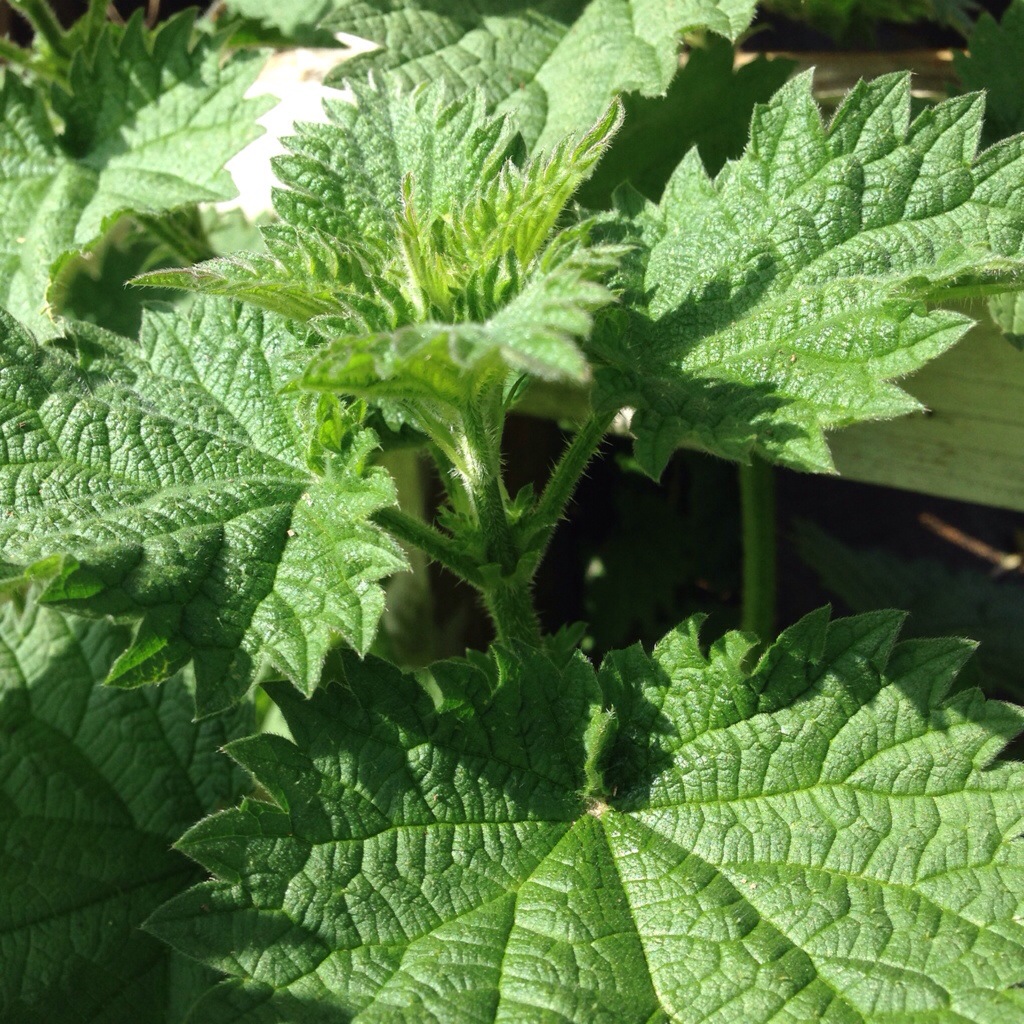
nettles
Like many allotments, ours has the occasional weed. Indeed; we have, the last eight years, been battling an attack of bind weed, with occasional skirmishes with ground elder, nettles and goose grass. Many of these weeds were essential foods in Medieval times. People like Nicholas Culpepper knew the nutritional benefits of these now unwanted plants; they even put them in books such as The Fromond List (a list of ‘herbys necessary for a gardyn’), compiled by Surrey landowner Thomas Fromond in about 1525.

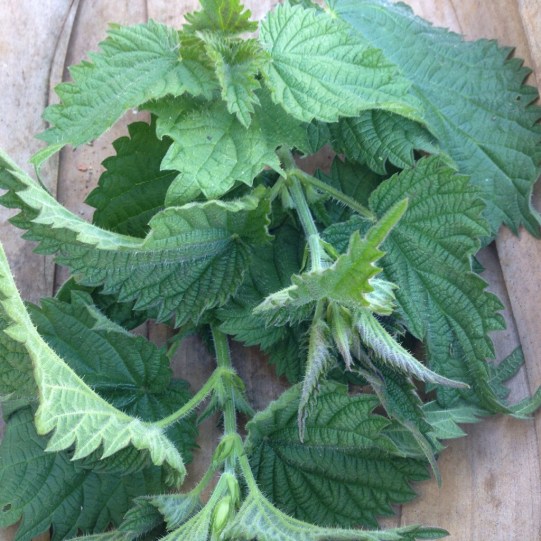
Across the world nettles for example are used in many dishes, from frittata, and a Scandinavian soup, to a version of the Greek spanakopita. The Italians seem to be particular fond of the humble nettle; so, as the nettle ‘crop’ at the allotment was looking particularly lush and fresh, I decided to make use of this foraged food for a risotto. Nettles are not known as Stinging Nettles for no reason, they have many hollow stinging hairs called trichomes on the leaves and stems, which act like hypodermic needles, injecting histamine and other chemicals that produce a stinging sensation. In order to avoid the obvious issue of being stung when picking I wore gloves and picked only the top few leaves, placing them straight into a last of bag as I did.20140430-082937.jpg
You will need
Two large handfuls of young nettle leaves
1 litre chicken stock
50g cubed butter
1 onion, very finely chopped
1 clove of garlic, finely chopped
250g Arborio rice
A small glass of dry white wine
50g grated Parmesan
A handful of toasted pine nuts

Start by blanching the nettles for a few minutes in boiling salted water, before whizzing in the food processor with a little liquid to make a purée. Next heat the stock, you want it to be just simmering so when you add it gradually to the rice it doesn’t reduce the temperature of huge dish too much and slow the cooking. In a thick bottomed pan, sweat the onion gently in a little butter and olive oil until it’s translucent and soft. Add the garlic and cook for a few more minutes, before adding the rice. Cook the rice for a few minutes until it starts to become slightly translucent, then pour in the the glass of wine. You want to let the wine evaporate until the onion and rice are nearly dry, then add stock, a ladleful at a time, stirring constantly, each time waiting for the liquid to evaporate before adding the next ladle.

Continue this process for about ten minutes, then add the nettle purée. Stir into the rice and continue to add the stock until the rice is al dente. When the rice is ready, add the cubed butter, seasoning and Parmesan and put the lid on the pan. Leave the risotto to rest for a couple of minutes, before beating the butter and cheese into the rice and serving. Sprinkle the toasted pine nuts on top and add a little more Parmesan and a drizzle of good olive oil.
Nettle risotto

Nettles are such a great resource, which as well as being nutritious and plentiful are free! Why not take the sting out of your food bill and give it a go. Any other suggestions for foraged greens?

I’m dead chuffed to be shortlisted in the FOOD category for the BIBS (Brilliance in Blogging Award). If you think I deserve to be in the final then please vote for me by clicking on the picture below. Thank you for all your support!

BiB Food 2014


I’m entering this recipe for Four Seasons Food celebrating the vegetables of spring.  FSF is run by Anneli at Delicieux and Louisa at Eat Your Veg who is hosting this month.

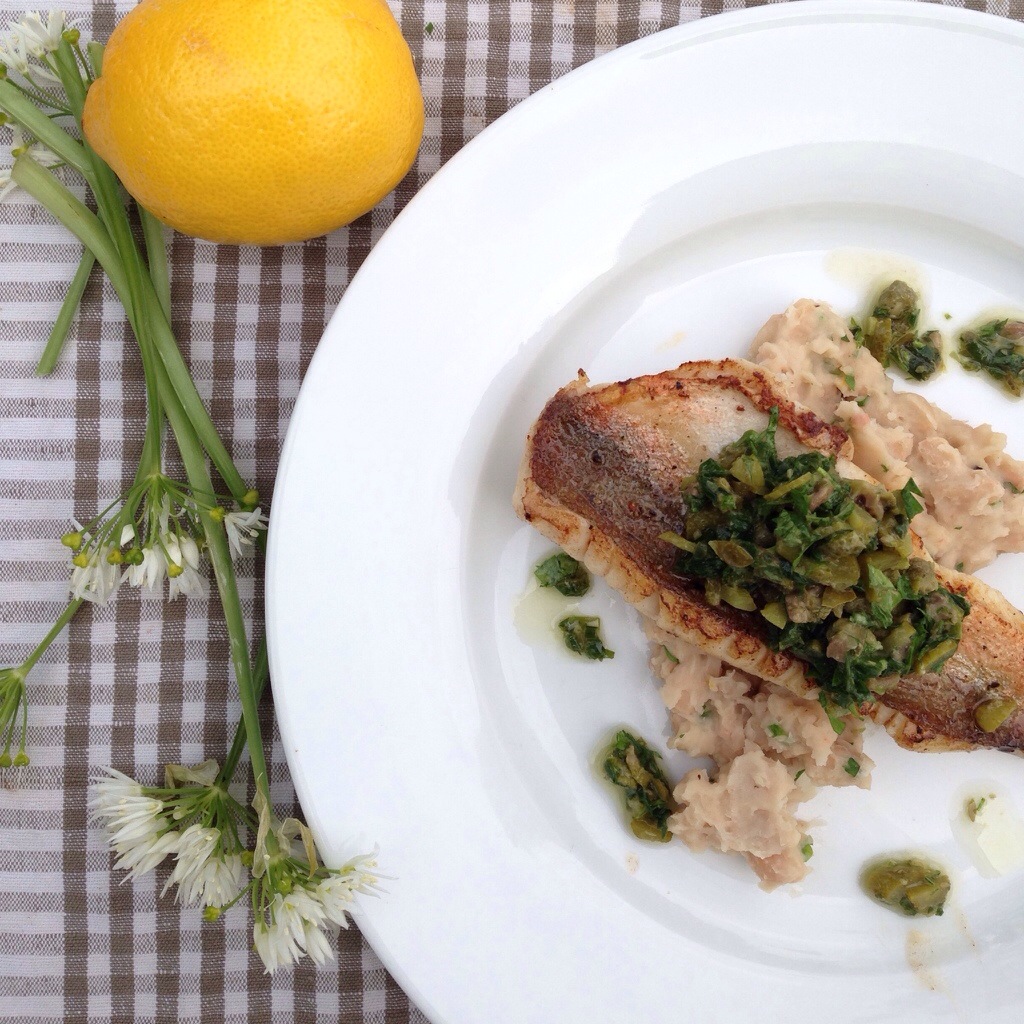
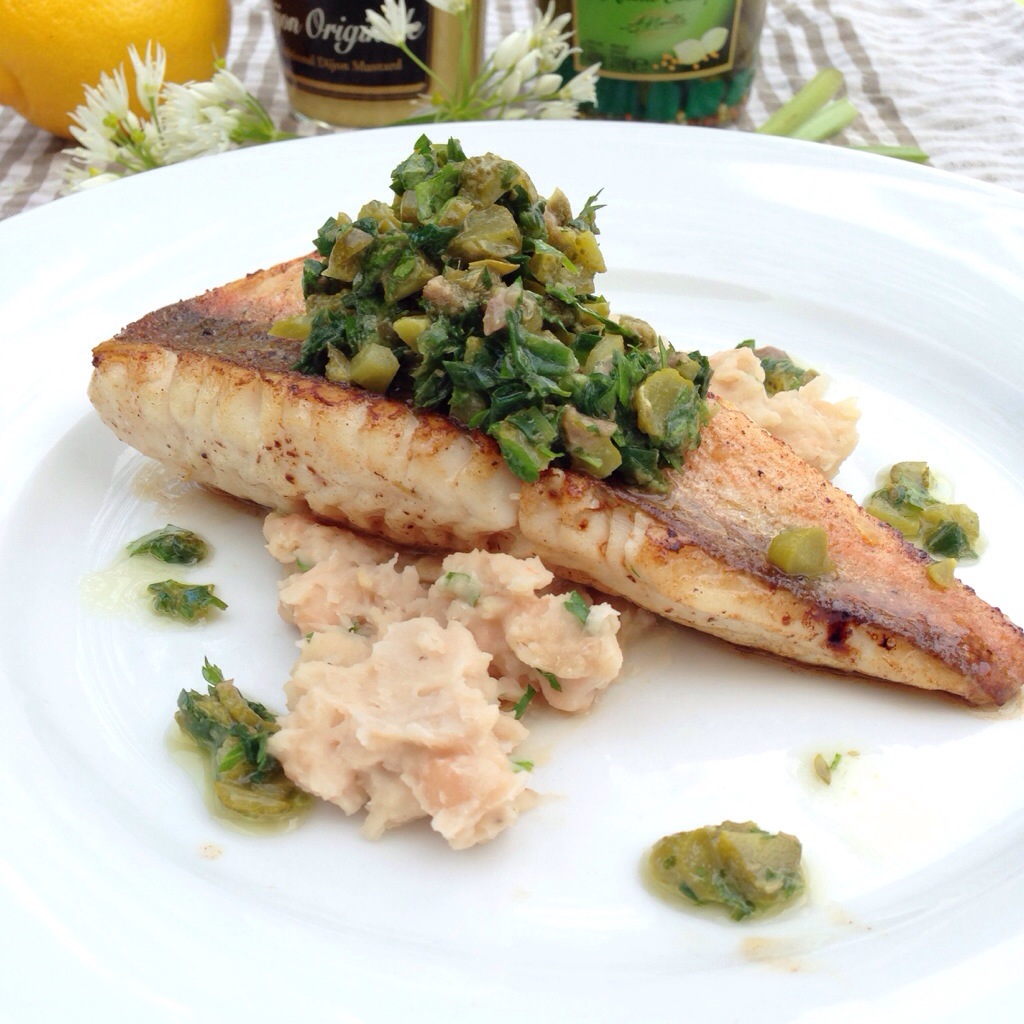
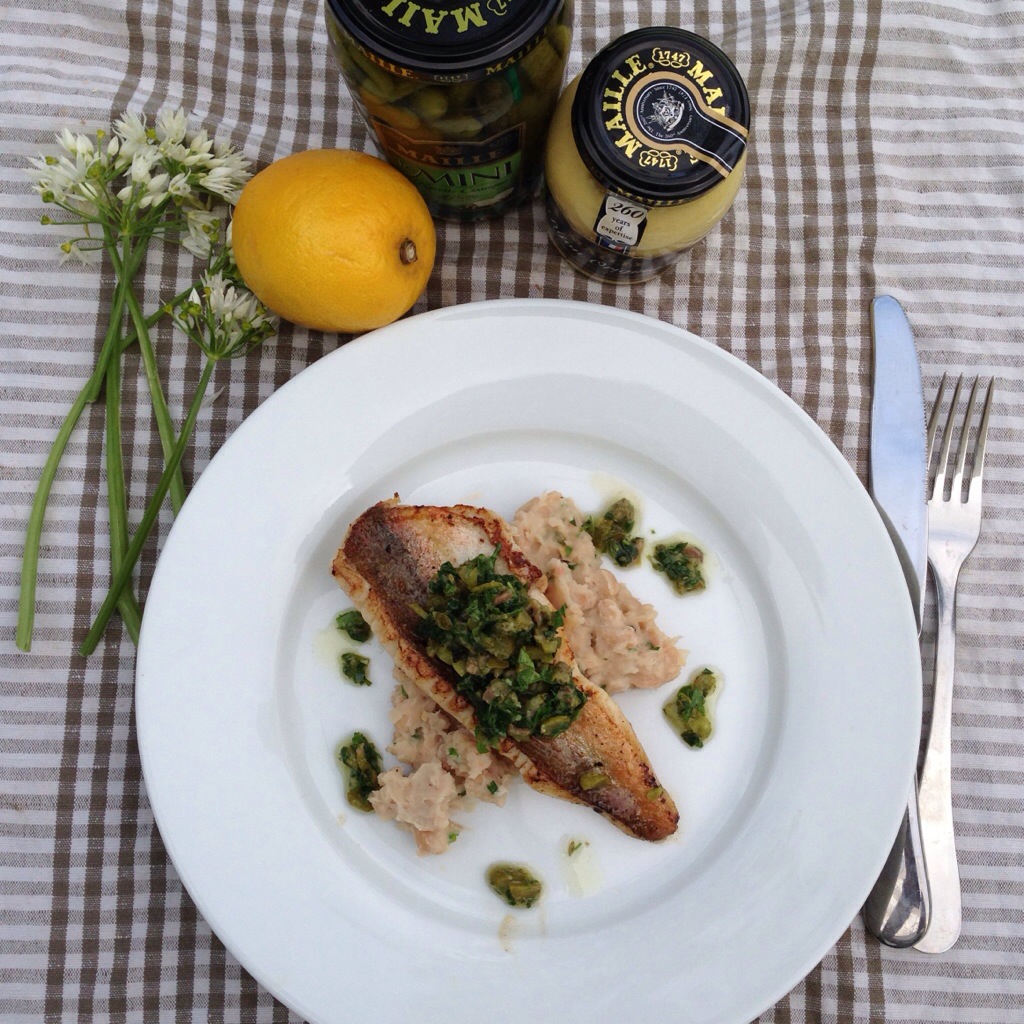
Gurnard, Cannellini beans and Wild Garlic Salsa Verde

I have been on the search for some wild garlic for weeks. Everywhere I went, my eyes had been peeled for the beautiful white flowers and my nose was seeking out that allium aroma which is such a giveaway of this springtime plant. Up until last weekend I had begun to think that this year’s abnormal weather had affected the wild garlic and caused it to disappear. Then, when away in Dorset, I found some. Under the woodland canopy, in a damp corner, there it was. I hurriedly gathered some and my mind began to race with ideas.

Recently I was contacted by Maille, purveyors of all things mustard, and asked if I’d like to enter a competition using their products. I’ve always said that I wouldn’t do reviews or product promotions; but as I use their mustards all the time I feel I can do so with a clear conscience. Armed with mustard and wild garlic I knew exactly what to make. Salsa Verde. This sauce is a brilliant way to use fresh herbs from the plot and a fantastic accompaniment to fish and meat. The acidity of the salsa combines particularly well with the flavour of meaty fish like Gurnard (a great sustainable option, which is only really caught as bi-catch and if we bought more of it would alleviate the pressure on other species).

20140427-135759.jpg

You will need (serves 2)
2 decent sized Gurnard fillets

For the Cannellini beans
salt and freshly ground black pepper
Olive oil  
1/2 clove garlic (crushed) 
Small sprig fresh rosemary
1 tbsp. chopped parsely
Grated zest 1/4  lemon   
1 can Cannellini beans

For the salsa verde
Parsley, mint and basil leaves (a small handful of each)
A handful of wild garlic leaves
1/2 tbsp. each of capers
1/2 tbsp. gherkins (I used Maille le Mini Recette Classique, they have a natty cage inside the jar so you don’t have to delve into the jar to grab a gherkin)
1 tsp. Dijon mustard (I used the Mailles Dijon Orginale)
1 anchovy fillet
Enough olive oil to bring the salsa verde together into a pourable sauce

20140427-135730.jpg

For the beans, put a splash of olive oil in a saucepan, and mix in the garlic. Add the rosemary sprig, and the lemon zest and warm through. Remove the rosemary and add the drained and rinsed beans, before adding to the pan and warming through. Take a third of the beans and whizz in the blender, then return to the pan. Finally add a small handful of chopped parsley.

The salsa verde is simple to prepare. Start by blanching the wild garlic leaves, refreshing in cold water, and allow to cool. Finely chop the garlic, herbs, gherkins, capers and anchovy using a sharp knife and combine with the mustard and enough oil to make a pourable sauce. Put to one side for the flavours to mingle and mature. Season the cod cheeks with salt and pepper and fry in a little olive oil for 2 minutes on each side. In the last minute, add the chopped garlic and a little lemon juice.

To cook the gurnard, season the skin side of the fillet, then add skin side to a hot buttery pan. Fry until the skin becomes crispy, around 3 minutes. Turn over and cook for a further minute.  To serve, spread the bean mix on the plate, place the fillet on top and then place some salsa verde on top.

20140427-135737.jpg

20140427-135751.jpg

20140427-135744.jpg