June at Plot 4

May, of all the months, seems to fly by. I don’t know what it is, but it always seem to be a month that happens; before you even realise your in it. In terms of the allotment, it’s the month when everything grows. Everything including the weeds. In fact, I’m sure the weeds grow quicker. Still, there are benefits to this growth spurt; flowers emerge, bulbs swell and fruit forms.

Finally the allotment has started to offer us a reliable harvest. The broad beans that I planted way back in October/November have done brilliantly, perhaps aided by the mild winter. We’ve been picking them for a couple of weeks now and we’ve still got lots to go and another row or two developing. Those spring sowings are not quite doing as well as the overwintered variety, but hopefully the warm weather of June will help bring them on and even allow us a cheeky final sowing! Salad leaves have been doing well, although the leaves I sowed in the greenhouse were decimated by extreme heat one day (all shrivelled and crispy). The Swiss chard continues to give us a supply, as does the spinach, although both are beginning to go to seed now the weather hots up. This month has also seen me channelling my inner forager, with nettles for a risotto and elderflowers for cordial being harvested. The elderflowers in particular look like they will give a good harvest, so I must get round to making some more cordial, or even champagne and fritters. Oh yes, and we harvested the first strawberry (from the greenhouse) the other day!

As with last month, there’s been a lot of sowing going on.  Various crops haven’t taken a liking to the heat in the greenhouse on some of the days, or my erratic watering, and have suffered as a result. So, I need to sow some more climbing beans and peas. I also want to get some dwarf beans started; they’re a family favourite, but have somehow got through the seed ordering and sowing net. Outside, there’s more rows of carrots to sow and I’ve got some great purple cauliflower to sow too. Towards the end of the month it will be time to sow Florence fennel seeds too. These delicious bulbs cost so much in the shops, so I’m hoping to grow them at the plot successfully and save myself a few quid.

A lot of the jobs for this month are related to keeping the crops growing. So weeding, watering, mulching and general maintenance of the plants will be a key job. The warm weather we’re due means it’s time to plant out the ever increasing squashes and courgettes. I’ve prepared the soil already, but will add a bit more organic matter before planting them out. Hopefully, we’ll be enjoying a plentiful supply of courgettes and winter squash well into the latter part of the year. In addition, we have discovered a big leak in our pond which means that most of the water has drained out. The newts and a few tadpoles seem to be happy enough in the remaining concentrated soup of a pond, but I think if we can reline the pond all will be a lot happier! Any ideas on a cheap way to get a suitable pond liner?

Garden share collective badge

This post is contributing to The Garden Share Collective; an international group of bloggers who share their vegetable patches, container gardens and the herbs they grow on their window sills.


Elderflower Panna Cotta with Strawberries

Elderflowers give a beautiful perfume to a dish, and add something special to this classic panna cotta. This is a desert which, despite its appearance on fancy restaurant menus, is a simple one to make. All you need is time for the gelatine to do its thing and set the sweetened cream.eledeflower and strawberry panna cotta

You will need (serves 4)
100ml milk
50ml double cream
2 tbsp. elderflower cordial
20g caster sugar
knife tip of vanilla paste
2 leaves of gelatine
150g yoghurt

100g strawberries (sliced)
1 peach (sliced)
1 tbsp. elderflower cordial

Stir the milk, cream, sugar and vanilla together in a pan over a lowish heat until the sugar dissolves and the liquid is just starting to boil. Take off the heat and allow to cool to room temperature.

Soak the gelatine in cold water for five to 10 minutes, then remove from the water and squeeze out water. Add to the warm milk and cream mixture and stir until dissolved. Pass through a sieve into a bowl and leave to cool. Mix in the yoghurt until smooth. Pour the mixture into small glasses, cover and chill for four hours. Meanwhile, hull and slice the strawberries and put in a bowl with the elderflower cordial. Leave to macerate for 30 minutes. I tend to serve these panna cotta in the glasses, with the fruit on top; but if you want to turn out of the moulds, dip the glasses in hot water for a few seconds, then turn onto a plate.

strawberries and elederflower panna cotta

I’m entering this recipe for Four Seasons Food celebrating the vegetables and fruits of spring.  FSF is run by Anneli at Delicieux and Louisa at Eat Your Veg who is hosting this month.

45dad-fsf-spring

Bread of Life

Confidence is a strange thing isn’t it? I’ve always been a quietly confident person, someone who had self belief and could adapt and be flexible when needed. Since getting depression, things have really changed. I no longer feel that I’m that person, I no longer back myself in a situation.

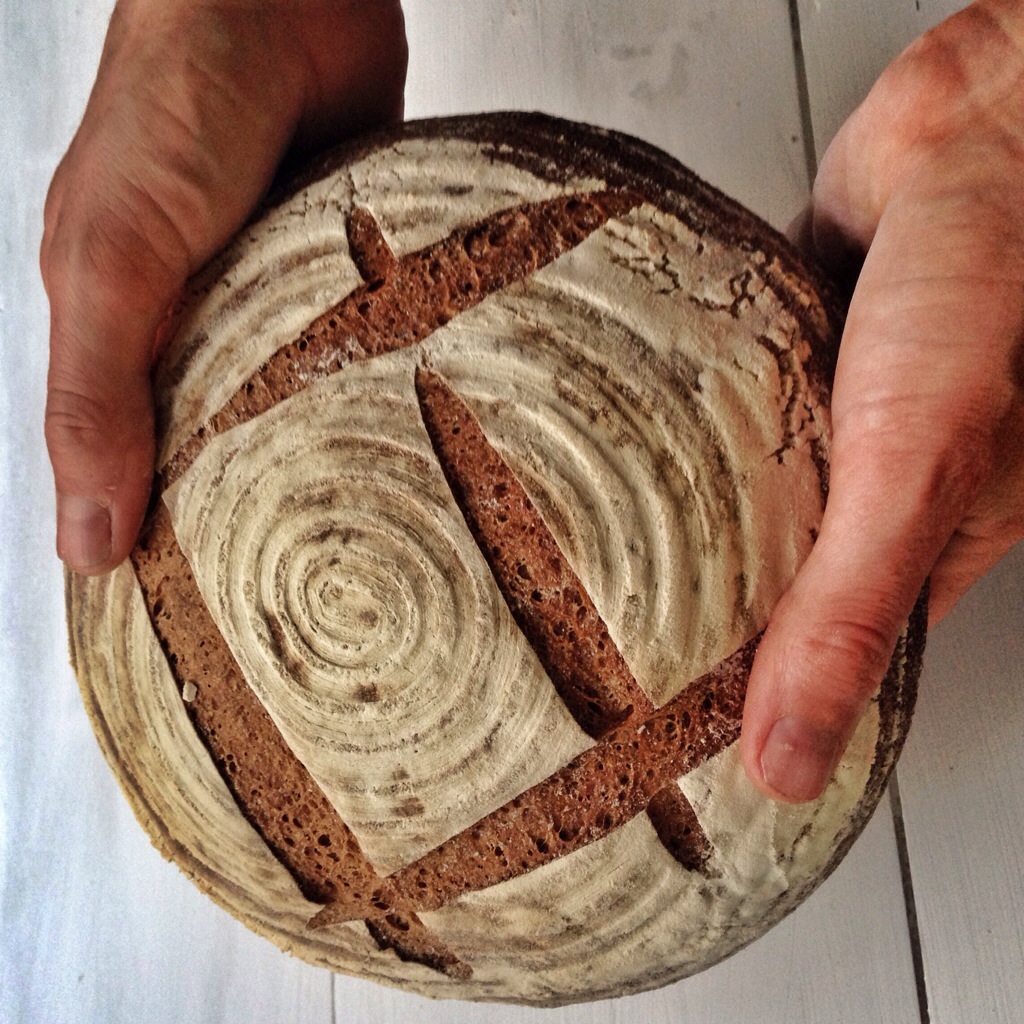
Strangely, cooking, and in particular working with bread, is something that I’ve come to feel a growing sense of confidence in. Bread is a forgiving thing; physically its responsive, it can be moulded, plied, kneaded. It is also such a simple thing; at its basic level it is only four ingredients. The act of making and kneading the dough, giving it time, and baking it to produce a fresh loaf is a miraculous thing. Fresh bread is nearly always appreciated by people too. It makes the person who eats it feel good, which makes you feel good, and feeling good about yourself is what confidence is all about. Without an inward belief it’s hard to project that to the outside world. You may act confident, but a lack of self-belief will show through. Working with food is helping me to bring that inner confidence back. It takes knocks now and again, but its getting there.


Wheelbarrow Planter

I’m always keeping my eyes open for different containers to grow crops in. Recently I’ve come across a couple of old wheelbarrows; abandoned and rusty, they are sad versions of their former working selves. They still serve a purpose though. They can hold soil, and as the bottoms are not rusted, a few drilled holes provide the necessary drainage. One of the wheelbarrows has been turned into a strawberry planter. Where once there were bricks and gravel, now there is lush green foliage, white flowers and the little green fruit of the developing strawberries. The berries are rapidly ripening and I had visions of being able to wheel the barrow around the plot, taking the fruit to whoever fancied the delight of picking fresh strawberries. Unfortunately, the weight of the soil, and the rusty wheel didn’t allow it. We’ll just have to go to the strawberries.

The other barrow has been sown with carrots. Its added height hopefully means that the dreaded carrot fly won’t detect the roots and damage the crop. I’ve sown little spherical Parisian carrots, so the lack of depth shouldn’t be a problem, and the fact it’s a container has allowed me to use a better draining soil (lots of sand imported) than the heavy clay we usually have. Now to find another wheelbarrow and see what I can put in it.

Van Gogh’s Sunflowers Can Be Yours

20140506-204242.jpgThere’s a reason I’m sure that Vincent Van Gogh painted sunflowers. Many experts believe he suffered from bi-polar disorder, and the sunflowers he saw in the fields of Arles must have given him hope in some of his darkest times. They are certainly one of my favourite flowers to grow on the allotment; providing both colour and height, as well as being a great source of food for both insects and birds.

This year we’ve grown a range of sunflowers, from the massive (well, meant to be) Russian Giant, to much smaller red varieties. Sunflowers need full sun; perhaps as much as 6-8 hours of direct sunlight per day is needed – the more the better really. They need a well-drained location, and as they are heavy feeders, you’ll need to incorporate a load of organic matter into the soil too. I use a combination of some home made compost and a scattering of chicken manure pellets. I tend to sow seeds in a similar mix, then transplant the seedlings when they are about 15cm. Apparently, if you want gigantic sunflowers the trick is to sow them in situ (so as not to damage the tap root when planting out). I don’t tend to do this as I find the slugs and snails at the plot take a liking to the small seedlings, with disastrous consequences.

As they grow, the plants need support for the stem. This can be done by placing a cane near the stem and loosely tying the cane to the plant with string. Make sure the cane is the correct size, its easier to give a big cane to a small seedling and watch it grow, than to swap a small cane for a larger one. Sown in the next week or so, they will produce beautiful radiant flowers in August. Something to cheer up anyone’s day.

I’m also dead chuffed to be shortlisted in the FOOD category for the BIBS (Brilliance in Blogging Award). If you think I deserve to be in the final then please vote for me by clicking on the picture below. Thank you for all your support!

BiB Food 2014


Elderflower Cordial

I look forward to the first few Elderflower blooms on the tree at the allotment. For me it really marks the start of the growing season, and in particular the start of the period of cropping from the allotment. At the moment the Queen of the Hedgerow is covering the land with white blooms and its heady scent. Elderflower has historically been known as a medicinal herb; being diaphoretic, anti-inflammatory and anti-catarrhal, and can be prepared as tea, tincture or a cold infusion. In culinary terms it is used in fritters, and perhaps most often made into a cordial. For me an ice cold drink of Elderflower cordial with a sprig of mint is the perfect summer afternoon refresher, and best of all its cheap and easy to make your own.

20140514-180724.jpg

 You will need
About 25 elderflower heads – Elderflowers need to be picked in the first half of the day and in sunshine in order to get the best cordial.
Finely grated zest of 3 lemons and 1 orange, plus their juice (about 150ml in total)
1kg sugar
1 heaped tsp citric acid (optional)

Check out the elderflower heads carefully and remove any bugs and bits. Place the flower heads in a large bowl together with the orange and lemon zest. Pour 1.5 litres boiling water over the elderflowers and citrus zest. Cover and leave to infuse overnight. Strain the liquid through a jelly bag, before pouring into a saucepan. Add the sugar, the lemon and orange juice and the citric acid to help preserve the drink and make it clear. Heat gently to dissolve the sugar, then bring to a simmer and cook for a couple of minutes. Once ready, use a funnel to pour the hot syrup into sterilised bottles. Seal the bottles with swing-top lids, then pasteurise for twenty minutes at 80°C. Even without pasteurisation I have had bottles last for several months, and enjoyed the cordial well into the autumn.

I’m entering this recipe for Four Seasons Food celebrating the vegetables of spring.  FSF is run by Anneli at Delicieux and Louisa at Eat Your Veg who is hosting this month.

45dad-fsf-spring

I’m also dead chuffed to be shortlisted in the FOOD category for the BIBS (Brilliance in Blogging Award). If you think I deserve to be in the final then please vote for me by clicking on the picture below. Thank you for all your support!

BiB Food 2014


Favourite Five Broad Bean Recipes

favorite fiveI’ve mentioned earlier this month that the first broad beans of the season are a real delight for me. I like the fact that you can plant a few beans in October or November and they emerge in the last of the autumnal sun, brush off whatever the winter throws at them, then rapidly grow as the days warm in spring. One single bean brings one plant, but a whole basket of harvested pods and countless beans. They are one of the easiest of crops to grow, only being slightly blighted by black fly and bird attack. I’ve found that overwintering the beans seems to cut down on the black fly attacks, but opens up the possibility of birds like pigeons feasting on the new shoots. So I often use a net to cover the plants in their infancy, and also pinch out the tops of the plants when the beans are formed; which I’m told reduces the chance of the black fly descending. As an ingredient the beans are perhaps at their best when small and sweet, although the larger beans work well when made into purees and we had amazing large dried and fried beans in Peru; a kind of Latin salted peanut.

Broad bean

Broad beans are a great ingredient and often make their way onto our plates. Here are my Favourite Five Broad Bean recipes.

Broad Bean Hummus – Cook 400g of shelled beans in boiling, lightly salted water till tender  about 8-10 minutes or so). Drain, cool and pop them out of their slightly grey skin. Whizz with a small sprig of mint in a food processor before pouring in a little lemon juice, and some olive oil as the processor blitzes. Continue to mix until smooth.

Broad Bean, Pea and Mint Tagliatelle  – This is perhaps our favourite spring/summer pasta dish. Start by blanching the beans   and peas (100g of each shelled). If the beans are young you don’t need to peel off the outer skin, but if older its worth the time. Take half of the beans and peas and whizz in food processor until semi-smooth. Finely chop a garlic clove and soften in some olive oil, add the whizzed pea/bean mix and cook for a minute or so. Add 200ml of double cream and the other half of the beans and peas. Stir in a handful of chopped mint and 75g grated parmesan. Add your choice of cooked pasta to the sauce, serve with a little extra parmesan sprinkled on top.

broad bean pea and mint pasta

Broad Bean Falafels – Place 500g podded broad beans in a food processor and whizz; add 1tsp. baking powder, small red onion, 1 clove garlic, handful of chopped coriander, parsley and mint, and 1 tsp. cumin seeds. Blend until smooth, adding a little lemon juice to help it break down. Add a little olive oil and then form into balls. Chill for a few minutes and then fry in oil until crisp, serve in a pitta with hummus and minted yoghurt.

Broad Bean and Chorizo Tapas – Cook the podded broad beans in salted water for 8-10 minutes, drain and peel off greyish skin. Meanwhile, slice a chorizo and fry in a little oil. Add the beans to the chorizo and spicy oil, toss for a few minutes, then add chopped flat leaf parsley.

Broad Bean, Pea and Feta Orzo Salad – Orzo, a delicate grain-shaped pasta, is quick to cook. Whilst it cooks, sauté 2 shallots, lemon zest, and some cooked peas and beans in a bit of butter. Combine the bean and pea mix with the pasta, some chopped feta, and a finely chopped mint. A great summer salad or side dish.

What ways do you use broad beans in your cooking?

I’m dead chuffed to be shortlisted in the FOOD category for the BIBS (Brilliance in Blogging Award). If you think I deserve to be in the final then please vote for me by clicking on the picture below. Thank you for all your support!

BiB Food 2014


The Macro Allotment

May is the month when plants spring into life and a trip the allotment always brings something new emerging from the ground. It’s the month when fruit forms and crops start to swell.

I’m dead chuffed to be shortlisted in the FOOD category for the BIBS (Brilliance in Blogging Award). If you think I deserve to be in the final then please vote for me by clicking on the picture below. Thank you for all your support!

BiB Food 2014


Our Daily Bread

Bread is the lifeline of millions of people across the world, with 99% of UK households buying bread it is undoubtedly a integral part of our diet. On a basic level it’s a simple prepared food, and as such the basic ingredients haven’t changed in thousands of years. I love baking and I love the whole process of making a loaf; its a very mindful thing, offering time to think and allowing you to do something physical which has a satisfying end product.
challah
I’ve made bread on and off over the last few years, but recently I’ve been getting more in to it. Although not working at the very early times of commercial bakers, making and kneading the dough before the school run has become a good way for me to start the day. With the positive benefits of bread on my mental wellbeing in mind, I discovered Bread Club. It’s been set up by a community social enterprise run by Community Chef in nearby Lewes. The basic premise is that communities used to have their own bakeries and everyone had a relationship with the baker, the oven, the community bread; and this is something which we should reinvigorate. In addition, the mindful nature of bread making is something we can all benefit from. Bread Club in Lewes is a group of people who produce real bread for subscribers to the club, providing those who subscribe with weekly fresh, lovingly crafted bread.
measuring
Over the last couple of weeks I’ve started a course of bread making training with Bread Club and the Community Chef, with a view to developing a similar project in Hove. Though a stressful experience in many ways (I still find meeting new people a challenge); working with a small group of bread lovers, making bread and enjoying lunch, has been a highlight of my week. So far we’ve focused on the basics of bread and how the different variables can be controlled to get a great loaf, as well as developing an understanding of enriched doughs. We always leave holding bags bulging with warm bread, and I fill the train home with amazing bread aromas. I can’t wait until next week.

I’m dead chuffed to be shortlisted in the FOOD category for the BIBS (Brilliance in Blogging Award). If you think I deserve to be in the final then please vote for me by clicking on the picture below. Thank you for all your support!

BiB Food 2014

Taking the Sting Out Of It – Nettle Risotto

Nettles consume the phlegmatic superfluities which winter has left behind. Nicholas Culpepper 1653

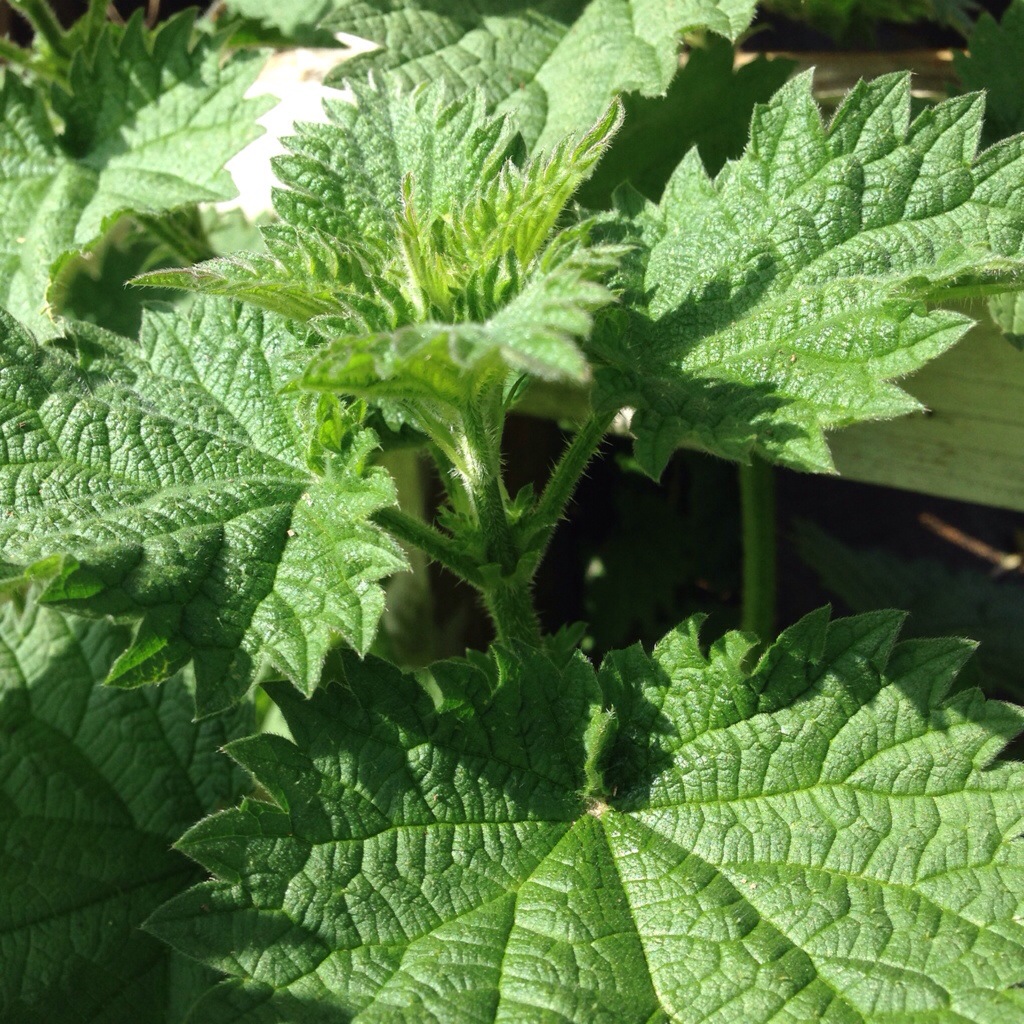
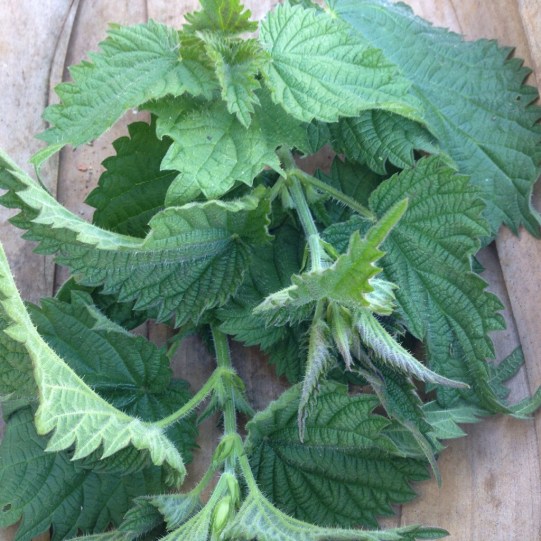
nettles
Like many allotments, ours has the occasional weed. Indeed; we have, the last eight years, been battling an attack of bind weed, with occasional skirmishes with ground elder, nettles and goose grass. Many of these weeds were essential foods in Medieval times. People like Nicholas Culpepper knew the nutritional benefits of these now unwanted plants; they even put them in books such as The Fromond List (a list of ‘herbys necessary for a gardyn’), compiled by Surrey landowner Thomas Fromond in about 1525.

Across the world nettles for example are used in many dishes, from frittata, and a Scandinavian soup, to a version of the Greek spanakopita. The Italians seem to be particular fond of the humble nettle; so, as the nettle ‘crop’ at the allotment was looking particularly lush and fresh, I decided to make use of this foraged food for a risotto. Nettles are not known as Stinging Nettles for no reason, they have many hollow stinging hairs called trichomes on the leaves and stems, which act like hypodermic needles, injecting histamine and other chemicals that produce a stinging sensation. In order to avoid the obvious issue of being stung when picking I wore gloves and picked only the top few leaves, placing them straight into a last of bag as I did.20140430-082937.jpg
You will need
Two large handfuls of young nettle leaves
1 litre chicken stock
50g cubed butter
1 onion, very finely chopped
1 clove of garlic, finely chopped
250g Arborio rice
A small glass of dry white wine
50g grated Parmesan
A handful of toasted pine nuts

Start by blanching the nettles for a few minutes in boiling salted water, before whizzing in the food processor with a little liquid to make a purée. Next heat the stock, you want it to be just simmering so when you add it gradually to the rice it doesn’t reduce the temperature of huge dish too much and slow the cooking. In a thick bottomed pan, sweat the onion gently in a little butter and olive oil until it’s translucent and soft. Add the garlic and cook for a few more minutes, before adding the rice. Cook the rice for a few minutes until it starts to become slightly translucent, then pour in the the glass of wine. You want to let the wine evaporate until the onion and rice are nearly dry, then add stock, a ladleful at a time, stirring constantly, each time waiting for the liquid to evaporate before adding the next ladle.

Continue this process for about ten minutes, then add the nettle purée. Stir into the rice and continue to add the stock until the rice is al dente. When the rice is ready, add the cubed butter, seasoning and Parmesan and put the lid on the pan. Leave the risotto to rest for a couple of minutes, before beating the butter and cheese into the rice and serving. Sprinkle the toasted pine nuts on top and add a little more Parmesan and a drizzle of good olive oil.
Nettle risotto

Nettles are such a great resource, which as well as being nutritious and plentiful are free! Why not take the sting out of your food bill and give it a go. Any other suggestions for foraged greens?

I’m dead chuffed to be shortlisted in the FOOD category for the BIBS (Brilliance in Blogging Award). If you think I deserve to be in the final then please vote for me by clicking on the picture below. Thank you for all your support!

BiB Food 2014


I’m entering this recipe for Four Seasons Food celebrating the vegetables of spring.  FSF is run by Anneli at Delicieux and Louisa at Eat Your Veg who is hosting this month.